APL installing electronics, readying to add insulation on NASA’s Dragonfly spacecraft


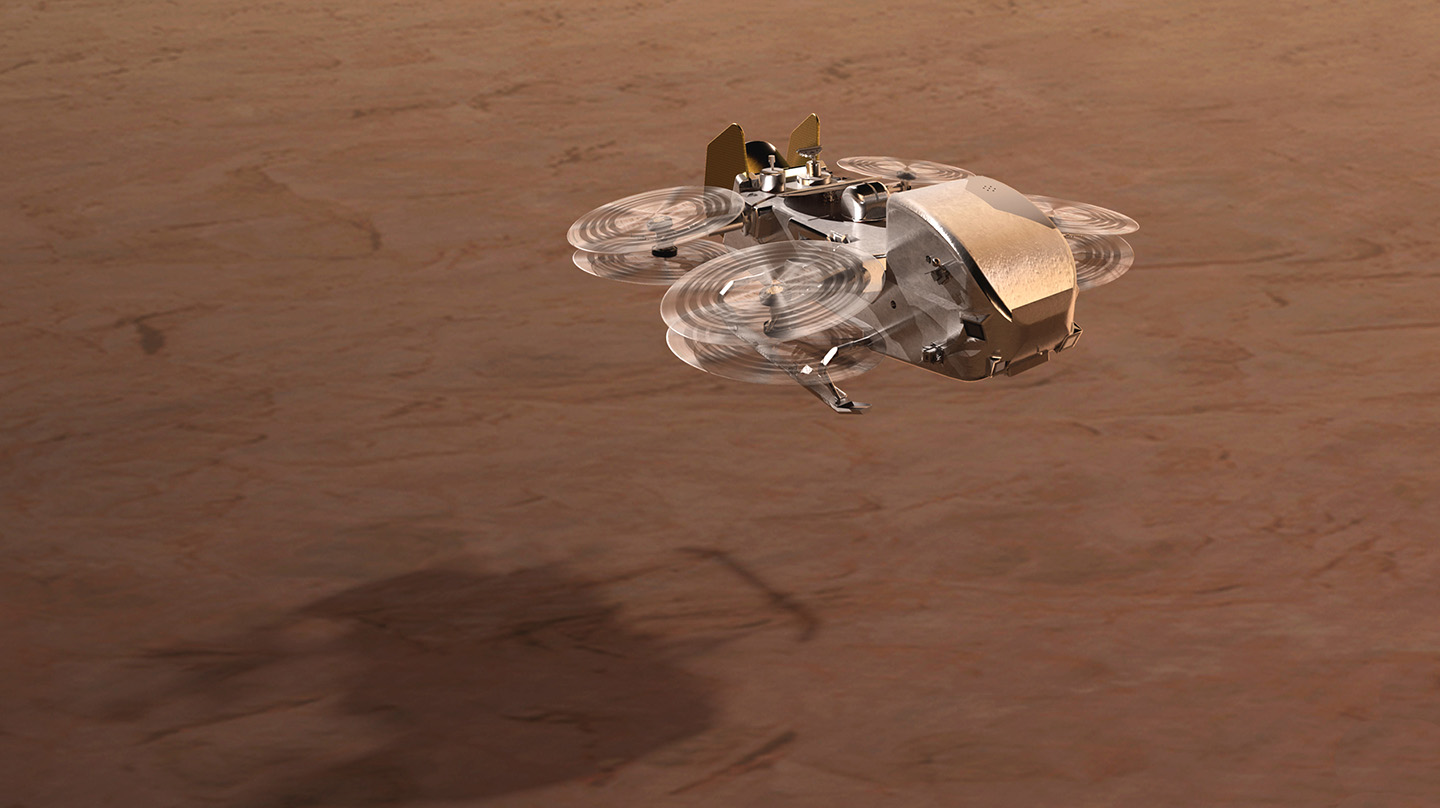
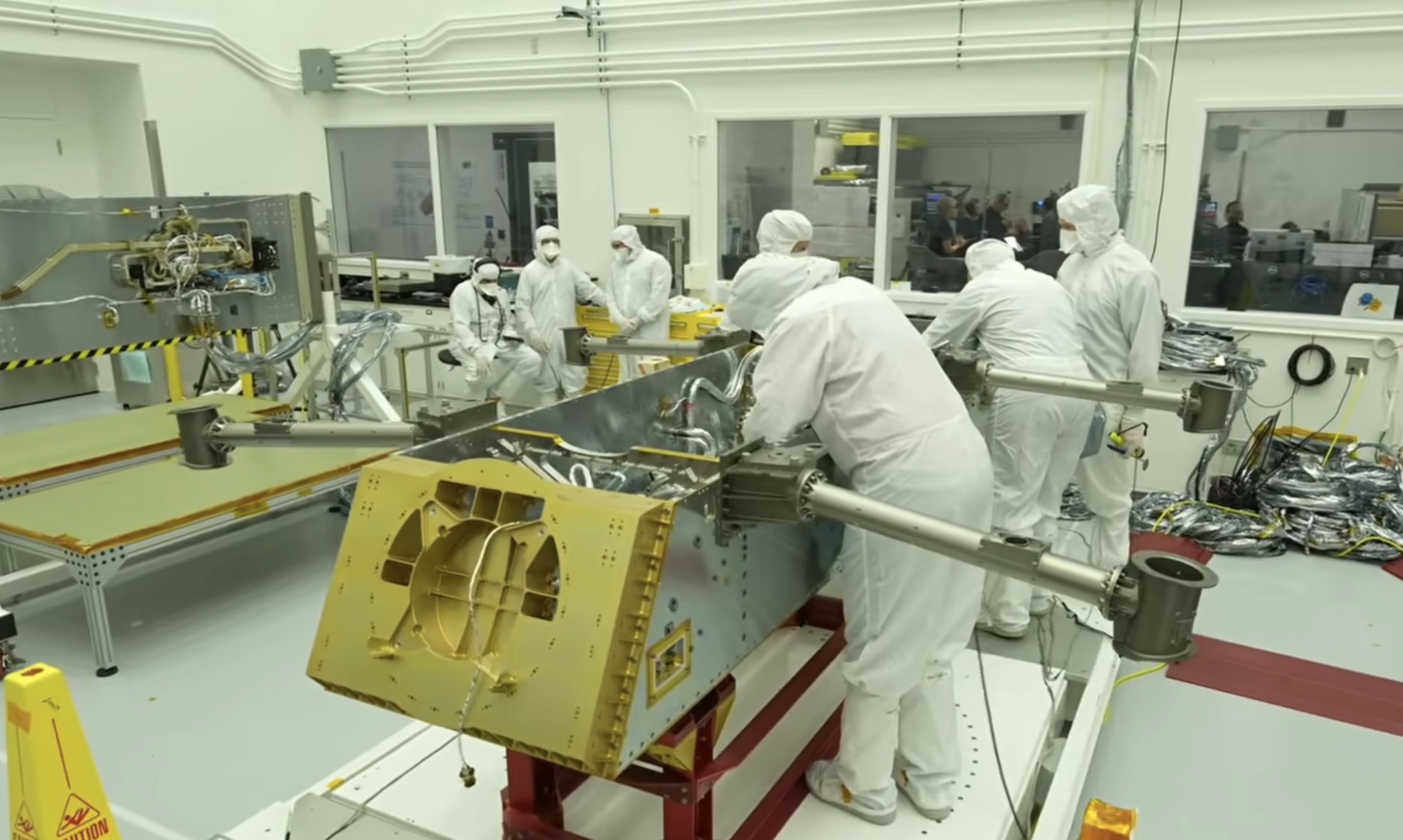
Technicians at Johns Hopkins Applied Physics Laboratory in Maryland are installing electronics inside NASA’s Dragonfly rotorcraft in preparation for its 2028 launch toward Titan, the agency shared today.
The livestreamed update showed video of the APL clean room where technicians are working inside the spacecraft’s body, connecting wiring on electronics boxes.
“We just finished the spacecraft structure qualification here,” said Simmie Berman, APL’s thermal-mechanical subsystem lead for Dragonfly, on the broadcast. This consisted of tests of “the entire structure” to verify that Dragonfly will be able to withstand the stress of launch, landing on Titan and flying on another planetary body.
The spacecraft is slated to reach Titan in 2035 and spend at least three years traversing the Saturnian moon via a series of short flights resembling leapfrog hops. No spacecraft has visited this icy body — which features liquid methane rain, sand dunes and slushy bodies of water — since 2005. The European Space Agency’s Huygens probe was not designed to operate on Titan’s surface, instead sending back atmosphere data during its descent and surface photos shortly after touching down.
NASA has estimated a $3.35 billion lifecycle cost for the Dragonfly mission, for which APL is the prime contractor.
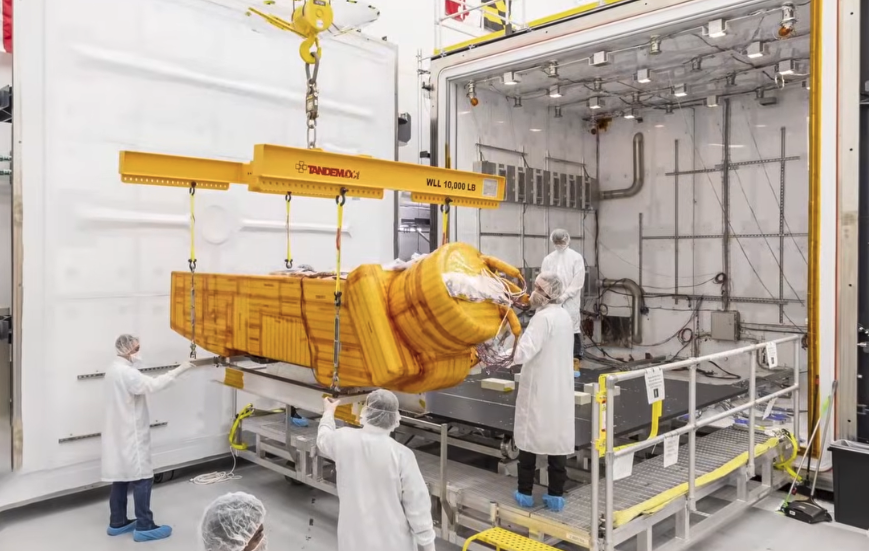
After the electronics are installed, APL will begin what Berman described as one of the most difficult and complex parts of assembly: installing the unique solimide-based insulation that will keep Dragonfly warm on Titan’s cryogenic surface. Solimide is a lightweight, fire-resistant polyimide designed to protect the instruments. At its lowest, Titan’s surface reaches temperatures of roughly minus 185 degrees Celsius (minus 300 Fahrenheit).
“The lander will be covered in approximately 850 tiles of foam, made by hand here at APL,” Berman said. “The whole thing goes together like a big, giant, three-dimensional jigsaw puzzle. That installation will go through the end of this year, and then early next year we’ll start doing our environmental testing.”
While on Titan, Dragonfly will draw heat from its MMRTG, short for multi-mission radioisotope thermoelectric generator. This device is similar to those aboard the agency’s Curiosity and Perseverance Mars rovers.
“We actually take the heat that is rejected from the power source, and we use fans to blow it throughout the entire lander to keep it warm. Then we wrap it in foam to make it like a thermos bottle, just to maintain all the heat inside,” Berman said. “The lander does have kind of an ability to cool itself down if it does get too hot, as we operate. I kind of liken it to the zippers in your parka when you’re skiing.”
After the insulation is installed, Dragonfly will be tested inside APL’s Titan Chamber, designed to simulate the temperature and pressure of the icy moon.
“Our team is basically working together to make sure that we meet both thermal requirements and maintain the ability to be able to fly around while we’re on Titan,” Berman said.