Drawn by helium-3, lunar mining companies prepare for initial missions
 By Keith Button
 By Keith Button
On Earth, helium-3 is worth $30,000 per gram because of its scarcity. But on the moon, there are abundant deposits of this gas in rocks and dust on the lunar surface, thanks to billions of years of solar wind exposure.
This has created a modern gold rush, birthing a handful of prospective mining companies now taking steps toward beginning operations on the lunar surface in the coming years.
Their initial missions will be aimed at determining where these helium-3 deposits are located, how concentrated those deposits are and the best methods for extracting them from the lunar regolith — all of which they need to be sure of before beginning large-scale mining because of the extreme expense of operating on the moon.
Then there is the matter of proving they can operate in the moon’s harsh environment, including surviving the two-week lunar nights.
Despite the unique challenges, there are parallels with Earth mining ventures, said Chris Salvino, CEO of Arizona-based Lunar Helium-3 Mining.
“There’s a lot of lessons learned from the 1840s gold rush, mining in general, that totally applies to what we are trying to do here,” Salvino said. “It’s just a different environment.”
Aside from its current price, the appeal of helium-3 lies in the projected demand — coolant for quantum computing and fuel for future fusion reactors, for example. Interlune, a Seattle-based space resources company with plans to mine helium-3, has signed contracts worth $500 million to sell the gas to the U.S. Department of Energy, Bluefors of Helsinki and Maybell Quantum in Denver, all for quantum computer cooling. Another prospective miner, Black Moon Energy of Houston, has $500 million in helium-3 contracts to supply DOE and fusion reactor companies, the CEO told me.
If all goes as planned, this mining could form the foundation of a larger lunar economy, proponents say.
“We strongly believe the only primary reason to be going back to the moon and the only value proposition is probably to extract helium-3,” Salvino said. “There are no other resources that would have enough value by themselves to become their own economy.”
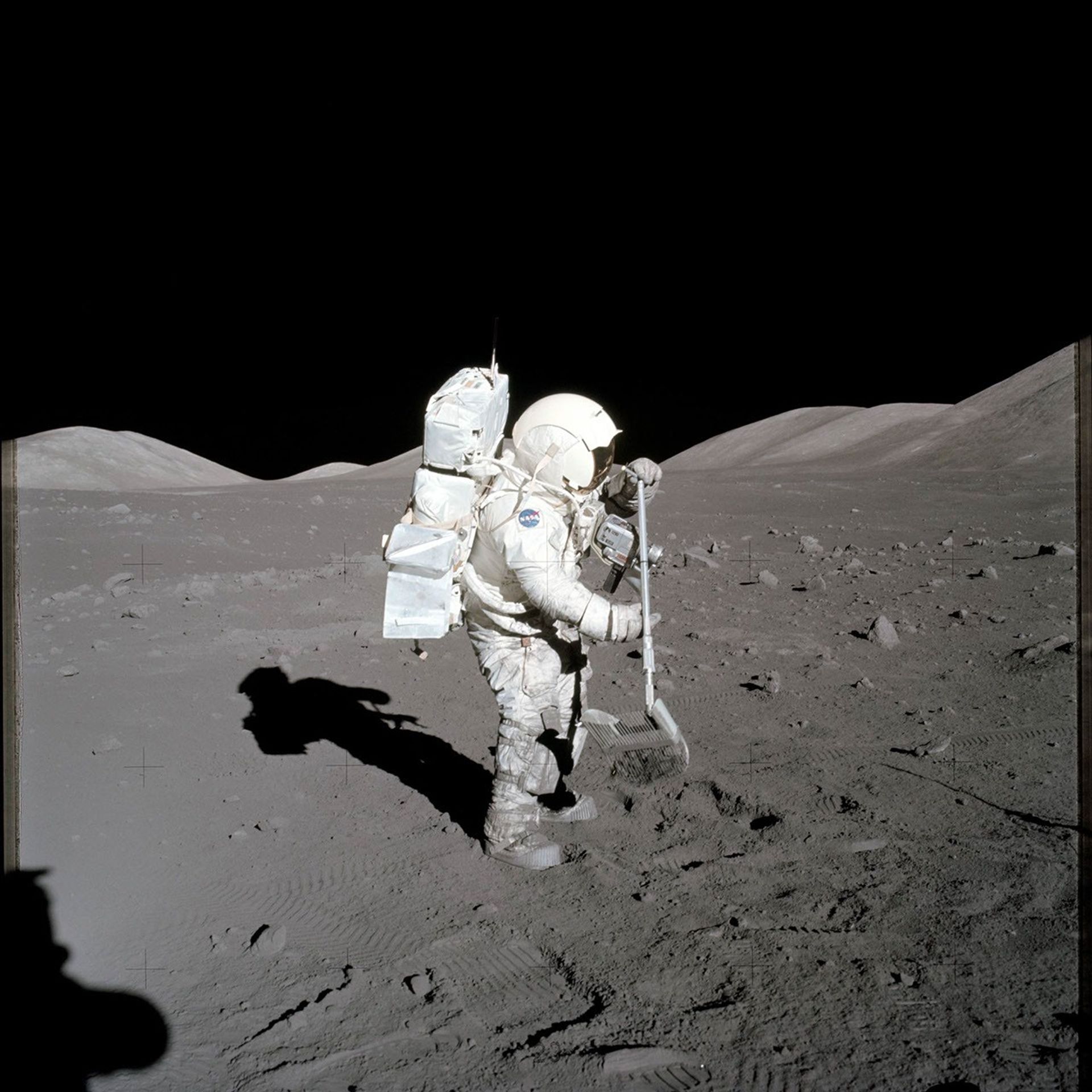
Although lunar soil samples brought back from the Apollo missions confirmed the existence of helium-3, the locations and concentrations of those deposits remain a matter of debate. Estimates of the concentrations in surface regolith range from parts per billion to parts per million, said Jeffrey Max, CEO of Magna Petra, a lunar mining startup in Durango, Colorado.
The most likely source is ilmenite, a titanium-iron oxide that absorbs helium-3, helium-4 (the more common form of helium), hydrogen and other gases carried by solar winds, said Christopher Dreyer, a space resources professor at the Colorado School of Mines. The helium-3 molecule either sits within the mineral’s crystal structure, where the molecule can be removed with heat, or it adheres to the surface of the crystal, where it can be dislodged by shaking.
To predict lunar helium-3 concentrations, Magna Petra has created a digital twin of the moon with the aid of artificial intelligence. The model simulated 4 billion years of solar wind deposits while also factoring in the age of meteor impacts on the regolith, helium-3 concentrations in the Apollo samples, mapping by NASA’s Lunar Reconnaissance Orbiter and even AI-conducted interviews with scientists.
The ilmenite hypothesis is “almost taken as evangelical truth” by prospective miners, Max said, but Magna Petra is considering other hypotheses as well. Other factors influence the concentration and distribution of helium-3, he noted, including heat from sunlight that causes the gas to relocate to cooler areas on the moon’s surface.
Magna Petra is targeting 2028 to send a rover to the lunar surface to measure plumes of gases released by the regolith, checking its model against the sampling results, Max said. The company then plans to commence its first helium-3 sample return mission to validate its mining concepts.
Similarly, Black Moon Energy is targeting 2029 to send a reconnaissance rover, said co-founder and CEO David Warden. He said the company has its own map of the lunar surface, like a reservoir map for oil and gas exploration, with predictions of helium-3 concentrations based on past regolith samples, lunar satellite mapping, surface temperatures and mineral composition.
Concepts for physically mining helium-3 — collecting, extracting or harvesting it, depending on who you speak to — range from scooping up tons of regolith per hour to passing lightly over the surface like a vacuum cleaner. Each must account for the effect of lunar dust on their equipment. These staticky, sticky particles coat every surface and are more jagged than broken glass.
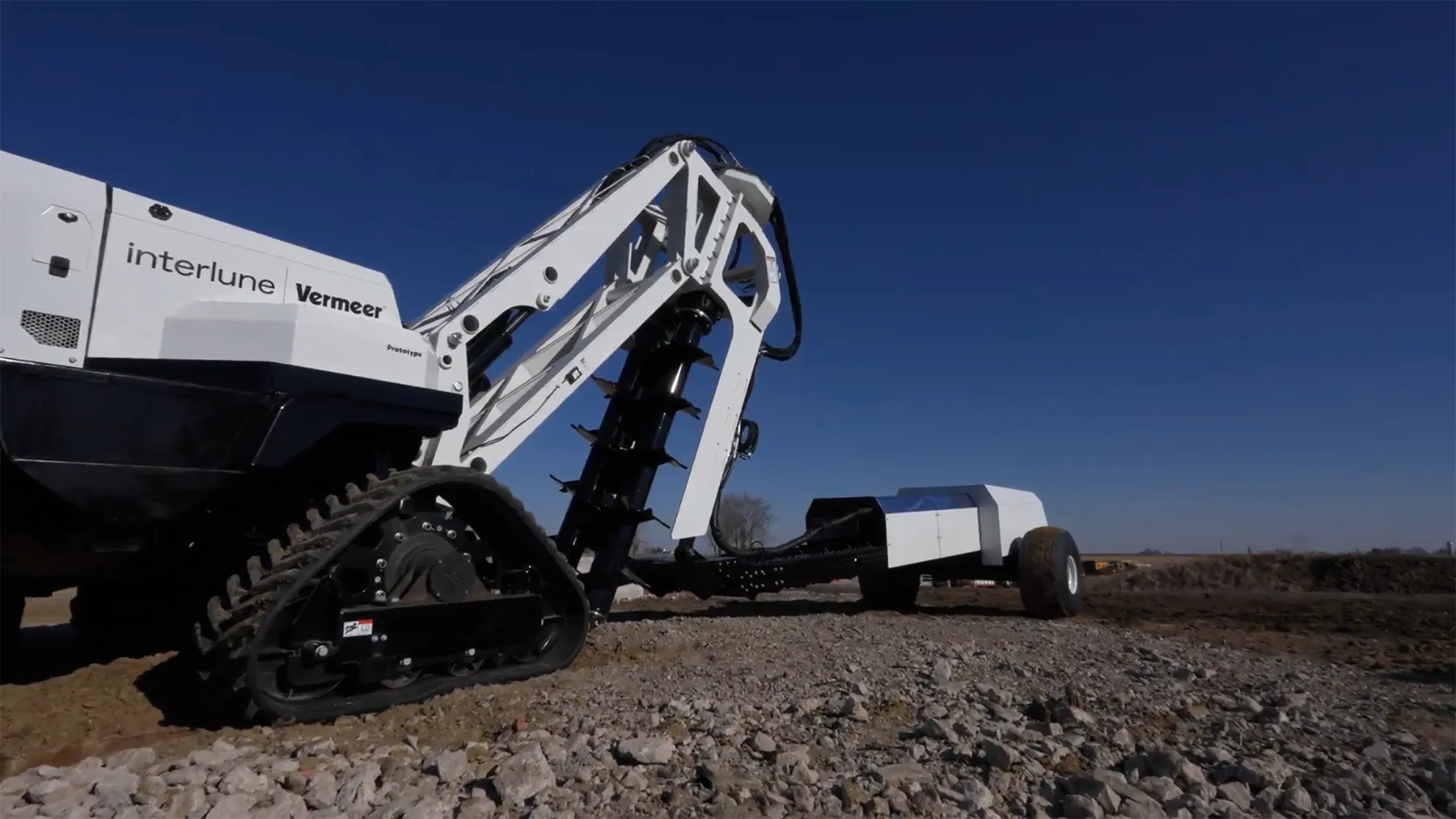
Interlune is in the large-volume camp: It would dig down 3 meters with a machine that can process 100 tons of regolith per hour, sort the rocks from the sand, then extract the helium-3 and other gases by crushing the regolith. The company hasn’t decided yet whether the sorting and extraction would take place at a central plant or as the material is dug up, said Rob Meyerson, co-founder and CEO.
In May, the company received a $6.9 million NASA contract to develop a robotic device that will scoop and sort regolith, as well as measure and extract gases contained in the lunar soil. That instrument is slated to fly aboard a 2028 Commercial Lunar Payload Services mission.
The company is also wrapping up its development of lunar excavation techniques for NASA under a $150,000 contract, Meyerson said. Last year, Interlune demonstrated a 100-ton-per-hour excavator prototype in Pella, Iowa, with truckloads of simulated regolith.
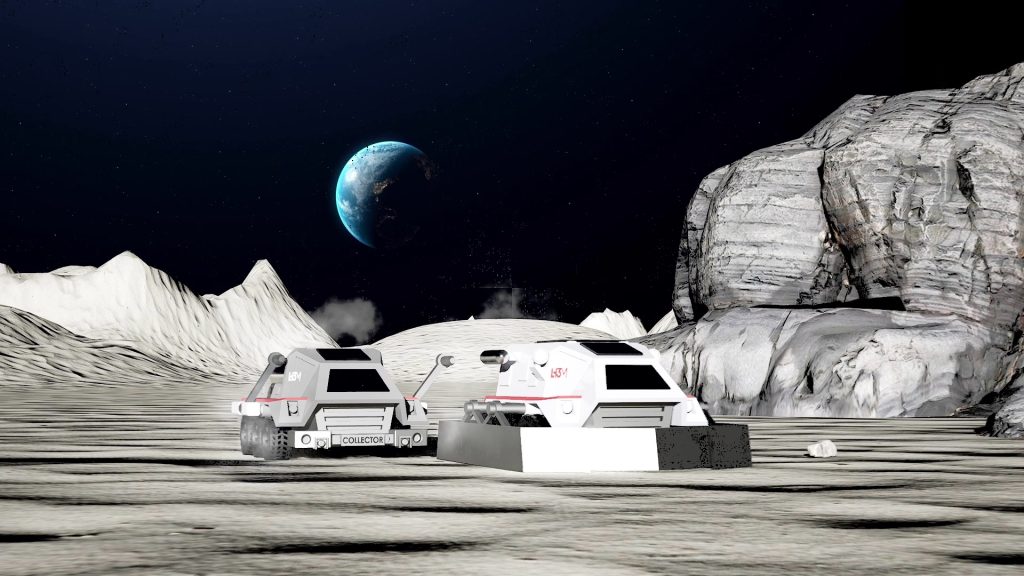
Lunar Helium-3 Mining’s concept resembles a giant vacuum cleaner, though without suction, Salvino said. A rover fitted with a skirt to prevent gases from drifting off would move over the surface, extracting helium-3 and other gases without bringing the soil into the rover. The gases would be separated while the rover is moving; the helium-3 would then be compressed into liquid for transport to Earth.
Because lunar regolith is so dense and “phenomenally abrasive,” Salvino said, “it will destroy equipment, so you can’t have a ton of moving parts like an Earth-based mining system.”
Black Moon plans to plow through the top 3 meters of regolith to release the gases, then put the lunar soil back down. Helium-3 would then be separated from the other gases through a combination of heating and cryogenic cooling, with some of the same techniques for refining crude oil, Warden said.
Magna Petra would release the loosely bonded helium-3 contained within the regolith by driving an oscillating plow over the surface, creating gas plumes like the clouds of dust that follow a car driving down a dirt road, Max said. The plumes would be vacuumed up and super-cooled to separate the helium-3.
A major obstacle for long-term operations is the two-week lunar night, when temperatures plunge to minus 130 degrees Celsius and solar panels can’t charge batteries. Such conditions can cause motors to seize up, circuit boards to crack and bonded materials to separate at the joints.
Maana Electric, an energy technologies company in Luxembourg, is working on a possible solution: a combustion chamber furnace that would provide heat to keep electronics, equipment and habitats warm through the lunar nights. It would first dissolve lunar regolith with fluoride or chloride salts and apply electrolysis to extract oxygen, silicon and metals. Then, it would mix metals from the first process, such as aluminum or magnesium, with the oxides in regolith to produce a self-sustaining exothermic reaction.
“As of right now, it’s very difficult to survive the lunar night. Most equipment is not designed for it, and most equipment that does survive, it’s by chance and not by design,” said Jarrett Dillenburger, a regolith processing researcher at the European Space Resources Innovation Center, which funds some of Maana’s engineering and research work. “It requires tackling a problem that on Earth we really don’t have to solve. Never on Earth does it get so cold that equipment is freezing in this way.”
Another challenge for mining engineers is figuring out how to maintain and repair the equipment without people, Dreyer said. Because it costs $500,000 to $1 million per kilo to deliver new equipment to the moon from Earth, repairs will be preferred over replacements.
“That equipment will fail, and what do you do then?” he said. “Very, very infrequently will be people present, so it’s probably robotic repair. On the moon. Which is another thing that’s never been done.”
If the plan for maintenance and repair fails, Dreyer added, “your only option is that 1-ton vehicle, you just leave it wherever it stopped and you deliver a new one to the moon. But it might be broken because of a $1,000 motor.”
In Salvino’s view, these needs could prompt a domino effect: Those providing repairs and other services to helium miners add another layer to the lunar economy, and then those servicers will in turn need their own lunar resources.
“If helium-3 is the tip of the spear and the lunar economy is built around that, then you’re going to need people with landers and rovers and repair capabilities,” he said. “And at that point, you might be able to extract secondary resources and use them on the moon or elsewhere.”