

1926
Oct. 1 — Aviator Alan Cobham touches down in London, concluding a 26,000-mile (41,840-kilometer) round trip to Melbourne, Australia. After taking off from the United Kingdom in June in his de Havilland DH.50J, he encounters sandstorms, heat and heavy monsoons, among other challenges, before reaching Melbourne on Aug. 15. He departs for London on Aug. 29, encountering monsoons again during the return trip. Aviation, Oct. 11, 1926, p. 621.
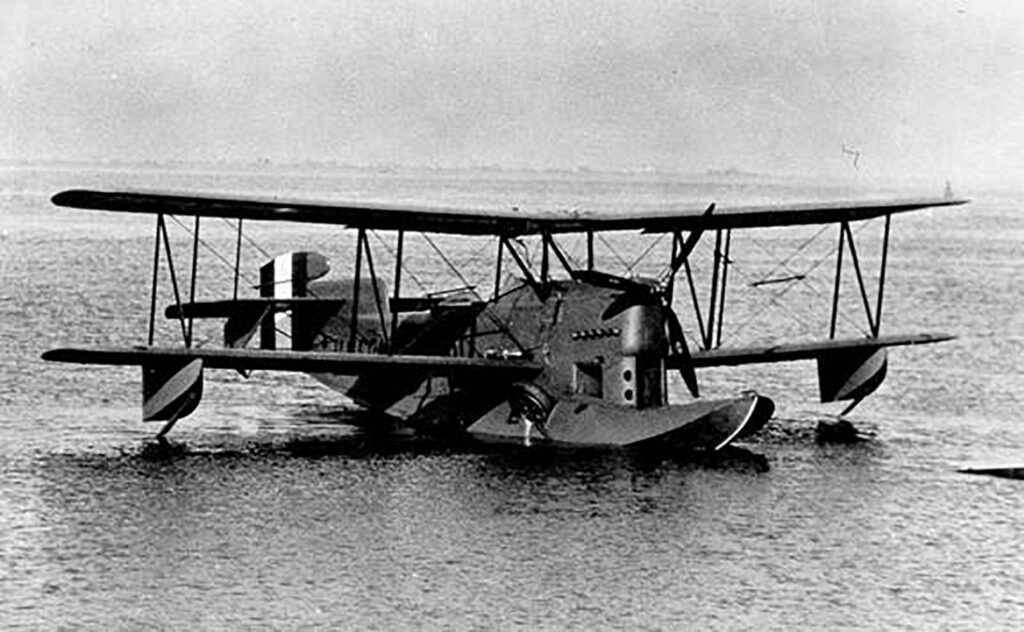
Oct. 14 — The U.S. Coast Guard Air Service receives its first purpose-built aircraft, a modified Loening OL-5. Congress appropriated $162,000 for the service to acquire five of these aircraft, which feature strengthened fuselage hulls, special skids on the wing tip floats and two Lewis machine guns. Three are delivered as of early November. Aviation, Dec. 20, 1926, p. 1,033.
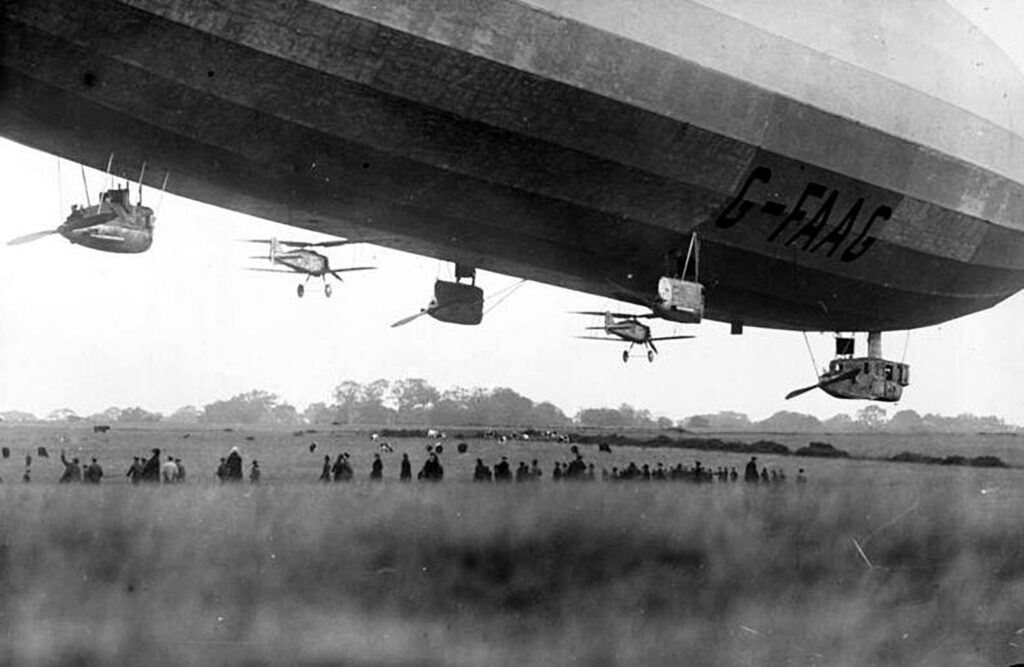
Oct. 21 — The British airship R.33 releases two Gloster Grebe single-seater fighters 2,000 feet above the Royal Naval Air Service’s Pulham Airship Station, demonstrating the possibility of using airships as multiplane carriers. The fighters are suspended from the airship’s keel: one ahead of the two front engine nacelles, the other closer to the rear. Previous flights were conducted with a single D.H.53 light monoplane. Flight, Oct. 28, 1926, pp. 703-706.
Oct. 22 — Lt. Cdr. Frank Wagner leads the U.S. Navy’s first fleet demonstration of dive-bombing. In this simulated attack, a squadron of Curtiss F6C-2s dive almost vertically from 12,000 feet toward ships in the Pacific Fleet, surprising and impressing military observers. Adrian Van Wyen and Lee Pearson, United States Naval Aviation 1910-1970, p. 60.
Oct. 29 — French aviators Dieudonné Coste and Rignot set a world record for straight-line distance flown. They take off from Le Bourget, France, in a Breguet 19 and land in Bandar-e-Jask, Iran, 32 hours and 3,340 miles (5,370 km) later. Darkness prevents them from going farther. Flight, Nov. 4, 1926, p. 724.
1951
Oct. 3 — The U.S. Navy commissions it first anti-submarine helicopter squadron. Based at Key West Naval Air Station in Florida, under Cdr. J.T. Watson, the squadron is to develop new techniques and procedures using aircraft, ships and shore installations. David Baker, Flight and Flying: A Chronology, p. 332.
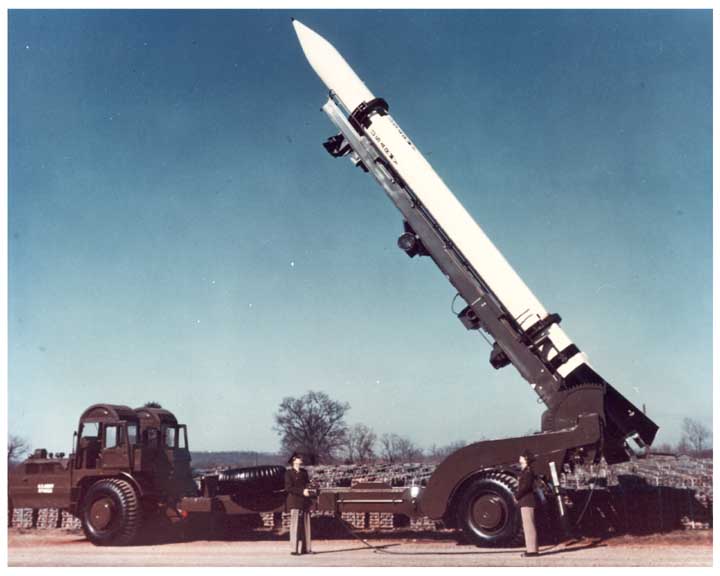
Oct. 10 — The Corporal E-11 ballistic missile developed by the Jet Propulsion Laboratory is launched from White Sands Proving Ground, New Mexico. The test demonstrates the basic configuration for the U.S. Army’s first operational guided ballistic missile and America’s first guided missile approved to carry a nuclear warhead. Eugene M. Emme, Aeronautics and Astronautics, 1915-1960, p. 68; James W. Bragg, Development of the Corporal: The Embryo of the Army Missile Program: Volume 1, Narrative, 1961, pp. 126, 175, 179.
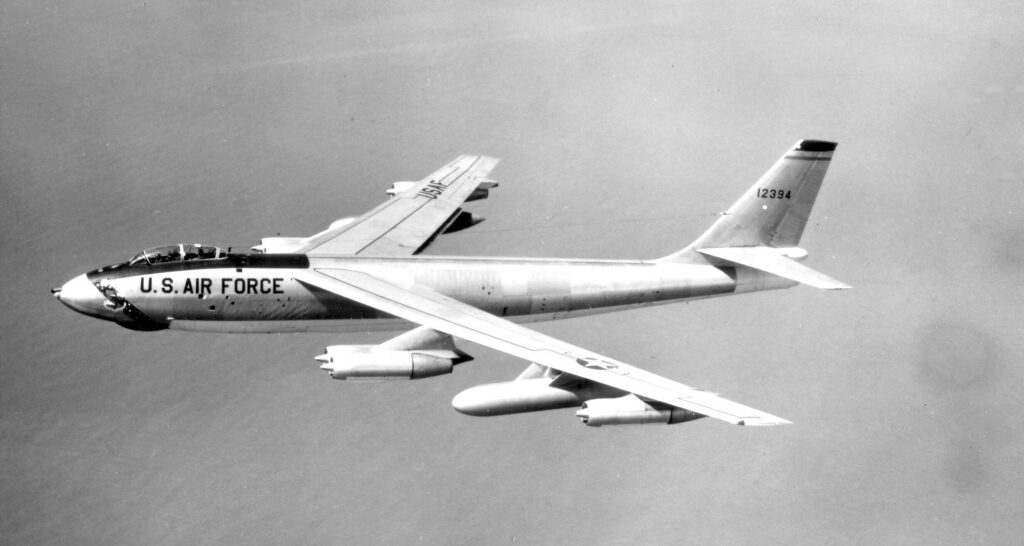
Oct. 23 — Boeing delivers the first operational B-47 Stratojet to the U.S. Air Force. The swept-wing aircraft was the winner of the service’s competition for a jet-powered bomber. Kirtland Air Force Base, Oct. 26, 2012.
Also during October — The Air Force Council decides to move forward with development of a modified F-86 Sabre from North American Aviation. This design becomes the F-100 Super Sabre, the first production aircraft capable of supersonic speeds. Marcelle S. Knaack, Post-World War II Fighters: 1945-1973, pp. 112-113.
1976
Oct. 5 — About 3,000 people attend a dedication ceremony at the Space Hall of Fame in Alamogordo, New Mexico. The museum honors those who made great contributions to spaceflight and technology. Among the original 35 inductees are Apollo 11 astronaut Neil Armstrong and Soviet cosmonaut Yuri Gagarin. New York Times, Oct. 10, 1976, p. 2.
Oct. 5 — Domestic Satellite Philippines and Nippon Electric Co. of Japan have agreed to construct a $26 million satellite communication system, Manila radio stations announce. The network is to be operational by 1978, with 11 stations providing long-distance service to the Philippines’ national communications network. NASA, Astronautics and Astronautics, 1976, p. 239.
Oct. 10 — A West German tanker rescues U.S. balloonist Ed Yost from the Atlantic Ocean after a U.S. Air Force search plane located him. Yost departed Maine on Oct. 6 in an attempt to be the first person to fly a balloon across the Atlantic. His record-setting flight lasts 107 hours and 2,740 miles (4,410 kms) before helium loss forces him to land about 200 miles (320 km) east of the Azores Islands. Yost spent 18 months and $100,000 building his balloon. Its gondola doubled as a catamaran, allowing him to survive at sea until his rescue. New York Times, Oct. 12, 1976, p. 5; June 7, 2007. The Times, June 2, 2007.
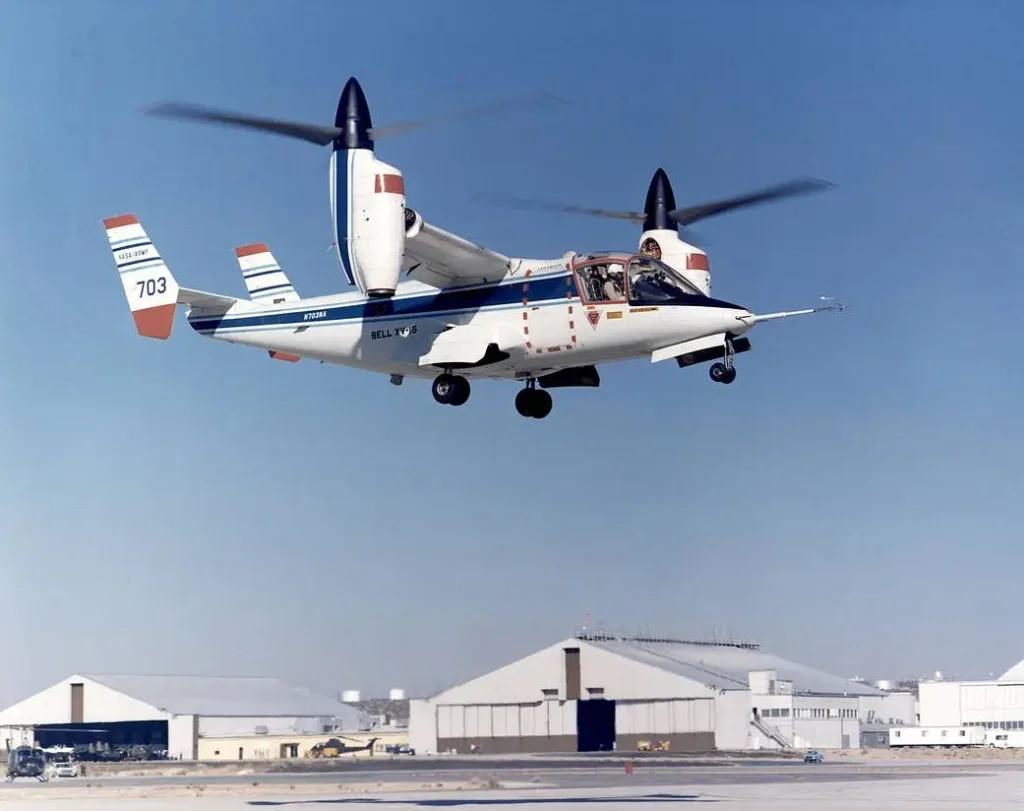
Oct. 22 — Bell Helicopter Textron rolls out the XV-15 experimental aircraft. On its wingtips are two turboprop engines with three-bladed propellers, capable of rotating from vertical takeoff position to horizontal flight configuration. The design marks a milestone in tiltrotor development. Flight tests are planned for 1977. Washington Star, Oct. 24, 1976, p. A-2; NASA Release 76-169.
Oct. 26 — Cape Canaveral, Florida, marks its 2,000th “major missile launch,” when a U.S. Army Pershing missile is fired. The area’s first launch occurred 26 years prior with a captured German V-2 rocket. KSC Spaceport News, Nov. 12, 1976, p. 1.
2001
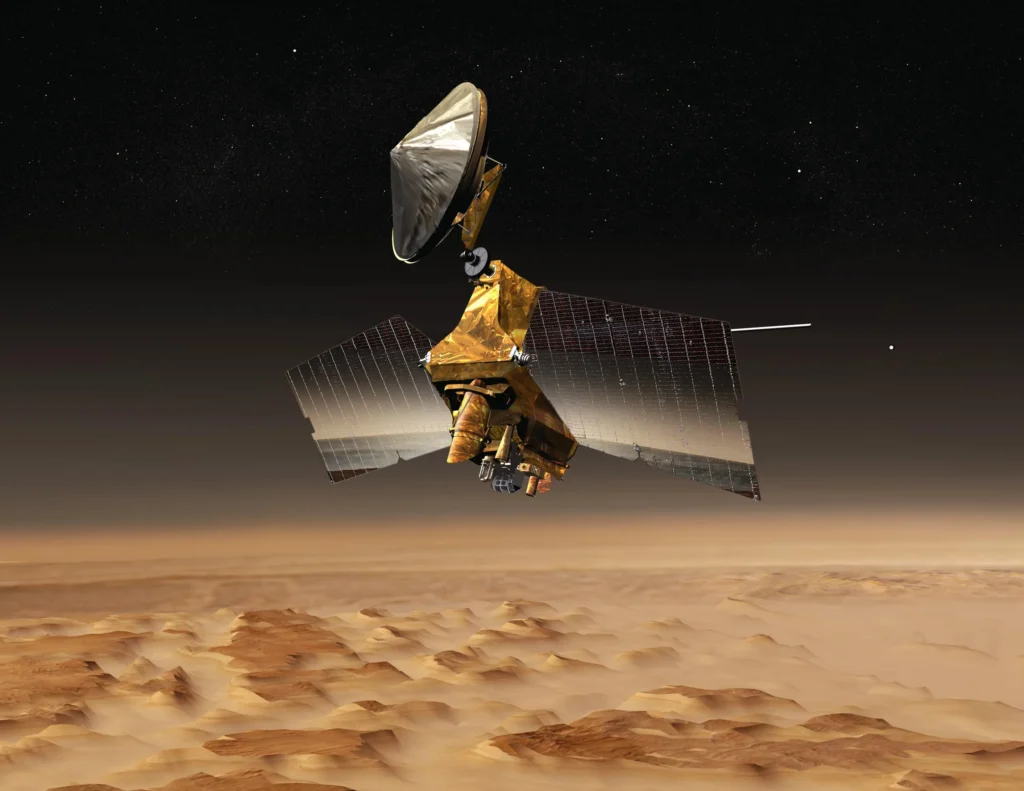
Oct. 3 — NASA announces Lockheed Martin will receive a $145 million contract to build the Mars Reconnaissance Orbiter, scheduled to launch in August 2005. MRO is to provide high-resolution photos of Mars, investigate future landing sites and serve as a communications and navigation relay point for later missions. Lockheed Martin News Release. NASA JPL Release 2001-191.
Oct. 8 — Russian cosmonauts Vladimir Dezhurov and Mikhail Tyurin perform a spacewalk outside the International Space Station, the first without a space shuttle orbiter present. Tethers attach the pair to the station for the 5-hour-long walk, during which they install a crane, ladder, handrails and other equipment. They exit and reenter through the Russian module Pirs, added the month before. NASA, Aeronautics and Astronautics: A Chronology, 2001-2005, p. 41.
Oct. 23 — European Space Agency astronaut Claudie Haigneré becomes the first European woman to visit the International Space Station, when the Soyuz capsule carrying her and two cosmonauts Victor Afanassiev and Konstantin Kozeev docks with the station. While onboard, Haigneré conducts various experiments and supervises a program to provide space data to European students. Spaceflight, December 2001, p. 489.

Oct. 24 — NASA’s Odyssey spacecraft reaches Mars orbit, concluding a six-month, 286 million-mile (460 million-km) voyage. The spacecraft is to remain in orbit for at least two years, mapping the planet’s mineral composition and searching for evidence of subterranean water ice beneath the planet’s surface. It goes on to hold the record for longest continually operating spacecraft beyond Earth orbit. NASA, Aeronautics and Astronautics: A Chronology, 2001-2005, p. 44.
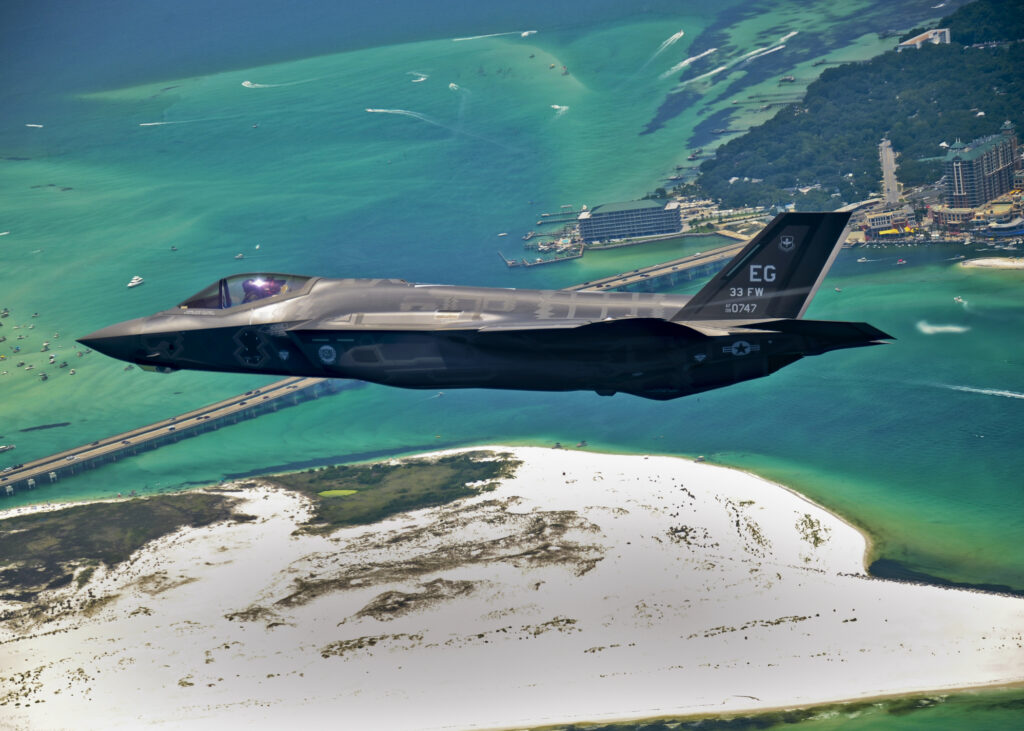
Oct. 26 — Lockheed Martin receives an $18.9 billion System Development and Demonstration contract from the U.S. Defense Department for the F-35 Joint Strike Fighter. Plans call for at least 3,000 units to be produced over the life of the program. Flight International, Oct. 30-Nov. 5, 2001, pp. 4-5.