

1926
July 1 — Three aircraft take off from New Brunswick, New Jersey, commencing Colonial Air Transport’s contract air mail route between New York and Boston. The planes make one stop in Hartford, Connecticut, where a large crowd meets them. Gov. John H. Trumbull, who also chairs Colonial’s board, boards one of the aircraft and flies on to Boston. The return flight to New York is seen off by U.S. Army and Navy flight exhibitions and a crowd. Aviation, July 12, 1926, p. 51.
July 2 — Following the passage of the Air Corps Act of 1926, the U.S. Army Air Service becomes the Army Air Corps. The corps gains more independent decision making, a step toward the creation of a separate military branch. Aircraft Yearbook, 1927, pp. 70-72.
July 14 — French aviators Capt. Girier and Lt. Dordilly set a new nonstop long-distance record. They fly the 4,700 kilometers from Paris to Omsk, Russia, in 29 hours, averaging 160 kph. Flight, July 22, 1926, p. 452.
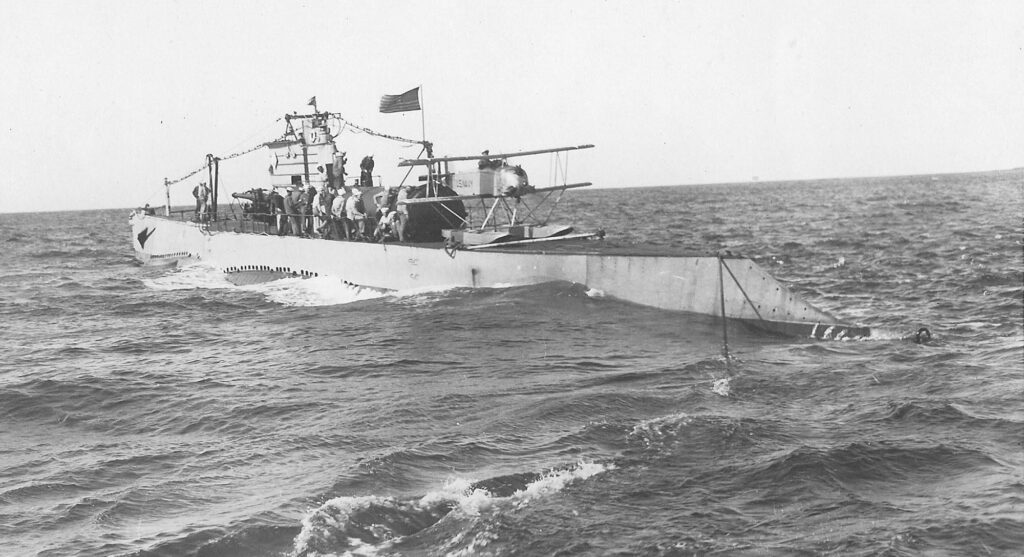
July 28 — The U.S. Navy conducts its first launch and recovery of a seaplane from a submarine. An S-1 submarine surfaces and launches a Cox-Klemin XS-2 seaplane piloted by Lt. D. C. Allen. The boat later recovers the plane and submerges, completing the cycle of operations. Lee M. Pearson, United States Naval Aviation, 1910-1970, pp. 59-60.
1951
July 6 — A handful of Lockheed RF-80A reconnaissance fighters collect fuel from a tanker aircraft over Korea, the first instance of combat aerial refueling. Eugene M. Emme, Aeronautics and Astronautics 1915-1960, p. 67. Air Mobility Command, Air Refueling: Without Tankers, We Cannot, 2009, p. 14.
July 19 — The Bournemouth airship flies for the first time from Bedfordshire, England. This is the first airship constructed in Britain since the loss of the R101 in 1930. The Airship Club of Great Britain built the craft with assistance from the Bournemouth Corporation and the Air League of Great Britain. L. G. S. Payne, Air Dates, p. 440.
July 20 — The prototype Hawker P.1067 swept-wing jet fighter completes its first flight at Boscombe Down, England. It is an early model for what becomes the famous Hawker Hunter transonic fighter jet, which begins operations with the United Kingdom’s Royal Air Force in 1954. Owen Thetford, Aircraft of the Royal Air Force Since 1918, pp. 334-41.
July 23 — Lockheed test pilots complete the first flight of a production model L-1049 Super Constellation. The design retains the distinctive “Connie” layout but extends the fuselage. Fourteen of the planes are scheduled for delivery to Eastern Air Lines and 10 for Transcontinental Western & Air. The L-1049 series subsequently becomes the most widely flown of the Constellation family. Aircraft Yearbook, 1952, pp. 105-106, 273-274; Jane’s All the World’s Aircraft, 1952-53, pp. 218-221.
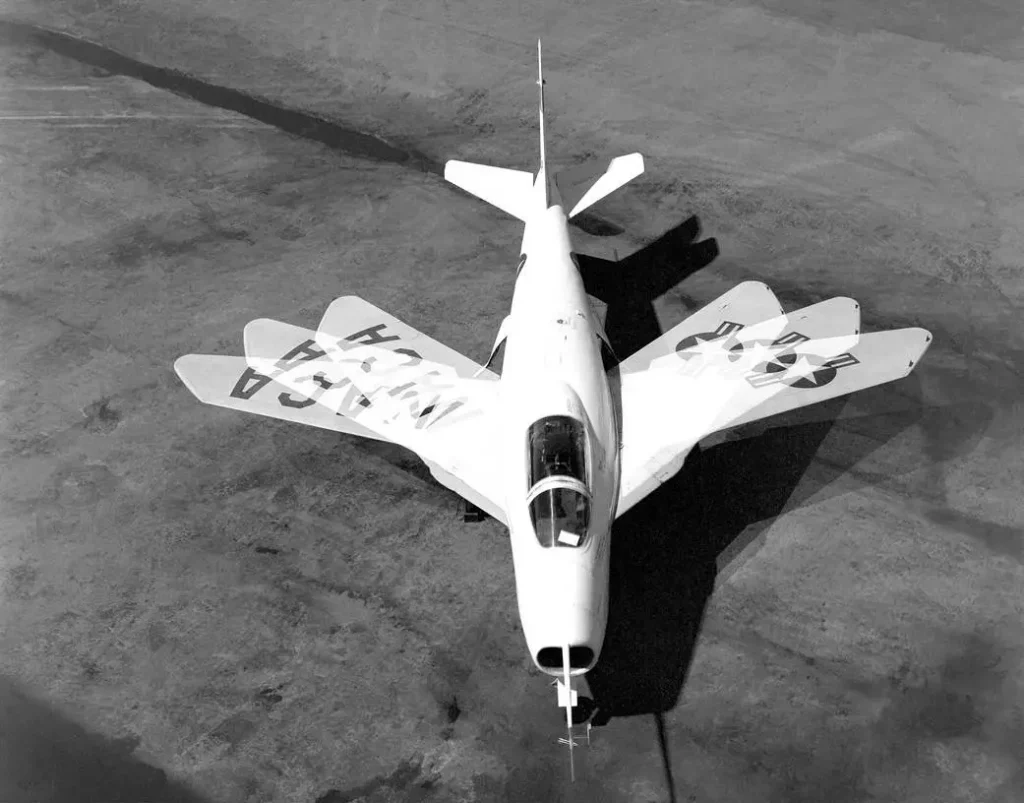
July 27 — A Bell X-5 research aircraft transitions its unique variable-geometry wings for the first time. This was the fifth of 133 flights by the X-5, during which the U.S. Air Force and NACA (National Advisory Committee for Aeronautics) gather substantial data for future variable-geometry aircraft designs. A.J. Pelletier, Bell Aircraft Since 1935, pp. 94-96.
1976
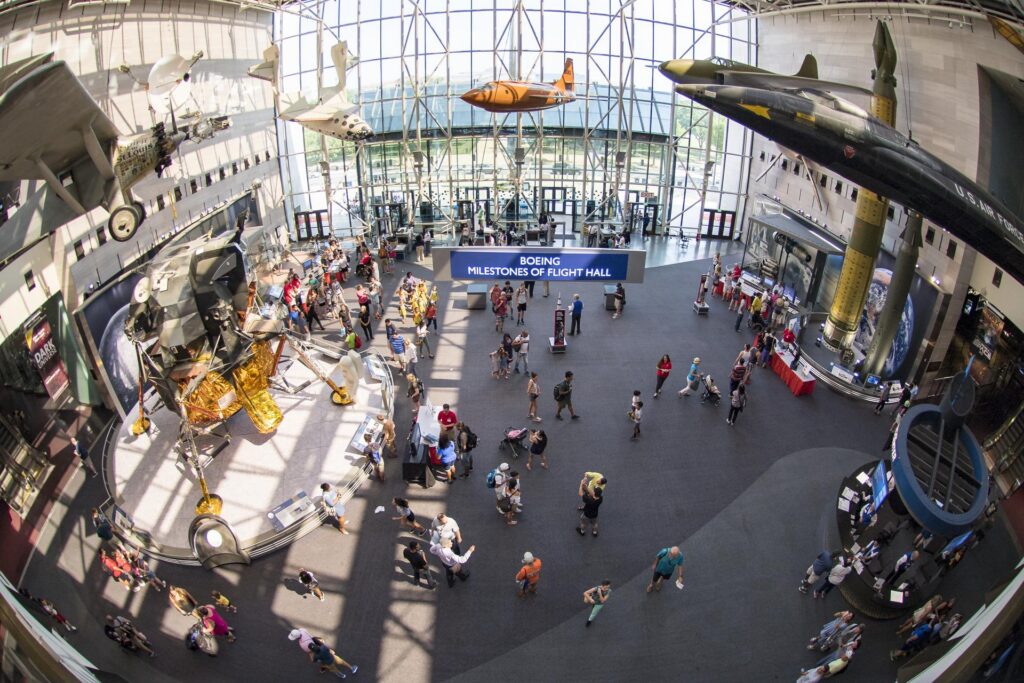
July 1 — The Smithsonian Institution’s new National Air and Space Museum opens as part of the U.S. Bicentennial celebrations. For the ceremony, a signal relayed from NASA’s Viking 1 spacecraft orbiting Mars activates a metal arm to cut a red, white and blue ribbon. The $41 million facility replaces the former National Air and Space Museum that had been housed for years in the Smithsonian’s adjacent Arts and Industries Building. New York Times, July 2, 1976, p. B12.
July 6 — The Soviet Union’s Soyuz 21 is launched from Baikonur cosmodrome to carry out “joint experiments” with the Salyut 5 space station already in orbit. Col. Boris Volynov, who flew on Soyuz 5 in 1969, commands the mission accompanied by flight engineer Lt. Col. Vitaly Zholobov. Soyuz 21 docks with the station on July 7 and remains there for 48 days. The cosmonauts carry out experiments to study fish behavior, melt metal and grow crystals in zero-g, as well as other environmental studies. New York Times, July 8 1976; Spaceflight, January 1977, pp. 36-37.
July 19 — U.S. President Gerald Ford issues an executive directive designating July 20 as “Space Exploration Day.” This date coincides with the seven-year anniversary of the Apollo 11 moon landing, as well as the expected touch down of NASA’s Viking 1 lander on Mars. NASA Release 76-133.
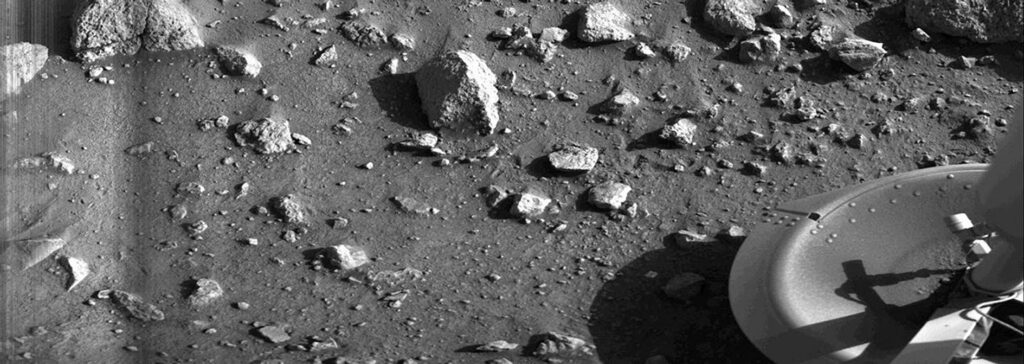
July 20 — NASA’s Viking 1 lander becomes the first spacecraft to land successfully on Mars. Touching down at the western edge of the Chryse region, its primary goals include collecting samples of Martian soil and attempting to detect evidence of life. Viking 1 also marks the first transmission from the surface of another planet. NASA, Astronautics and Aeronautics, 1976, pp. 148, 153-157.
July 27 — The Soviet Union has launched the Intercosmos 16 satellite, the newspaper Tass reports. The spacecraft carries scientific instruments developed by Czechoslovakia, the German Democratic Republic and Sweden to study ultraviolet and X-ray radiation from the sun and its effects on the upper atmosphere. NASA, Astronautics and Aeronautics, 1976, p. 163.
2001
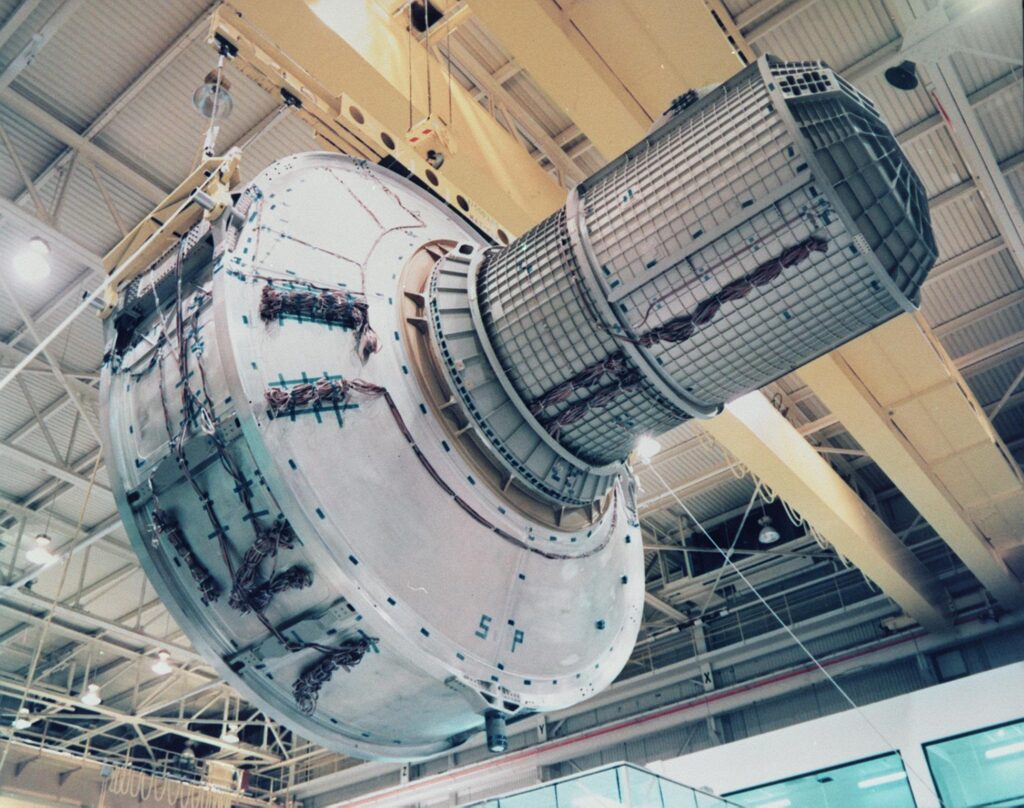
July 12 — NASA’s space shuttle Atlantis lifts off from Cape Canaveral, Florida, with a crew of five to deliver the Quest airlock to the International Space Station. This module permits astronauts to access space without needing a shuttle. The STS-104 mission lasts just over 12 days. NASA, Aeronautics and Astronautics: A Chronology, 2001-2005, pp. 27-28.
July 17 — British Airways tests a modified Concorde, the first supersonic flight for these planes since last year’s Air France crash that killed 113 people near Paris. The aircraft takes off from London’s Heathrow airport, flies almost to Iceland and then lands near Oxford, England, after roughly three and a half hours in the air. United Press International, July 17, 2001. The Guardian, July 17, 2001.
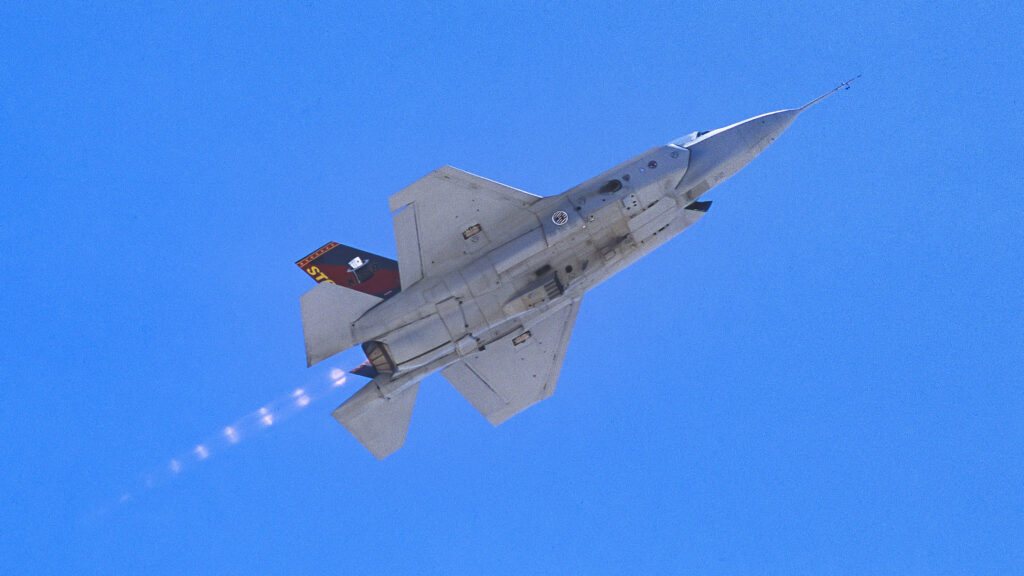
July 20 — The Lockheed Martin X-35B demonstrator completes “Mission X,” becoming the first aircraft to complete a short takeoff, level supersonic flight, and vertical landing all in a single flight. Smithsonian Air & Space Museum webpage, Lockheed Martin X-35B STOVL.
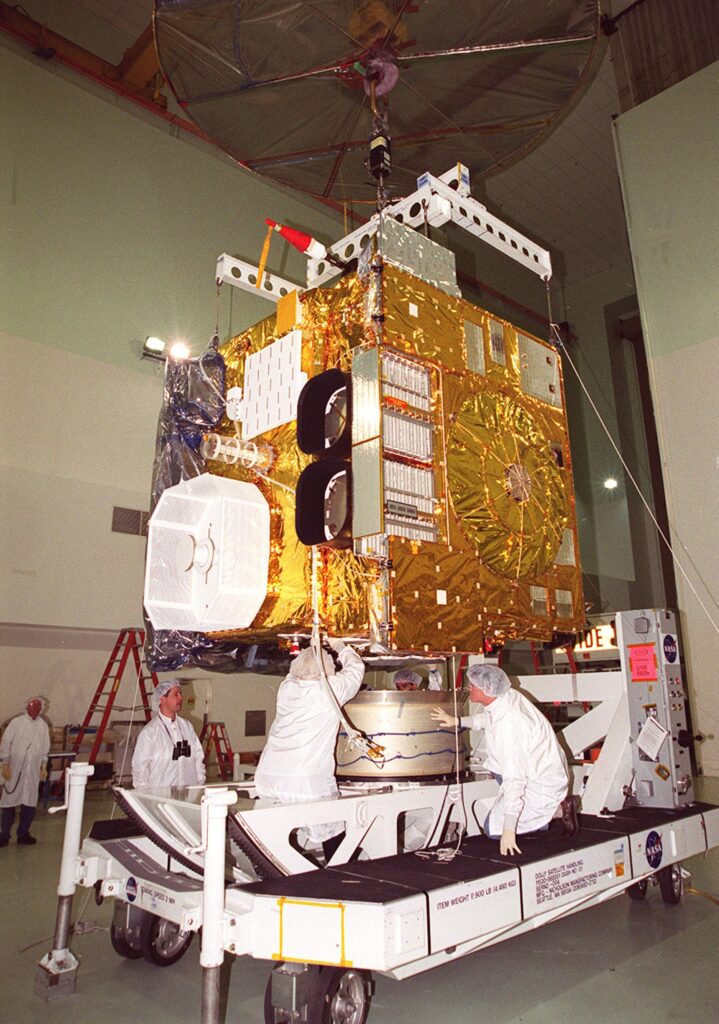
July 23 — An Atlas II rocket launches NOAA’s GOES-M weather satellite, later dubbed GOES-12. Part of the Geostationary Operational Environmental Satellites program, the spacecraft will spend two years in on-orbit storage before entering operations to monitor severe weather events. GOES-12 will go on to operate for a decade, outliving its design life. SpaceNews, July 23, 2001. NOAA news release, Aug. 19, 2013.