

1926
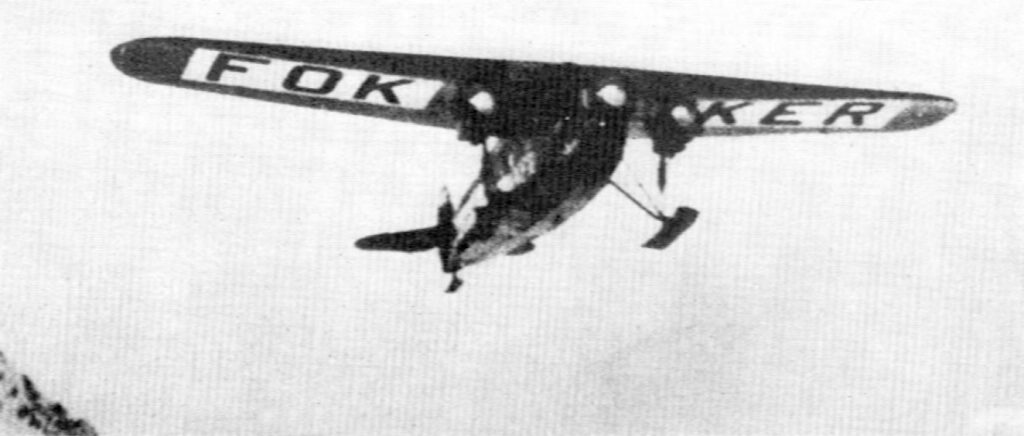
May 9 — U.S. Navy Lt. Cmdr. Richard Byrd completes what he claims is the first flight over the North Pole. His Fokker Trimotor, with pilot Floyd Bennett at the controls, reaches the pole at 9:04 a.m. Greenwich time. After circling the Pole for about 14 minutes at an altitude of roughly 2,000 feet, the aviators return to their base at Kings Bay, Spitsbergen, completing the round trip in 15.5 hours. Initially under dispute, Bryd’s claim is later verified by the National Geographic Society after a review of his navigational records. Aviation, April 19, 1926. Aircraft Yearbook, 1927, pp. 179-181.
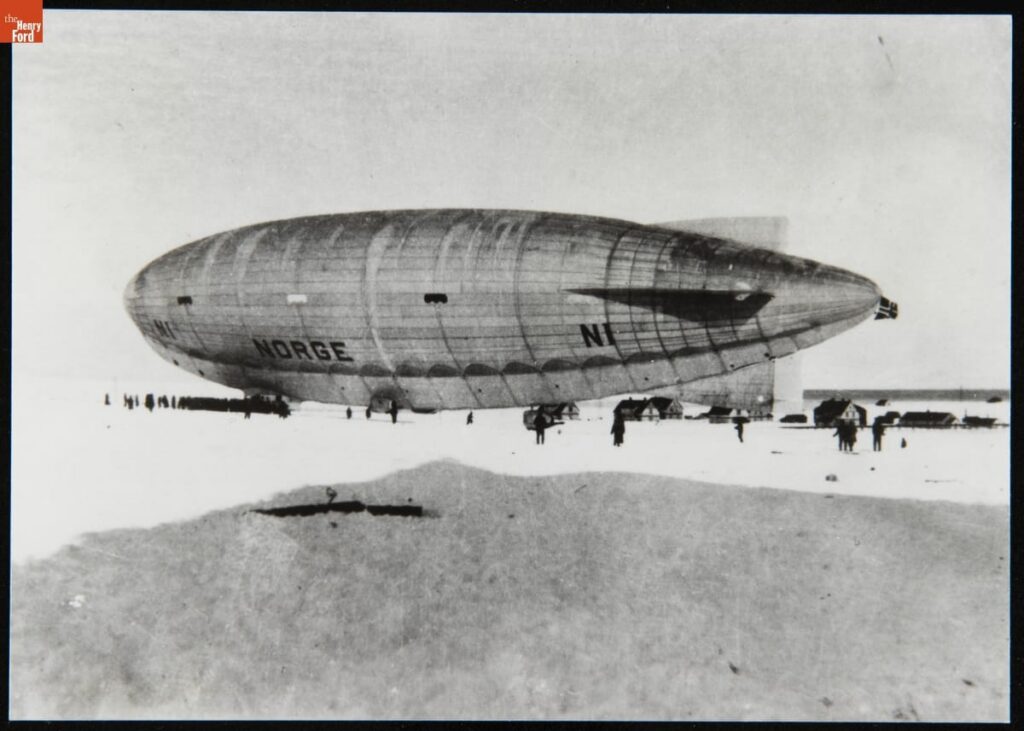
May 12 — The Norge N-1 semi-rigid dirigible crosses the North Pole, the first fully documented flight of its kind. The airship is under the command of Italian Col. Umberto Nobile, the designer, pilot, and constructor of the ship; American Lincoln Ellsworth as navigator; and Norwegian explorer Capt. Roald Amundsen, who officially leads the trans-Arctic expedition. The Norge departs Spitsbergen on May 11 and crosses the pole about 15 hours later. The crew drops several flags — U.S., Norwegian and Italian — and broadcasts a message from the ship’s Marconi radio transmitter. Aviation, April 26, 1926, pp. 624-626.
May 20 — U.S. President Calvin Coolidge signs the Air Commerce Act into law, introducing regulations to the budding civil aviation industry. The law directs the Commerce Department to certify aircraft for airworthiness and is a predecessor to the Federal Aviation Act of 1958 that creates the Federal Aviation Administration. U.S. Air Services, July 1926, pp. 22-24.
May 30 — Fourteen balloons representing seven nations enter the lists of the Gordon Bennett Cup race in Antwerp, Belgium. Ward Van Orman of the U.S. takes first place, flying 864 kilometers in the Goodyear Tire and Rubber Co.’s Goodyear III balloon. Second in the race is the U.S. Army Air Corps balloon S-16, piloted by Capt. Hawthorne Gray. Aviation, June 28, 1926, p. 982; U.S. Air Services, July 1926, p. 36.
1951
May 14 — U.S. aviator Max Conrad flies from Los Angeles to New York in 23 hours, 4 minutes, 31 seconds in a modified Piper Pacer, a new unofficial record for nonstop transcontinental flight by a light plane. Aircraft Yearbook, 1951, p. 320. Aviation Week, May 21,1951, p. 7.
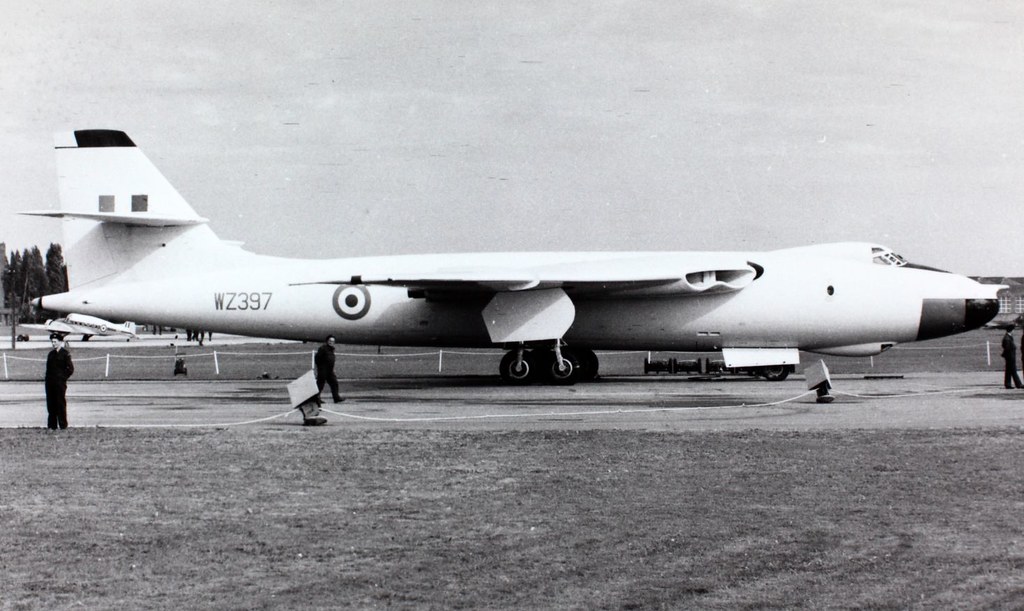
May 18 — The U.K.’s first four-jet bomber, the Vickers Type 660, makes its first flight. This is a prototype of the Valiant, which is to replace the Avro Lincoln and Boeing B-29 bombers in service with Bomber Command. The design uses an all-metal stressed-skin construction with a sweptback wing. William Green and Roy Cross, The Jet Aircraft of the World, p. 124; Aviation Week, June 4, 1951, p. 15.
May 26 — Lincoln Ellsworth, a U.S. aviator known for his polar flights, dies at 71 in New York. Ellsworth was the navigator for Roald Amundsen’s 1925 flight, the first attempted aerial crossing of the Arctic. The following year, Ellsworth crossed the Arctic Ocean with Amundsen in the semi-rigid airship Norge, and in late 1935 made a 3,700-kilometer survey flight across Antarctica in a Northrop Gamma with pilot Herbert Hollick-Kenyon. Flight, June 1, 1951, p. 636.
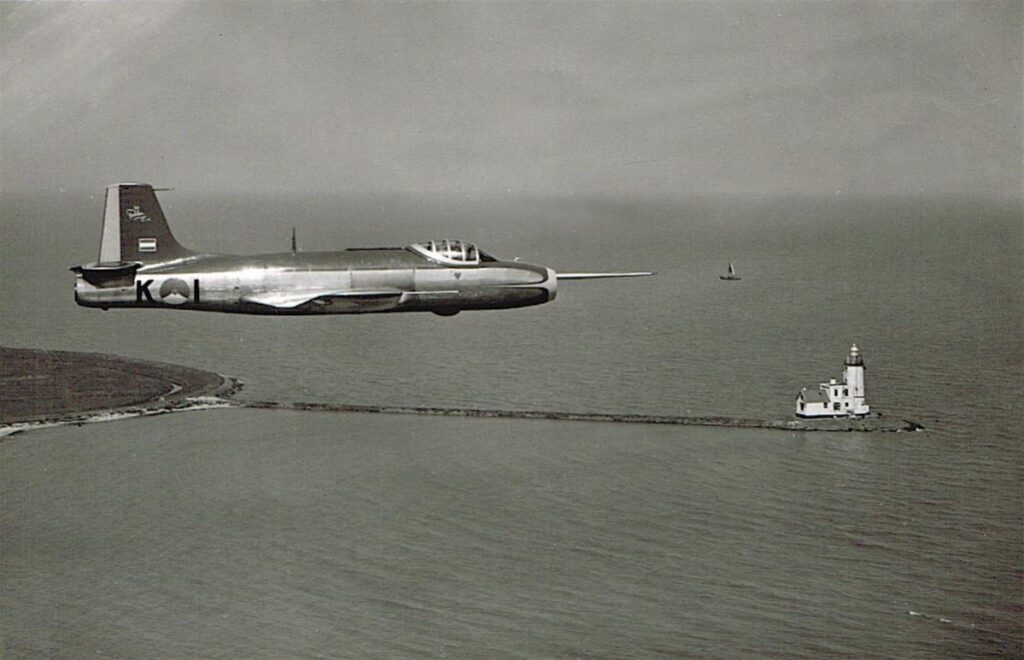
Also during May — The first Fokker S.14 Machtrainer prototype makes its inaugural flight. This is the first jet-propelled aircraft designed from the outset for training new pilots in differences in flying technique between piston-engined and jet-propelled aircraft. Powered by a Rolls-Royce Derwent 8 turbine, the trainer has side-by-side pupil and instructor seats. The Royal Netherlands Air Force orders a production series of 20 machines. William Green and Roy Cross, The Jet Aircraft of the World, p. 123.
1976
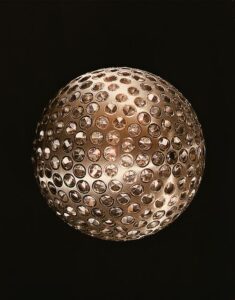
May 4 — NASA’s first Laser Geodetic Satellite is launched on a Delta rocket from Vandenberg Air Force Base, California, into a near circular orbit. Known as LAGEOS-1, the 60-centimeter-diameter sphere is the first satellite dedicated to testing high-precision laser ranging. It is covered in hundreds of reflectors made of silica glass, designed to reflect laser beams directed at it by ground stations to detect movements of the Earth’s surface as small as 2 cm. LAGEOS-1 and its twin, LAGEOS-2, are to provide data for earthquake research, among other purposes. NASA Release 76-67.
May 12 — NASA announces the first use of a satellite to relay medical data from a moving ambulance to a hospital receiving station. Developed by the National Space Technology Laboratories in Mississippi and General Electric’s Science Services Laboratory, the special portable transmitter and antenna continuously communicate voice and medical data, including electrocardiograms. NASA Release 76-86.
May 19 — International golf champion Arnold Palmer concludes an around-the-world flight in his “Freedom’s Way USA” Learjet, setting a speed record for a circumnavigation with a business jet. Palmer and the other two crewmembers cover 37,000 kilometers in 57 hours, 25 minutes, 42 seconds. They make multiple stops, at each one presenting U.S. bicentennial flags and bronze replicas of the Declaration of Independence. National Aeronautic Association News, July 1976, p. 1.
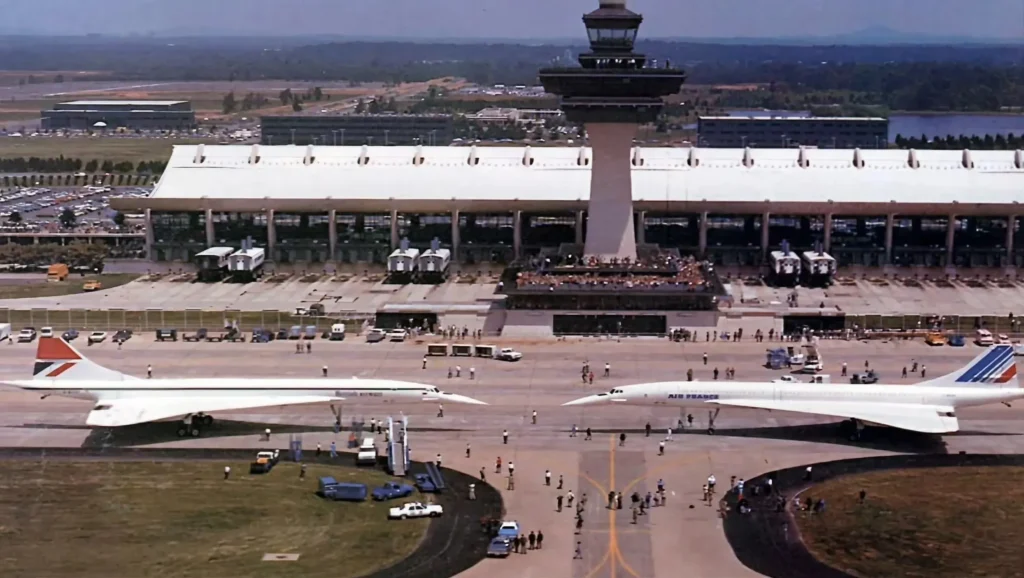
May 24 — Concorde airliners operated by Air France and British Airways touch down at Dulles International Airport outside Washington, D.C., commencing commercial supersonic trans-Atlantic service. A large crowd gathers to watch the planes, which arrive about two minutes apart. The Air France flight carries 80 passengers; the British Airways flight carries 75. Aviation Week, May 24, 1976, p. 1. New York Times, May 25, 1976, p. 1.
2001
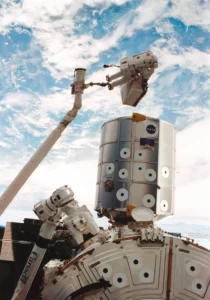
May 1 — The space shuttle Endeavour lands at Edwards Air Force Base in California, concluding the 11-day STS-100 mission that delivered the Canadarm2 to the International Space Station. This 17-meter-long robotic arm, built by the Canadian Space Agency, plays an integral role in station maintenance, grappling arriving cargo spacecraft and other operations. NASA, Aeronautics and Astronautics: A Chronology, 2001-2005, p. 18.
May 17 — British pilot Polly Vacher touches down in Birmingham, England, becoming the first woman to circumnavigate the globe in a small plane. She took off in January in her Piper PA-28 Dakota, eastbound on a trip to raise awareness for the Flying Scholarships for the Disabled charity. The longest leg of her route was the 16-hour flight from Hawaii to Oakland, California. Polly Vacher, Wings Around the World.
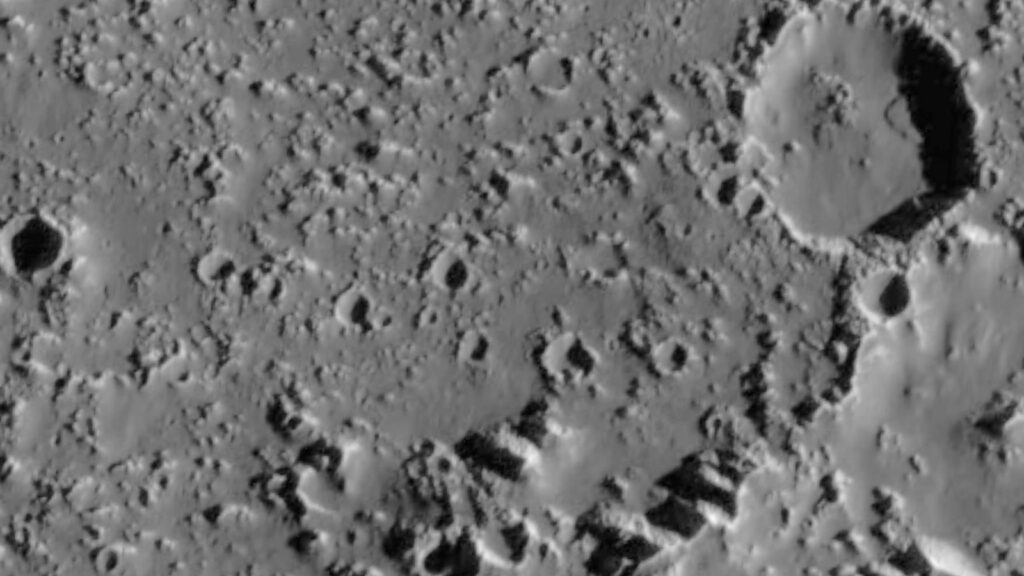
May 25 — NASA’s Galileo probe flies 123 kilometers above the surface of Callisto, the spacecraft’s closest approach to any of the Jovian moons since it began orbiting Jupiter in 1995. This flyby was intended to capture close-up images of Callisto’s cratered surface and provide a gravity assist that sets up a flyby of another moon, Io, in August. NASA, Aeronautics and Astronautics: A Chronology, 2001-2005, p. 22.