
ThinkOrbital preps for first on-orbit X-ray scans


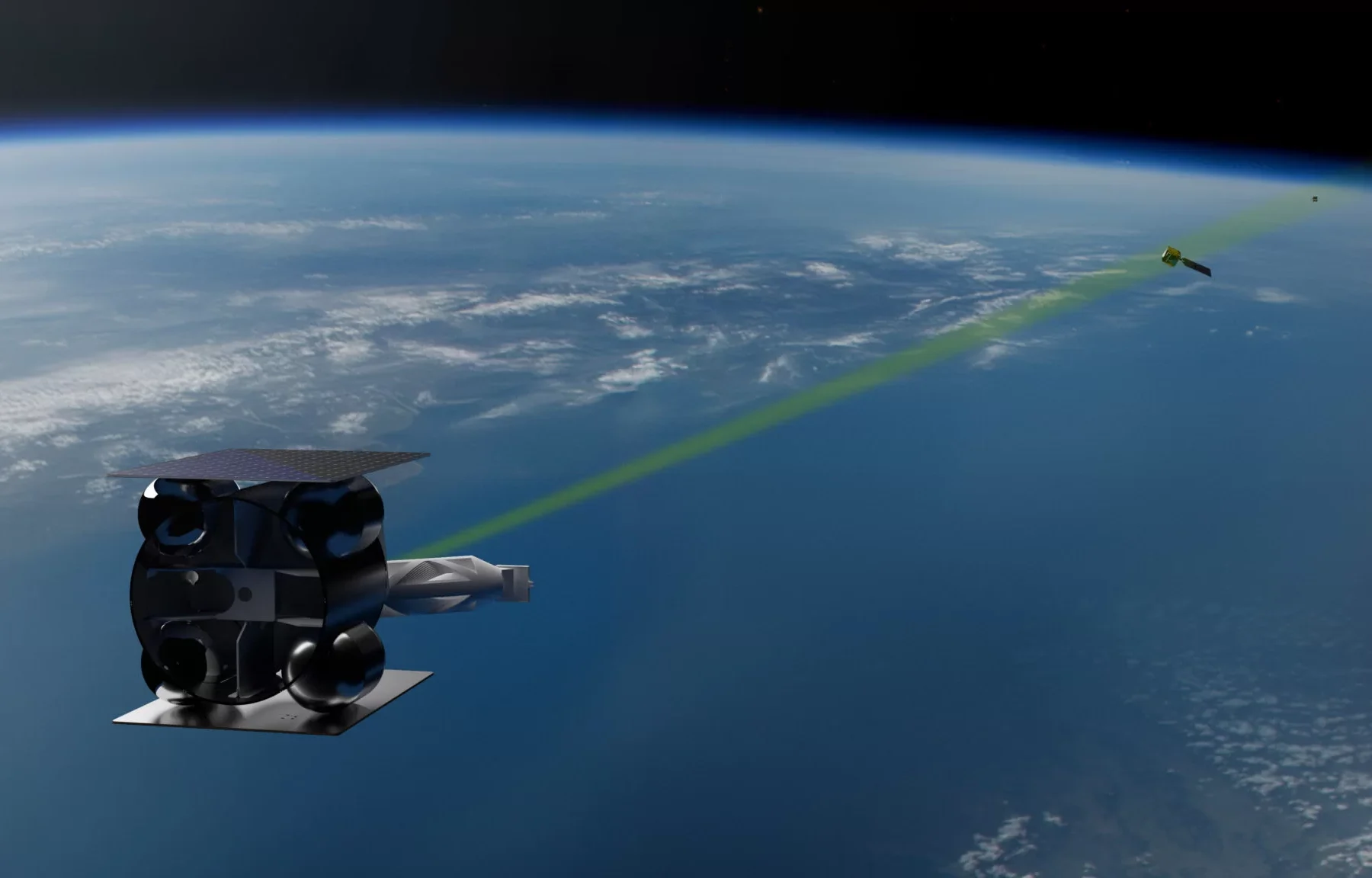
As the U.S. Space Force seeks ever-improved space domain awareness, one company hopes to offer particularly detailed images via a new service: long-distance X-ray scans. ThinkOrbital, a Colorado-based startup, plans to test this technology on orbit for the first time early next year.
When Lee Rosen co-founded ThinkOrbital in 2021, the company focused on building large space infrastructure but, in the process of testing its electron beam welding technology, realized it could generate X-rays.
“It’s a weird physics phenomenon,” said Rosen, who’s also CEO. “We started to do some experimentation with that in our vacuum chambers here in Boulder, and not only could we see through the welds that we had just done, but we could see into the vacuum chamber.”
“That’s kind of where my military background took over,” he recalled.
A new question emerged: What if satellite operators could use X-rays to look inside other spacecraft? That idea led the company to develop ThinkX, a device intended to take X-rays on orbit from distances of up to 10 kilometers.
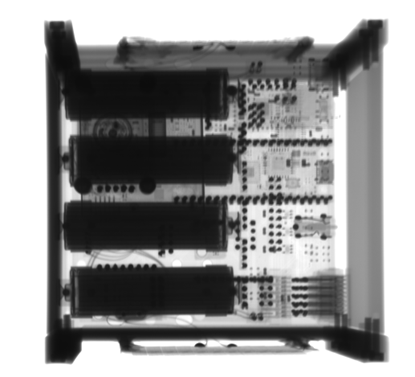
ThinkX is designed to work similarly to terrestrial X-rays. Two packages, a source and a receiver, will be integrated onto highly maneuverable satellites, launched into orbit and positioned on either side of a target object. While the satellites stay as still as possible, X-ray beams will be sent from the source to the receiver, processed into an image and sent to the ground. The result will look like a regular X-ray and show “the different materials that are on board the [target] satellite,” Rosen said.
However, making this happen requires solving three key technical challenges.
First, “I need a highly maneuverable, rendezvous and [proximity operations] host satellite” to get the X-ray technology in position and stabilized, he said. “There are several that are coming online.”
Second, the X-rays need to go from the source through the target and reach the receiver without getting too weak to be useful. “Energy is constantly dissipating out the farther you go,” Rosen said. For this reason, X-rays are traditionally done in close proximity, but the “international norm for space is [to] stay outside the 10-km bubble.”
Objectively, that’s not a huge distance, “but it’s still pretty far for an X-ray,” he added.
To solve this, “we have to start with a very narrow pencil beam of X-rays, and the technology to build that is something that we have as a proprietary capability,” Rosen said.
Finally, the entire X-ray system needs to be “small enough to fit on a satellite,” which is difficult when “we have a pretty high-power X-ray,” Rosen said.
The first ThinkX demonstration will be funded partly by ThinkOrbital and partly by a Tactical Funding Increase contract from Space Force’s Space Systems Command and U.S. Space Command. The company did not disclose the contract’s value.
For this mission, the ThinkX receiver is scheduled to be launched in July aboard the first water-propelled spacecraft from Argo Space, a startup based in El Segundo, California.
Robert Carlisle, co-founder and CEO of Argo, said “incorporating customers on the first mission — certainly you have to be kind of risk-matched. All these people are sophisticated. They understand the difficulties and the risks associated with the first flight of any new spacecraft.”
The second part of the demonstration, the ThinkX source, is to be launched in January. Rosen said the company has not finalized the host satellite.
Once both spacecraft are in low-Earth orbit, they will rendezvous to be 1 km apart and scan a target provided or selected by Space Force.
Rosen expects the X-ray scan itself to take “single digit minutes,” but the mission’s full duration will depend on the launch schedules and rendezvous timelines. The ThinkX test unit is designed to last “well over a year,” he said.
If all goes well, ThinkOrbital plans a follow-on demonstration to test its X-ray technology at a 10-km distance.
For now, Rosen sees the U.S. military as the technology’s main customer, allowing “us the ability to actually look inside our adversaries’ capabilities and try to understand what those capabilities are and what the intent of that spacecraft might be.”
On-orbit X-rays could also be useful for commercial insurers or anomaly resolution, “but I think the military adopting it first and using it, showing its usefulness, will be super important,” he said.