Joint DARPA-Northrop robotic servicing spacecraft to launch in late July


The first U.S. spacecraft capable of robotically servicing satellites in geosynchronous orbit is slated to launch July 21 from Cape Canaveral Space Force Station in Florida, Northrop Grumman announced this week.
The 4,400-kilogram spacecraft is the product of DARPA’s nearly decade-long Robotic Servicing of Geosynchronous Satellites program, dubbed RSGS, and a joint public-private partnership with Northrop Grumman subsidiary SpaceLogistics. The goal is to establish on-orbit servicing as a way of extending the life of expensive or otherwise hard-to-replace satellites.
“This is really a unique and first-of-its-kind spacecraft,” said Cassie Wong, Northrop’s director of logistics and servicing, in a mid-June interview.
A DARPA spokesperson said the agency has spent $420 million on the RSGS program. Wong declined to provide specifics on Northrop’s portion of the funding, but noted the company has put “hundreds of millions into servicing technology” over “the last couple of decades.”
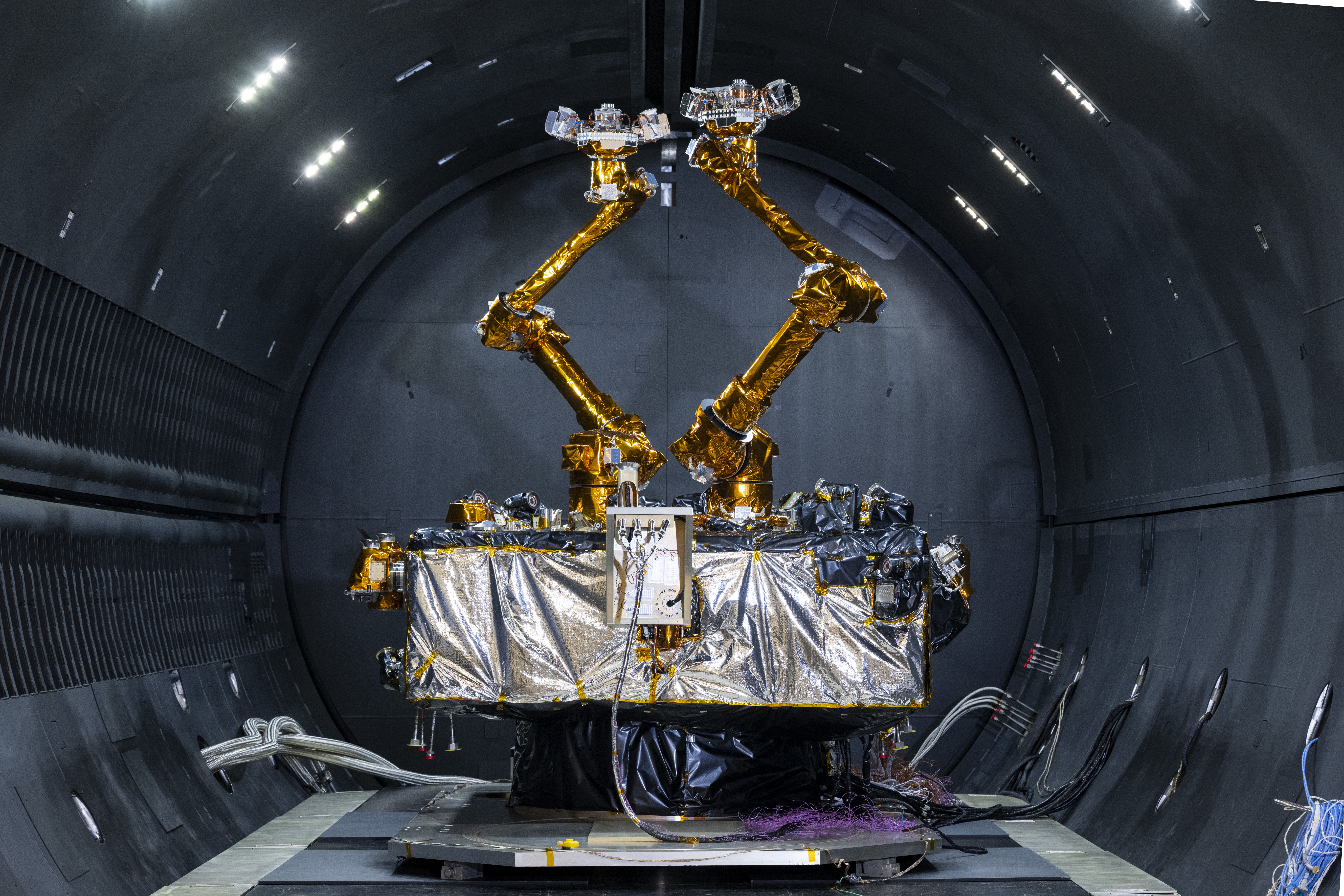
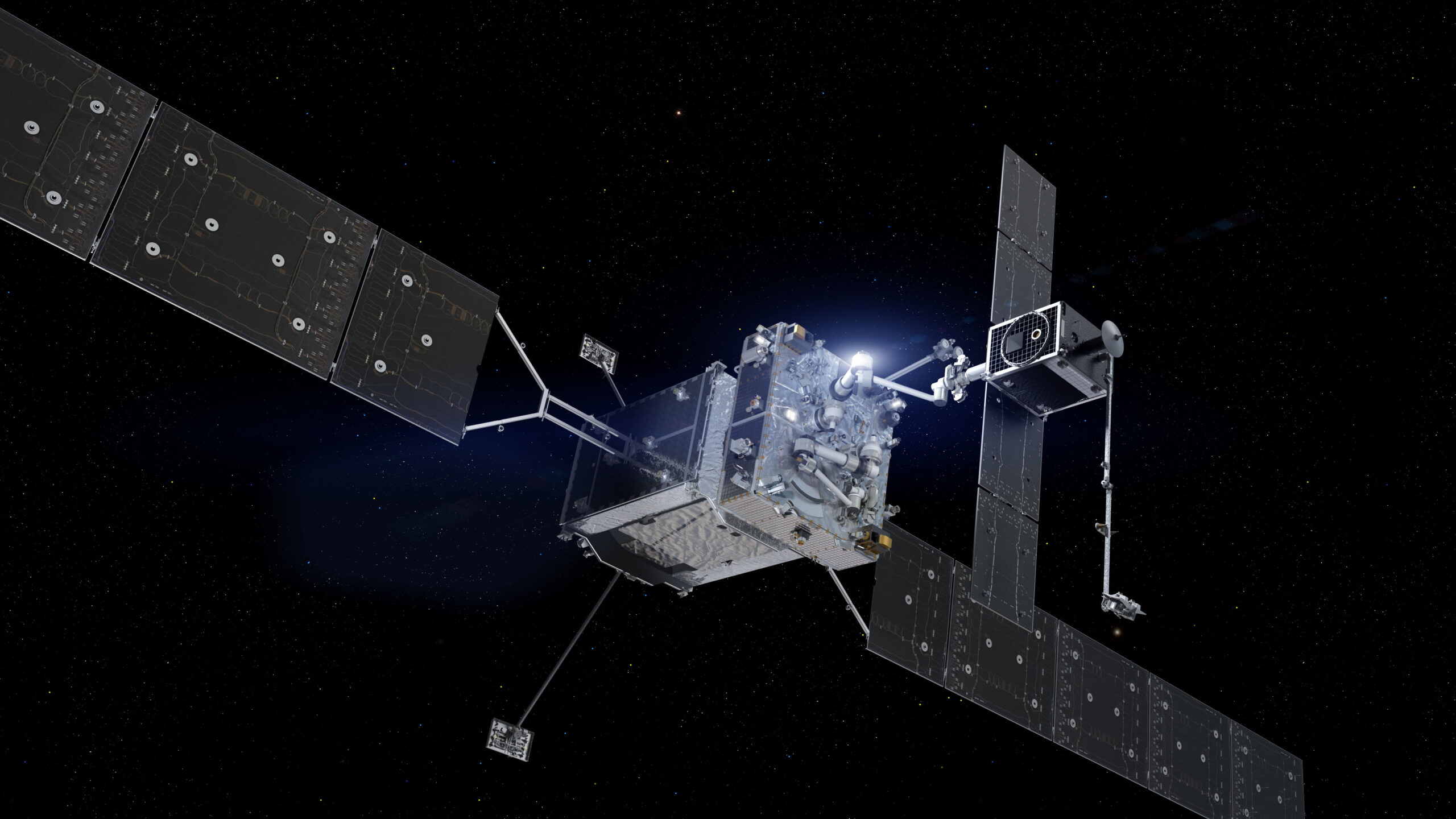
For the program, a SpaceLogistics MRV, short for Mission Robotic Vehicle, was equipped with two “very dexterous” robotic arms, James Shoemaker, DARPA’s RSGS program manager, told me in early June.
The MRV and its RSGS payload will be sent into orbit aboard a SpaceX Falcon 9, alongside three fuel “jet packs” provided by Northrop. It will take the four spacecraft approximately 14 months to reach geosynchronous orbit, Shoemaker said.
Once in GEO, the cargo van-sized MRV is to collect and install the mini fridge-sized fuel packs one at a time using its 3-meter-long robotic arms, Wong said. Two of the packs are to be installed on commercial satellites: one owned by SES of Luxembourg, the other from Optus, an Australian satellite company.
Northrop declined to provide details on the plans for the third fuel pack and any additional MRV activities.
In addition to installing the packs, Wong said the MRV’s arms will be able to “inspect satellites, [conduct] repairs, add additional auxiliary payloads or power to satellites,” noting “it’s just [up] to our imagination.”
Shoemaker added “you can launch new tools after [it’s on] orbit if you have a specialized mission you need to do.”
Notably, the arms are designed to “work on satellites that were not prepared to be serviced,” such as “this current generation of GEO satellites,” Shoemaker said. This required DARPA, in collaboration with the U.S. Naval Research Laboratory, “to make the robotics a little more complex, a little more capable.”
Building the robotics was the most challenging task for the RSGS team prior to launch, Shoemaker said, but post-launch, the hardest part will be “actually operating in zero-G.”
With this in mind, ground operators plan to use “baby steps,” Shoemaker said. When the RSGS arms first grab on, “you do a range of small motions to try to calibrate the system and make sure the responses” are as expected. If not, “you change the gains on the controllers and things like that.”
To prepare, Wong said the ground team will “continue to rehearse and test out our robotics and our installation procedures” while the spacecraft is in transit to GEO. For this, ground operators will rely on simulations based on data from other Northrop servicing spacecraft and from the MRV-RSGS ground testing.
Although Northrop will own and operate the combined MRV-RSGS spacecraft, DARPA will “kind of look over the shoulder while they do their first servicing,” Shoemaker said. The company also has “to do a set of activities to close out the DARPA objectives for the demo mission, and then we basically hand over all the keys to them, and they’re responsible for sending us data on every subsequent servicing mission they do.”
The MRV-RSGS spacecraft has an intended design life of 10 years. Unlike other DARPA programs, “this is closer to being an operational system than just a tech demo,” Shoemaker said.
“This is kind of the first step for expanding the scope of what you can do in orbit,” he added.