OPINION: The moon is stuck in a Greenwich v. Paris moment

By Ryan Park
Disclaimer: The views expressed in this article are those of the author and do not necessarily reflect those of JPL.
In the late 19th century, travelers crossing the Atlantic faced a confusing problem. Depending on the map, “zero longitude” ran through Greenwich near London or through Paris. A navigator switching from a British almanac to a French one, for instance, could suddenly find their reported position shifted. The confusion ended at the 1884 International Meridian Conference in Washington, D.C., when the world adopted Greenwich as the global standard, saving decades of duplication, expense and inefficiency.
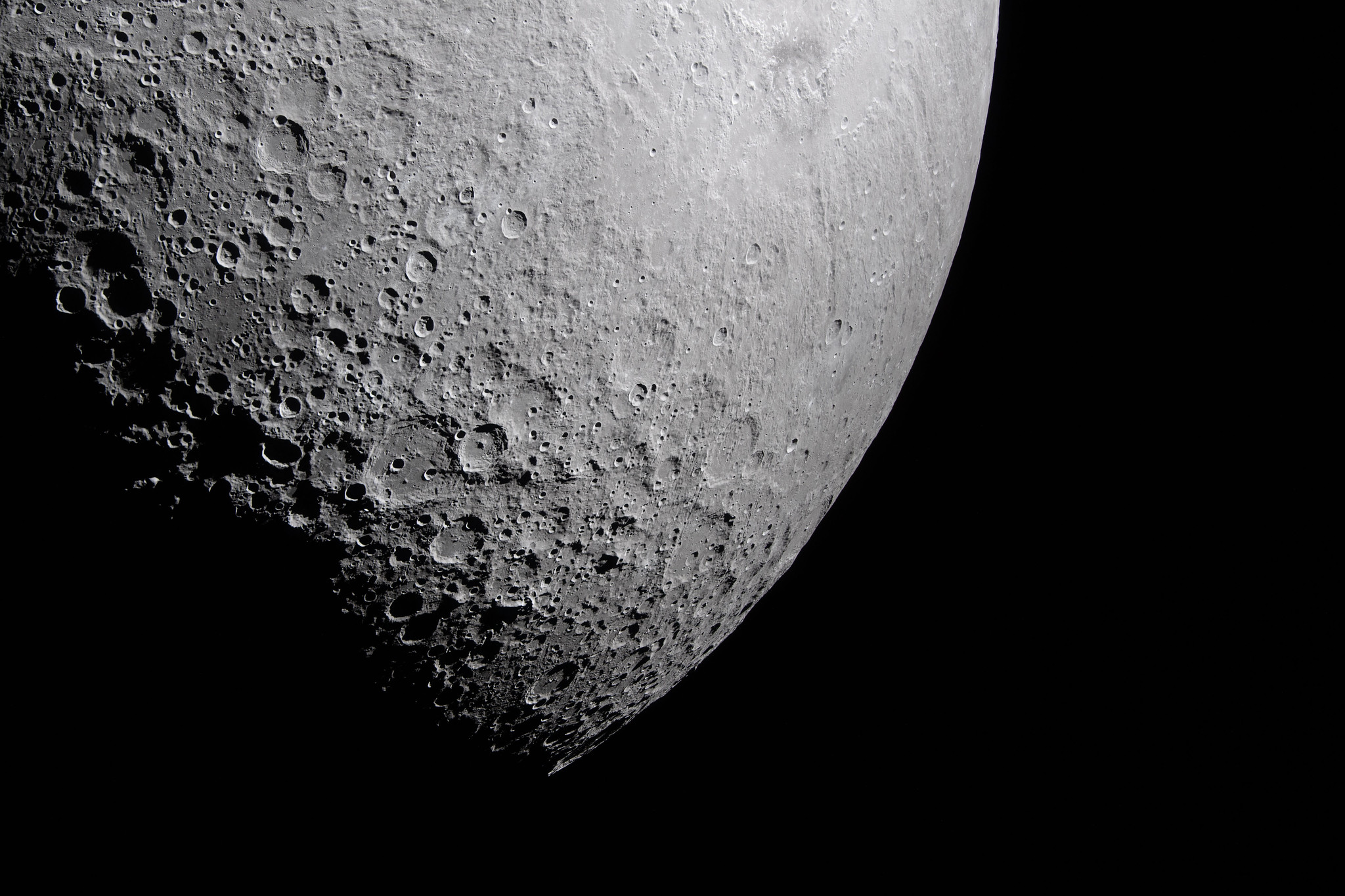
Today, as nations and industries prepare to return to the moon, we face a strikingly similar dilemma. The moon, like Earth in the 1800s, is becoming a place where humans will travel, build, explore and possibly even live. Yet two competing “prime meridians” remain in use, representing two different reference frames. Unless this is settled now, we risk wasting resources, fragmenting data and, in the worst case, endangering future astronauts. This is not a physics problem; it is a problem of coordination and policy.
Every map, rover drive, landing trajectory and geological study relies on a reference frame, a shared definition of coordinates that specifies where zero lies and how positions are measured. Currently, the moon has two such frames: the Principal Axis (PA) frame and the Mean Earth (ME) frame.
The PA frame is defined by the moon’s gravity field, an internal property inferred from tracking and orbital measurements. The ME frame was initially based on the moon’s orbit around Earth and was later refined using the coordinates of lunar retroreflectors, bright and reliable beacons for laser range measurements from Earth and orbit.
Both frames can pinpoint locations to within a meter. However, the net rotation between them corresponds to positional offsets of up to about half a mile (roughly 875 meters). For a rover or an astronaut, landing that far off target is not a minor inconvenience; it could jeopardize crew safety and mission success.
When a celestial body is first mapped, a PA frame is often adopted, assuming a roughly homogeneous interior. As higher-resolution data become available, the frame is redefined relative to surface features. The updated frame remains consistent with the older PA frame but is anchored to observable surface features that can be reliably tracked. After decades of high-resolution mapping, the moon now benefits from a frame tied to observable surface features for operational use.
Earth’s modern terrestrial reference frame works the same way, relying on continuously monitored surface stations. The ME frame mirrors this approach, anchoring coordinates to measurable features that can be tracked and verified over time. For precision navigation, surface operations, mapping and construction planning, a stable and directly observable frame is indispensable.
In 2008, representatives from NASA and several other space agencies endorsed the ME frame as the standard for lunar mapping and lunar operations. The International Astronomical Union’s Working Group on Cartographic Coordinates and Rotational Elements reached the same conclusion in 2011. Nearly all lunar maps, geological datasets, digital elevation models and mission archives already use it.
The PA frame is tied to evolving gravity models. It can shift slightly as new data emerge or different techniques are applied. Such evolution is acceptable for internal scientific study, but would complicate navigation, infrastructure planning and long-term lunar development. A frame tied to observable surface features minimizes these risks while providing greater long-term stability for operations.
No current or known mission requires precision beyond what the ME frame provides, and no technical limitations have been identified that would prevent it from supporting future lunar operations. The frame’s accuracy can continue to evolve and improve as new data become available while maintaining compatibility with existing products and archives. The challenge is not capability but coordination. All operational data already exist within the ME frame, and updates can be incorporated without disrupting decades of accumulated observations and mission products.
Some have proposed making the PA frame the universal standard, but this could introduce unnecessary costs and coordination challenges. Even using the PA frame internally while sharing results in the ME frame could introduce subtle but dangerous inconsistencies. Virtually all existing lunar surface data, including maps, images, hazard models and landing analyses, are tied to the ME frame.
Converting the archive would be prohibitively expensive and, in some cases, practically impossible. Printed maps would remain in circulation, published papers would retain their original coordinates and digital archives would require extensive reprocessing and validation. The result would be decades of mixed-reference products, increasing the risk of confusion and operational error.
As humanity returns to the moon through NASA’s Artemis program, international collaborations and commercial ventures, consistency matters more than elegance. A stable, shared reference frame is not merely a scientific preference; it is foundational infrastructure that affects safety, cost and reliability.
Earth learned this lesson in the 19th century. Waiting too long to agree on a prime meridian wasted money and slowed progress until the 1884 conference finally established Greenwich as the global standard. That choice was driven not by physics, but by the necessity of a shared system.
We face a similar crossroads with the moon. While large missions may have the resources to translate between frames and cross-check coordinates, as lunar traffic grows, it becomes increasingly crucial to establish and maintain a single standard.
The simplest, safest and most practical path is to preserve the ME frame as the lunar standard and continue building infrastructure around it, with all operational data shared in the ME frame. This will ensure that the moon becomes a place where exploration science and human life can thrive safely and efficiently.
Ryan Park is a principal engineer and senior research scientist at NASA’s Jet Propulsion Laboratory, an adjunct professor of astronautics practice at the University of Southern California and an AIAA Associate Fellow. His research focuses primarily on orbit determination and planetary science.