

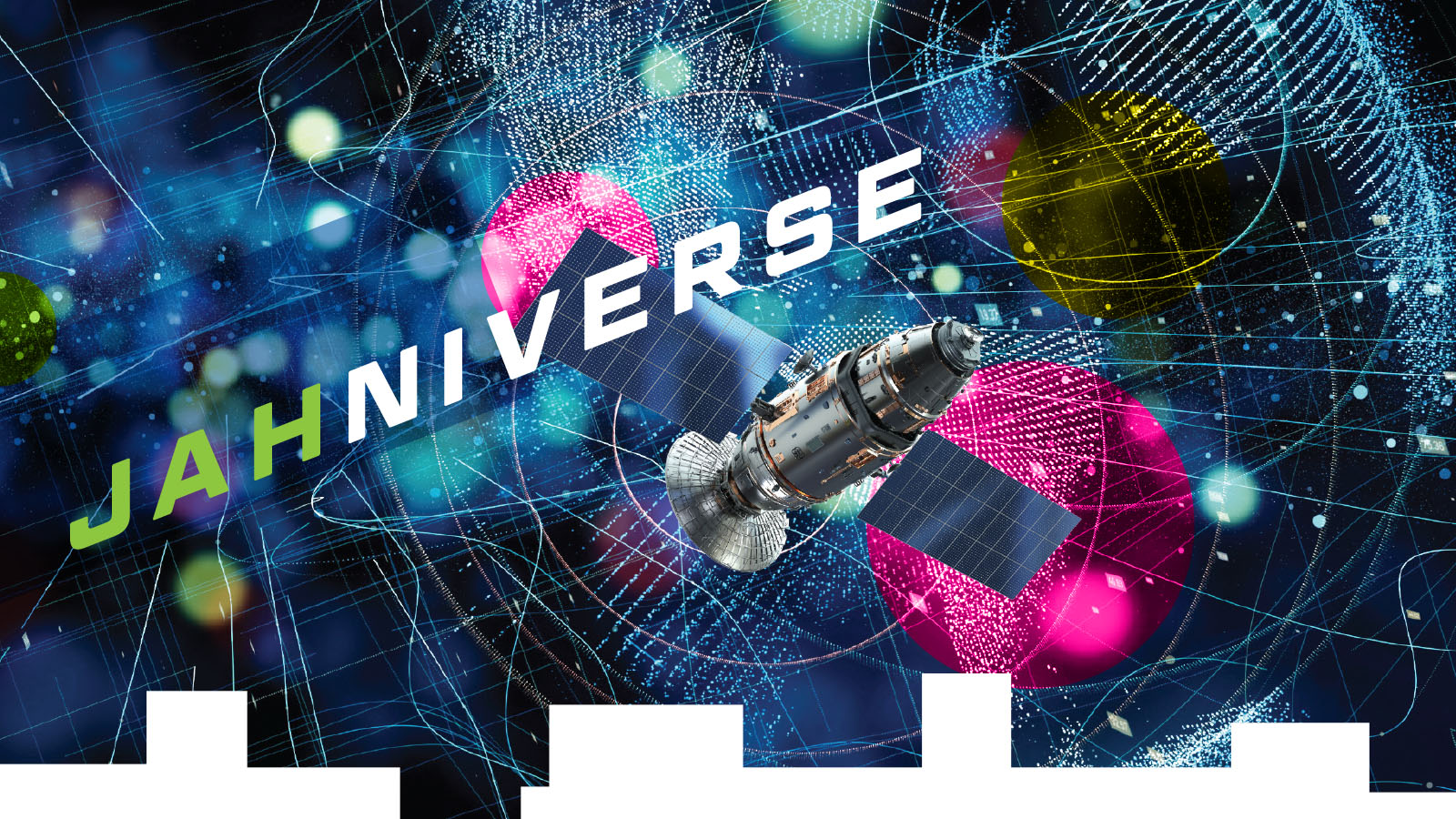
In May, the science academies of the G7 countries — also known as the S7 — provided French President Emmanuel Macron its statement on large satellite constellations to carry into the G7 Summit.
The S7’s working group, of which I was a member, concluded that “the rapid expansion of large satellite constellations, particularly in low Earth orbits (LEO), marks a turning point in humanity’s relationship with near-Earth space.” We recommended the Group of 7, or the G7, establish a permanent international body with broader authority than the International Telecommunications Union that is part of the United Nations and “let an international treaty emerge on these questions.”
None of the nine declarations the G7 leaders issued after their mid-June meeting in Évian were on space. Instead, discussion of satellite constellations would be “directly addressed” during the International Space Summit on Sept. 9-10, the Élysée Palace, Macron’s official residence, said in a statement.
Here’s what that rerouting means, in my view: The political moment the S7 recommendations were engineered for came and went without a leaders’ declaration. The load-bearing venue is now a French-hosted summit focused on the space economy, sovereignty, security and responsible use of space. In other words, while sustainability is on the agenda, it’s not the agenda.
But that doesn’t mean the S7’s work has stopped. In early June, the European Space Agency, the Italian National Research Council and the European Conference for AeroSpace Sciences (EUCASS) convened the second Space Capacity Allocation for the Sustainability of Space Activities workshop. Its purpose was to advance modeling of orbital carrying capacity, the metric at the heart of the S7’s recommendations.
Meanwhile, Italy already has a national space economy law that makes environmental sustainability a licensing criterion and attaches criminal penalties for non-compliance. Whatever one thinks of the industrial politics driving that policy, it demonstrates that a G7 member can act on the concerns driving the S7 statement without waiting for an explicit directive.
And shortly after the S7 recommendations were made public, the National Academies began a workshop process to carry the recommendations into a domestic conversation with real technical depth. It is not yet formalized, and I will not pretend the path from workshop to policy is short. The point is to make sure that regardless of what emerges from the Paris summit, the United States has a coherent scientific voice on orbital sustainability that outlasts any single political moment.
What concerns me is that the Paris summit will likely produce some language on responsible use of space, shaped more by European companies’ anxiety about the market share of SpaceX’s Starlink and other non-European constellations than by the global-commons argument the S7 tried to advance. In that case, “sustainability” would be interpreted to mean European sovereignty in low-Earth orbit, and the more challenging questions related to governance would simply get filed with the previous warnings. If that happens, the September summit will be a missed second chance to meaningfully implement the S7 recommendations on a global scale.
If you are an aerospace engineer, an operator, a policy analyst, a graduate student, you are the people who will populate the workshops the S7 recommendations now depend on. You will write the carrying-capacity models, argue for uncertainty quantification in licensing and hold the line if sustainability is at risk of being watered down to concerns about economic viability.
The S7 statement was written by scientists and delivered to politicians, who have declined to act on it (as of yet). The next chapter belongs to the working scientific community, until governments catch up.
Aerospace America publishes a rich variety of opinions relevant to the future of aerospace. The views expressed are those of the author(s) and do not necessarily reflect those of our publisher, AIAA.