


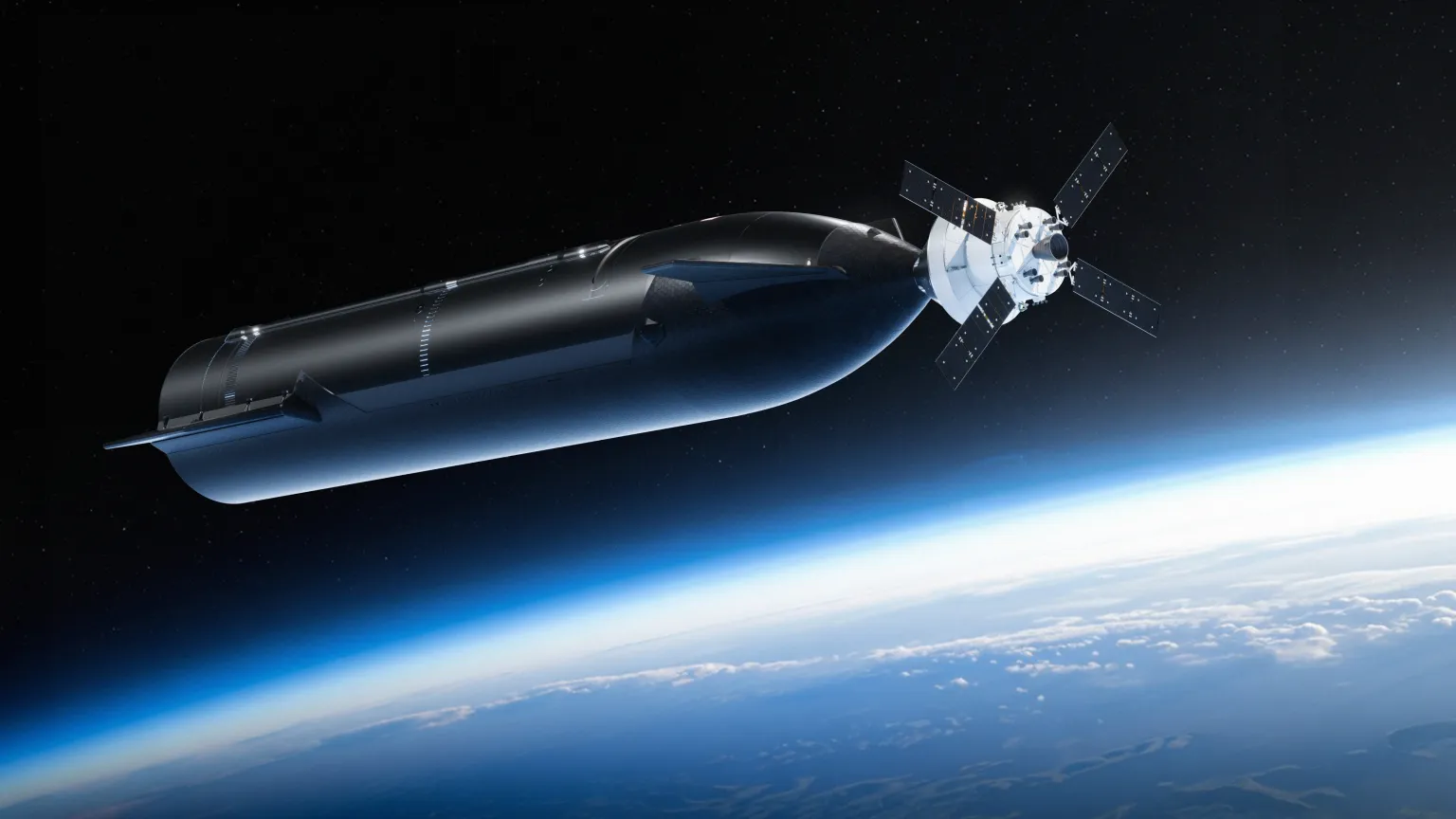
NASA’s Artemis III mission, set to test rendezvous and docking with commercial lunar landers, is on track for a mid-2027 launch, agency officials said Friday.
NASA in late February converted Artemis III from the program’s inaugural landing to a low-Earth orbit demonstration in which an Orion capsule will rendezvous and dock with test articles of the Blue Moon Mark 2 and Starship landers. This Apollo 9-esque mission is meant to demonstrate some of the required operations for crewed lunar landings. NASA is targeting 2028 to conduct the Artemis IV and V landings, and thereafter conduct annual crewed surface missions.
NASA Administrator Jared Isaacman said during a Friday press conference the agency is preparing to integrate the SLS solid rocket boosters with the rocket’s core stage this month, progressing toward a “year-end tanking test and summer 2027 Artemis III launch.” A chart displayed later in the press conference indicated the mission could take place between May and September.
Artemis III is to include several firsts, including the inaugural flights of Blue Origin’s Blue Moon Mark 2 and SpaceX’s Starship landers. Both test articles are “progressing really well,” said Jeremy Parsons, the agency’s Artemis program manager.
He said NASA is working closely with Blue Origin as the company works to rebuild its launch complex after a New Glenn rocket exploded on the pad in May. “Blue Origin is shooting for pad operations to start back up in November, with the first return-to-flight launch of New Glenn soon thereafter,” he said.
“Their design for the Artemis III lander test article is in good shape,” he added.
Meanwhile, he said, SpaceX is analyzing the data from last month’s Starship flight, the first time the design went to orbit, and is “making great progress” in designing and building the passive docking system the test lander will carry for Artemis III. He added the company is targeting “the November time frame” for the next Starship flight.
“Each one of those flights is going to be critical lessons, building confidence, reducing risk toward our lunar missions,” he said.
Parsons also elaborated on the sequence of events for Artemis III, a roughly two-week mission. Plans call for Blue Moon to launch first, followed by the Orion capsule with the four astronauts. Orion will dock with Blue Moon on day three, kicking off two days of “crew operations,” Parsons said, during which two of the astronauts will enter the lander crew cabin and evaluate the life support and other systems.
On day six, the Starship test article will launch from Florida. Orion will undock from Blue Moon and adjust its orbit to rendezvous and dock with Starship, staying connected for about two hours.
“Once Starship operations are complete, the Artemis III crew have the remaining days available for additional test objectives before needing to come home,” Parsons said. Those include evaluating the Orion Crew Survival System suits the astronauts will don in the event the Orion cabin loses pressure.
Those tests, “when combined with the [Blue Moon] Mark 1 landings, with the additional Starship launches, with our uncrewed [lander] demonstrations, make us very comfortable with the risk level we’re going to go take on Artemis IV,” he said.
NASA hasn’t yet determined which lander will be used for Artemis IV, he said, but “regardless of who goes first, both providers are planning for lunar landing missions in 2028.”