

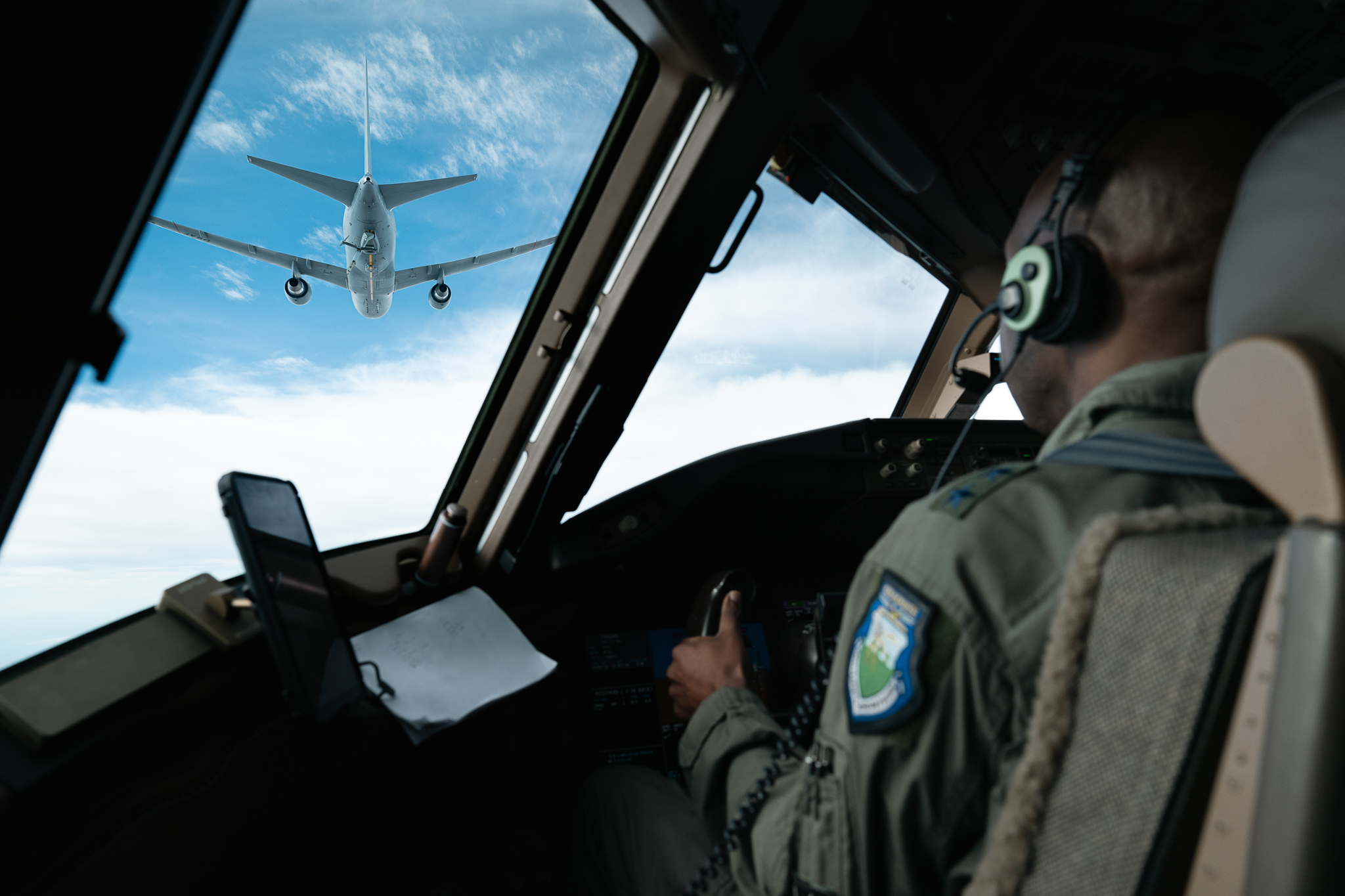
The U.S. Air Force unit responsible for all undergraduate pilot training is nearing completion of a five-year project to move from time- and event-based curricula to a competency-based one.
The new approach is rooted in a concept known as competency mapping, which entails collecting data from past courses, identifying the knowledge, skills and abilities trainees must develop for each airframe and then using the resulting map to inform the course syllabus, said Christy Stephens, chief of curriculum for the unit’s Flying Training Center of Excellence. Previously, the key metrics for pilot readiness were in-flight hours, time spent in a simulator and completion of sequential scenario-driven exercises.
The shift is meant to allow the unit to train more pilots without more resources, according to the 19th Air Force’s commander, Maj. Gen. Travolis Simmons.
The 19th Air Force has spent $20 million on this competency mapping effort since fiscal year 2023, according to a spokesperson. Headquartered at Joint Base San Antonio in Texas, the unit conducts all initial aircrew training within the Air Education and Training Command and accounts for 44% of the service’s total flying hours, according to the command’s website.
Under the new competency-based curriculum, the day-to-day training experience will not be significantly different, Simmons said, but courses will be more targeted and likely shorter.
“It really allows us to be very surgical,” he said, to “really zoom in to the particular competencies and understand better what it is that we’re teaching, why we’re teaching that particular thing and then to spread it out across the syllabi in a more effective way.”
The T-6A Texan II, the first aircraft trainee pilots fly, was one of the initial airframes targeted for competency mapping. By 2025, the team had identified 333 training events and over 4,000 knowledge, skill and ability points, Simmons said. By tracking these competencies rather than total flight time or events completed, they were able to cut syllabus flying hours by about a third and increase pilot throughput by about 20% without increasing the size of the training fleet, he said.
For this mapping, Stephens said the unit is using a slate of software tools and the platform CADRE, an “overarching interface” developed by the Air Force Research Laboratory, which “connects to all of our other databases, to every [simulator], to our reporting databases, to the aircraft grade sheets, things like that.”
To ensure training quality doesn’t slip as course syllabi shrink, the mapping team combined historical data analysis with comparisons of test groups learning in either simulators or live aircraft, Stephens said. This allowed them to identify competencies where simulator training was as effective as in-flight training.
The result is a more flexible curriculum which, “for example, helps us to deal with things like weather issues so we don’t lose those training days,” she said.
The focus now is applying this approach to the rest of the training aircraft, then updating the course syllabi for instructors and trainees, Stephens said.
As of early November, Stephens said competency maps for the C-17 Globemaster III and F-35A Lightning II are complete; the KC-135 Stratotanker is 60% mapped; the F-15 Eagle is roughly 45% mapped; the KC-46A Pegasus is 40% mapped; the C-130J Super Hercules is “kicking off” and the F-22 Raptor and F-16 Fighting Falcon map work is set to begin in December.
“March of ’27 is the end date for the project,” she said, “when each of the airframes I listed will be 100% mapped.”
A spokesperson said that related updates to course syllabi may extend past this and have no specific deadline.
The 19th Air Force’s competency mapping work is part of a broader modernization effort across Air Education and Training Command.
In the future, Simmons hopes to see competency mapping expanded to create “an individualized training signature that’s associated with each human,” which would follow them “from the time they start through the time that they retire.” This would allow for individualized syllabi based on a pilot’s common mistakes or natural strengths.
For now, he said, “this is just a way to produce better aviators faster with fewer resources.”