
Space Force looks to personnel growth to boost integrated testing approach


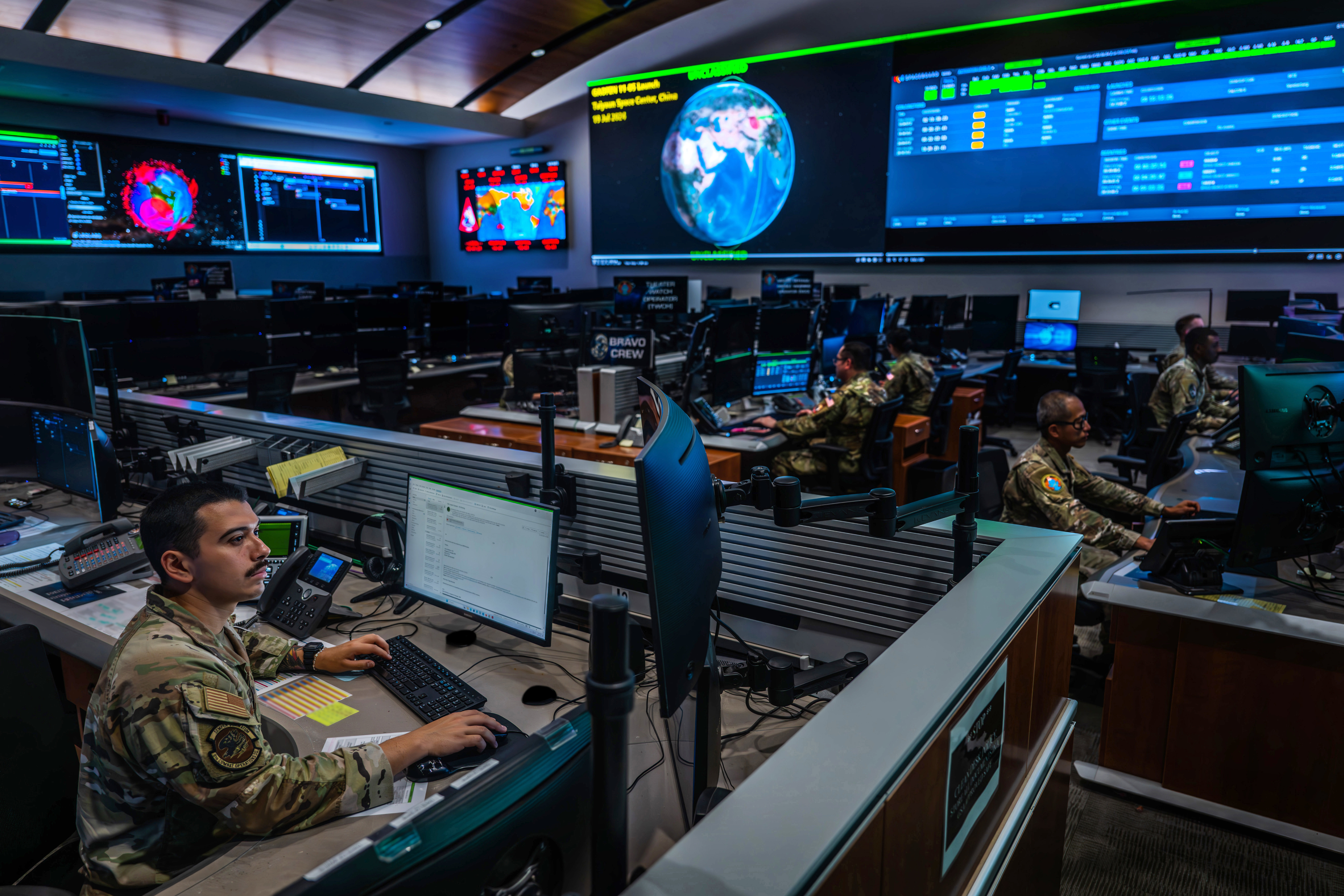
U.S. Space Force officials said their effort to integrate testing processes relies on growing the service’s workforce, as planned in the fiscal year 2027 funding request.
The White House’s budget proposal, released April 3, seeks $70.1 billion for the Space Force — a dramatic increase from the roughly $40 billion the service received in fiscal 2026. The budget requests growth in the Space Force’s personnel spending as well as its research, development, test and evaluation funding.
The traditional Pentagon testing process puts new equipment through developmental testing first to verify it meets technical requirements. Then it’s moved to operational testing, where users can incorporate it into their work before fielding.
But within the Space Force, “we’re streamlining how our test system is, melding the old developmental and operational test silos into an integrated test concept,” Gen. B. Chance Saltzman, chief of space operations, said at an April 1 event.
The old “test model was built for deliberate, sequential evaluation,” Col. Michael Christensen, the Space Force director of test and evaluation, told me in an April 13 interview.
When the Space Force was established in 2019, “we inherited that design model,” Christensen added, but service leaders quickly decided to move toward an integrated test model. The service formed program-specific test teams staffed by users, acquirers, testers, weapons school graduates, cyber operators, intelligence analysts and senior operators, he added.
Moving to the integrated test model has been a yearslong process requiring “a cultural shift,” according to Christensen.
And service leaders say boosting the Space Force’s personnel could help.
“One of the problems,” Lt. Gen Douglas Schiess, the deputy chief of space operations for operations, said at the April 1 event, “is we need more manpower to be able to do that. We’ve got to take operators that maybe have not done [testing] before, get them ready to be with the acquirers and the contractors to be able to do that.”
Christensen said the new test model “requires the growth that’s being forecasted in the Space Force.” To form integrated test forces, “I’ve got to take people off the line. Instead of training for operations, now they’re helping me out with acquisition.”
Space Force officials have said they expect the service to double in personnel within the next five to 10 years.
“The growth that we’re trying to experience is extremely welcomed,” Christensen said. Having more personnel would allow operators “to be a part of these integrated test forces more deliberately and continually, as opposed to just a back and forth between their [operations] job and then the integrated testing job.”
He said the Space Force has recently moved to ensure integrated test teams are working with program acquisition executives, introduced as part of the Pentagon’s acquisition reform effort.
Defense policy legislation passed in December formalized unified test and evaluation as an “alternative test and evaluation pathway,” exempt from some of the requirements imposed on the traditional testing pathway.
“Congress has validated our way going forward,” Christensen said. “While the old method worked for the old environment, the new method has to have to meet up and change for the new environment that we’re in.”
Asked about the potential risks of moving too quickly, Christensen said in a statement that the service understands “the delicate balance between an exhaustive testing process, which can risk delaying critical systems, and the need to deliver capabilities with focused, mission-oriented testing.”
“Currently, our culture is more willing to accept a degree of risk, with the understanding that development and deployment is an iterative process,” he added.
According to Saltzman, “it’s all about accelerating how fast we get capability.”