Space Force likely to double in personnel within a decade, vice chief says


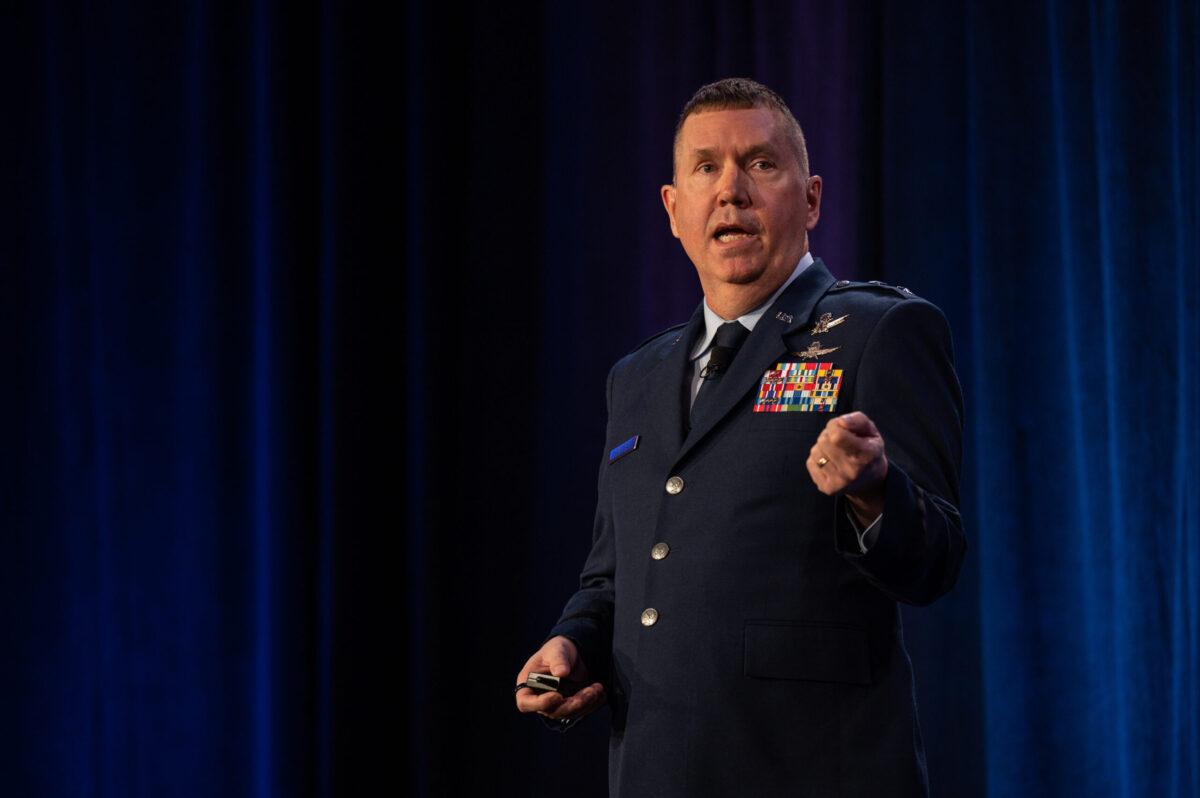
WASHINGTON, D.C. — With six years of development and maturation under its belt, the U.S. Space Force is at a “pivotal area,” in which leaders can refine mission focuses and consider future challenges, the service’s No. 2 officer said Wednesday.
Speaking at an event co-hosted by SpaceNews and Johns Hopkins University, Vice Chief of Space Operations Gen. Shawn Bratton said Space Force’s earliest years were consumed with organizational tasks and decision-making, down to how many silver buttons to display on the dress uniform jacket. (The answer? Six, because it is the sixth military service, he said.)
“We’re through the birthing of the Space Force. There’s still more to do, but much of that work is behind us, and really that enables time for thinking and time for discussion about things like dynamic space operations and what does this Space Force look like in 2040 and what are the challenges?” Bratton said. “Which ones do we have the capacity to take on, of all the things that we could or should do? And so right now that discussion — we’re really, really focused on the warfighting piece.”
With the Space Force recently approved to have a combined $40 billion budget for fiscal year 2026, nearly double that of its first full year of operation, Bratton said he’s now weighing how to support a growing force of Guardians and civilians. He said he expects the service to double in personnel within the next five to 10 years, though he cautioned that figure hasn’t been proposed or approved.
“We’re 10,000 military today, 5,000 civilians,” he said. “It doesn’t hurt my head at all that those numbers would double. On the infrastructure side, we have a lot more work to do there — on what infrastructure we need to be able to operate all those capabilities to support and sustain those Guardians.”
That infrastructure, he said, includes acquisition program offices to field and develop emerging capabilities; test and training infrastructure to support acquisition; and bases or operating locations from which to employ assets.
Where the service has made significant progress, Bratton said, is in outlining doctrine focused on space superiority and control and what it means to have a warfighting service for space.
“Now, we’re infusing that down to the lowest levels. We’ve sort of got our minds around, ‘What does this fight look like? How do we think about key terrain?’” he said.
The other services, particularly the U.S. Navy, are grasping the value of a service that can deliver another layer of defense from above, he added.
“The Navy has really realized the threat and how they’re held at risk by being observed from space. And they have really demanded from the Space Force capabilities and warfighting capacity that didn’t exist before, so they can be successful in their mission,” Bratton said. The service has done “a lot of work in the warfighting piece, a lot of work in how does the Space Force fit into that joint force; what is the space contribution to the fight, not as a support mechanism providing ISR communications or navigation and timing, but how is the adversary using space to find Navy ships at sea, and what can we do about that?”
Yet officials know critical questions remain unanswered, Bratton said. In particular, the service must think more about how it should prepare for future operations in cislunar space — the broad expanse between Earth’s orbit and the moon — and reach consensus on whether to invest in satellite refueling technology.
Another unresolved question, he said, is how and when to put Guardians physically in space.
“It’s on the to-do list; we haven’t got there. Do we need to put human Guardians in space?” Bratton said. “It would be tragic if that didn’t happen someday. Is that day 2030, 2040, 2050? I don’t know the answer, but we owe work on that.”