

NASA is adding a new, two-seal design to the interface between the SLS moon rocket and its fueling lines in an effort to prevent the hydrogen leaks that delayed the Artemis I and II missions.
NASA engineers and leaders had identified the so-called “quick disconnect” fittings of the fueling system as the source of the hydrogen leaks that emerged during pre-launch testing for both missions. In both cases, this contributed to launch delays of several weeks.
The quick-disconnect mechanisms are part of the electric and propellant lines in the tail service mast umbilical linking the base of the SLS mobile launch platform to the rocket’s core stage. They are designed to retract quickly before the rocket lifts off the pad.
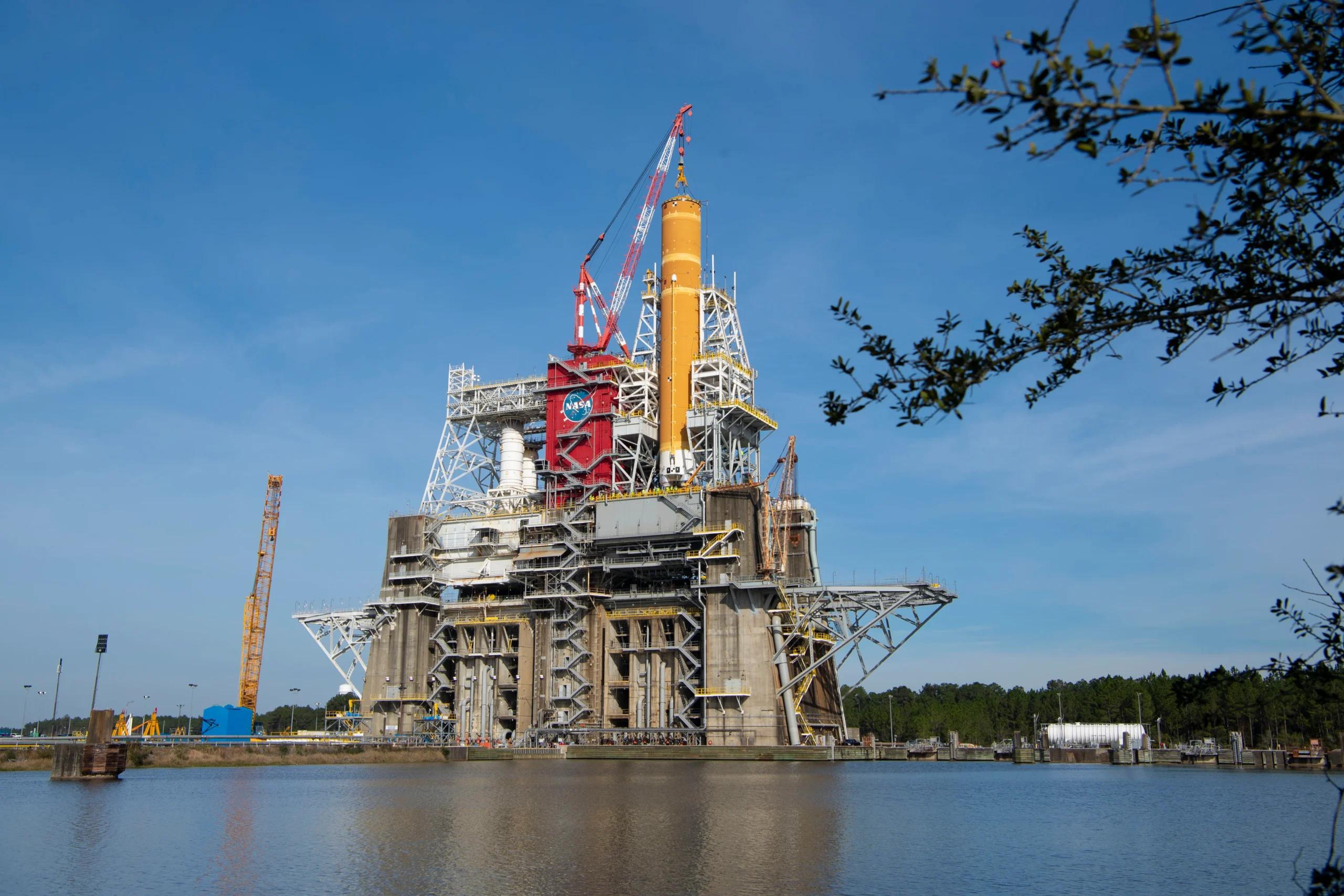
Terry Prickett, NASA’s chief engineer for the SLS core stage, told me the agency has begun testing the new interface and is preparing for additional testing at Stennis Space Center in Mississippi. He said he expects that testing to begin soon, but does not have a precise date.
After testing at Stennis, the new interface will be installed on the Artemis III core stage and solid rocket boosters for testing at Launch Complex 39B in Florida during the first half of 2027. NASA says it is aiming to launch Artemis III in mid-2027.
The previous quick disconnect fitting “was just a single-seal design, and you had to worry about the interface being perfectly centered with a spring-loaded bellows pressing perfectly to form the seal,” Prickett said. “In that case, any misalignment could cause you problems.”
“The new design is a pipe within a pipe, and we’ve got two of those seals in there. So we have redundancy built in. And in the new design the seals are two different diameters, so they are a step-seal design,” Prickett continued. “It’s got a lot of benefits over the existing design from a sealing perspective.”
During Artemis II fueling tests in February, NASA ended the critical wet dress rehearsal prematurely when technicians discovered “a liquid hydrogen leak at the interface of the tail service mast umbilical, which had experienced high concentrations of liquid hydrogen earlier in the countdown,” the agency said in a blog post.
After conducting a second wet dress rehearsal, NASA launched Artemis II on April 1.
In a March 30 pre-launch press conference, SLS program manager John Honeycutt said the leakiness may have been caused by “Teflon creep,” meaning a seal could have become deformed or defective because it had been in the interface for 10 months. He said NASA had switched out the seal after the first wet dress rehearsal; after the second rehearsal, another NASA official said the new seal dramatically reduced the leakiness.
Prickett noted the new interface can be easily swapped out of the existing structure, “so it’s really just two new pieces that we have designed as far as hardware is concerned, and they are bolt-in replacements for the old ones. If for some reason something happened and we want to revert back to the old design, we can.”