

ARLINGTON, Va. — United Launch Alliance’s early investigation into Sunday’s Vulcan Centaur failure indicates the root cause was an issue with the rocket’s booster, president and CEO Mark Peller said today.
Speaking at an event hosted by the Washington Times, Peller said “we had a significant shortfall in booster first stage performance” that prevented Vulcan from reaching orbit and successfully deploying its payload, 40 satellites for Amazon’s broadband internet constellation.
ULA’s current focus is determining “what caused that deficit in performance,” Peller added.
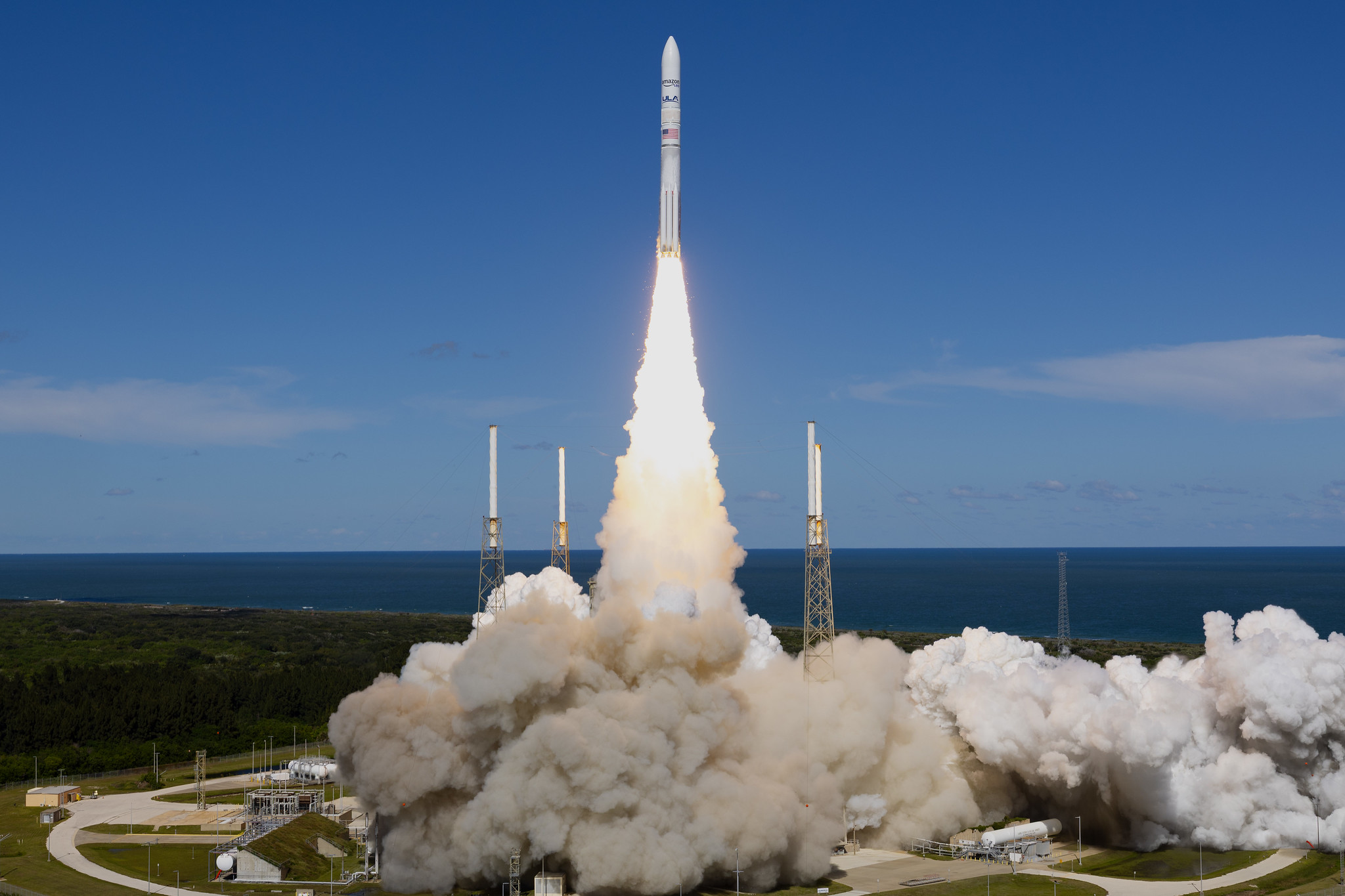
The company said today in a statement on its website the performance issue appears to have occurred “just after liftoff” from Cape Canaveral, Florida, at 12:40 p.m. Eastern Time.
“We did complete the boost phase of flight,” Peller said. “We separated the upper stage, our Centaur V, which ignited its RL10 engines, and it was continuing on downrange. We did separate the fairing, but the booster had left Centaur off in such a low-energy state in terms of altitude and velocity that Centaur wasn’t designed for and couldn’t make up for that performance deficit, and it was unable to reach orbit.”
The FAA said Sunday that ULA will conduct a mishap investigation. The agency “will oversee the ULA-led investigation, be involved in every step of the process, and approve ULA’s final report, including any corrective actions.”
Peller said today, “we are committed to working through that investigation as quickly as we can.”
This was the first flight of a Vulcan since February, during which the rocket experienced an issue with the nozzles of the solid rocket boosters that provide additional thrust in the first few minutes of flight.
“We had implemented several improvements to the design of those nozzles,” Peller said, “and based on our initial review of data, it looks like that all worked very well, so six clean SRBs.”