


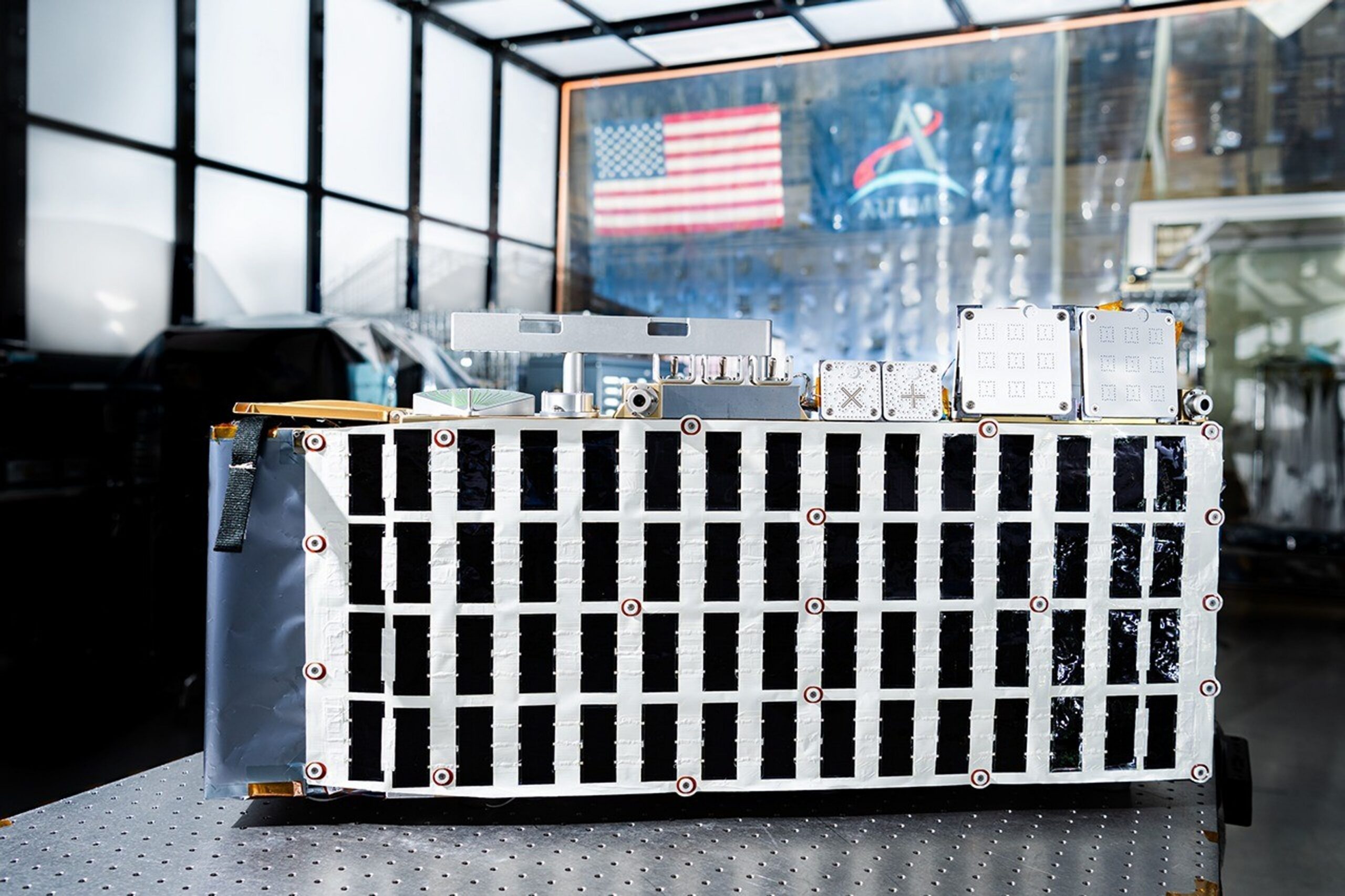
A NASA-funded instrument package designed to hunt for water ice in the lunar south pole region will also help monitor hazards faced by astronauts, like micrometeorites and moonquakes.
The agency announced Sept. 30 it had selected a proposal from the University of Maryland for the LEMS-SP, short for Lunar Environmental Monitoring Station-South Pole. This autonomous instrument suite is a follow-up effort to the already-built LEMS-A (Artemis) station that is slated to ride to the lunar surface with a future Artemis crew.
This is the latest batch of awards NASA has made related to its ongoing efforts to begin crewed lunar surface missions in 2028 and establish the beginnings of a permanent Moon Base by the end of the decade. Among the goals for both LEMS missions is to monitor seismic activity near the nine potential landing sites under consideration for Artemis IV, building on the observations of instruments left on the surface during the Apollo 12 through 17 missions.
Plans call for both suites to include seismometers to detect moonquakes and nearby impacts of micrometeorites, but LEMS-SP is to go a step further to also “sniff” for vaporized molecules, or volatiles, thrown off by such impacts, said Mehdi Benna, LEMS principal investigator and a senior planetary research scientist at NASA’s Goddard Space Flight Center.
“Volatiles are a major focus for LEMS-SP,” said Benna, who is also a professor at the University of Maryland. “We want it to be on the high rim of a large crater at the south pole, like Faustini, right in the middle of what we believe to be rich ice deposits. And as we sit there on the rim, we’re going to listen to micrometeor impacts and sniff whatever comes out of these craters.”
Imaging from space has indicated there are water ice deposits in the lunar south pole’s deep, permanently shadowed craters, he said. By stationing LEMS-SP on a crater rim, its spectrometers should be able to capture and sense any floating water particles emerging from those craters after being vaporized by micrometeorites.
Assembly of LEMS-SP is slated to begin next year, Benna said. In a separate interview, Ryan Watkins, a program scientist in NASA’s Exploration Science Strategy and Integration Office, said many of the mission specifics are also to be determined, including the landing site, launch date and lander. Regarding the landing site, he noted Benna’s recommendation would be a primary consideration.
Long term, LEMS is to be part of a broader “network of seismometers on the moon,” Watkins said. “Even with the Apollo seismic data, we don’t have a lot to characterize the entire moon, especially the far side. The idea is to have these new stations become part of a Lunar Geophysical Network with, I think, a minimum of four stations.”
The LEMS data will immediately be superior to Apollo observations in one regard, anticipates Dani DellaGiustina, an assistant professor at University of Arizona who helped develop the LEMS seismometers to survive launch and the extreme lunar thermal environment.
Much of the “Apollo data was 8-bit digitized,” she said. “So if you zoom into the seismic waveforms from that data, you see a pixelated texture that is sort of reminiscent of an old Nintendo graphic. But these LEMS will have modern instruments, so just being able to digitize our data to 24 bits is going to just vastly improve the quality of seismic data that we record.”