After successful 2024 demo, NASA’s laser navigation tool approaches next flight


This story has been updated to correct the attribution of Intuitive Machines’ statement.
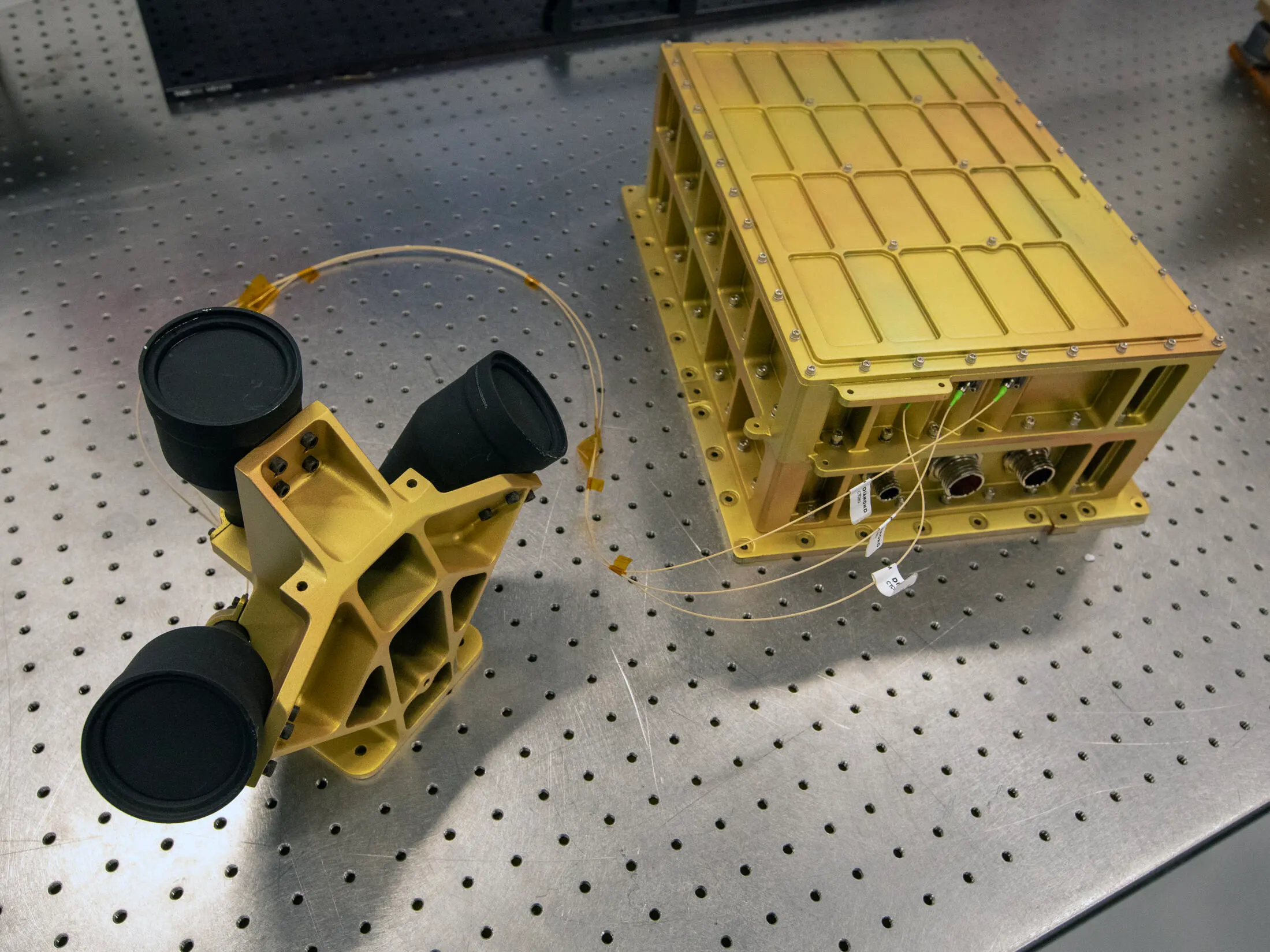
A NASA laser light tool designed to guide landers during descent toward the lunar surface “exceeded preflight expectations” and yielded “high measurement accuracy and flight validation” of velocity and altitude during its first in-space demonstration in early 2024, according to a NASA paper published last month in AIAA’s Journal of Spacecraft and Rockets.
“Our Doppler lidar worked perfectly. It was just beautiful watching such great quality measurements,” said Farzin Amzajerdian, a senior scientist at NASA’s Langley Research Center who began developing the technology some 20 years ago.
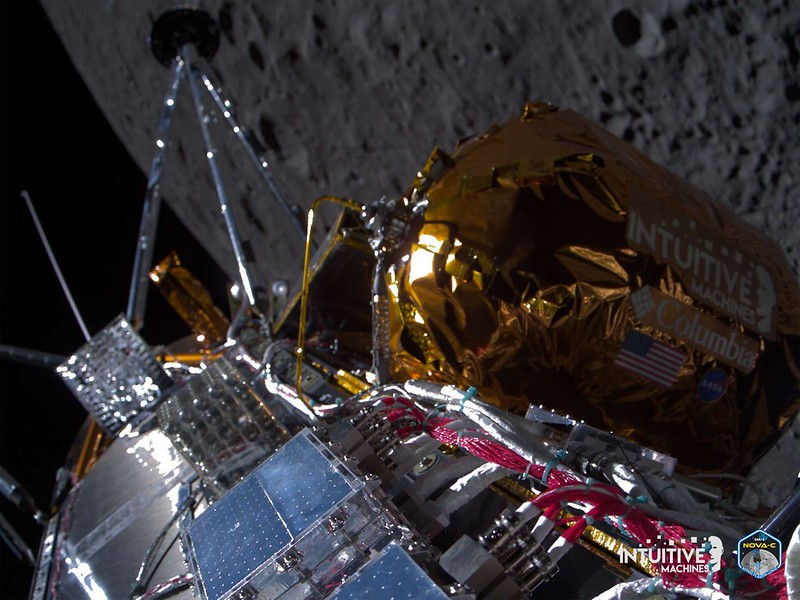
The Navigation Doppler Lidar device, or NDL for short, was intended to function as a backup navigation system for the Intuitive Machines lander that touched down on the moon in February 2024, the company’s inaugural mission under NASA’s Commercial Lunar Payload Services program. The lander, named Odysseus, completed a soft landing but tipped over shortly after.
Prior to the landing, the Intuitive Machines flight controllers discovered some of Odysseus’ navigation sensors weren’t functioning and made a last-minute attempt to pull data from NDL to aid the landing. However, Amzajerdian and his co-authors wrote, a software problem prevented the lander from using that data.
If Odysseus had been able to tap into NDL, it may have landed successfully, he told me in an interview.
“I think it was the following Monday that they realized that the lander was on its side. And then when they looked carefully, they saw we didn’t use the NDL data,” Amzajerdian said.
Despite these issues, Amzajerdian and his co-authors consider NDL’s first demonstration a success that paves the way for it to be incorporated into NASA’s plans for expanded lunar exploration under the Artemis program.
“Terrain features such as craters were observed in the data and confirmed by comparison with digital elevation maps of the lunar surface,” the paper reads. The results “show agreement between the lidar and modeled measurements to within approximately 5 m [meters] and 0.5 m/s [meters per second]” indicating “the Navigation Doppler Lidar produced accurate measurements.”
NDL’s next flight is slated for this year, when another of the devices will ride to the moon aboard Astrobotic’s first Griffin lander. The company said in June the launch is targeted for “late 2026.”
The 2024 demonstration “inspired development of a commercial market,” Tim Crain, Intuitive’s chief technology officer, said in an emailed statement provided by the company. “We now see vendors who have commercialized this technology or have been inspired by its success to develop similar sensors using different modalities of laser light measurements.”
NASA in 2016 licensed the NDL technology to Virginia company Psionic, which has been developing lighter-weight and smaller versions of it. Intuitive is designing its own laser navigation payload, named LUNA, that is to ride along on the company’s IM-4 mission that is scheduled for next year.
Although NDL is not configured to detect hazards like boulders or craters, NASA is developing a separate instrument with lidar for such purposes, Amzajerdian said.
One reason to use NDL on the moon is that its extremely thin atmosphere means clouds or vapor won’t interfere with the lidar beams, as they could on Earth. Lidar, originally short for light detection and ranging, uses laser beams and reflections to gauge distance to an object, while Doppler lidar can measure whether distance between the object is growing or diminishing.
Compared to radar, when used on Mars or the moon, lidar “performance is better, and it can potentially reduce the mission cost because it’s much easier to integrate it into the vehicle,” Amzajerdian said.