

1926
Aug. 11 — William MacCracken, the driving force behind the Air Commerce Act of 1926, becomes the first assistant secretary of commerce for aeronautics, overseeing the new Aeronautics Branch tasked with regulating U.S. aviation. The organization is a precursor to the Federal Aviation Administration. Aircraft Yearbook, 1927, pp. 6-7.
Aug. 23 — French pilot Jean Callizo reports a world altitude record, saying he reached 40,820 feet (12,422 meters) in a Bleriot-Spad S.61. Callizo later pleads guilty to tampering with the barograph measurement device on a follow-up record attempt, and the Aero Club of France strikes all his achievements from its records. U.S. Air Services, December 1926, p. 40. New York Times, Sept. 4, 1927, p. 2; Sept. 6, 1927, p. 3; Nov. 30, 1927, p.10; Dec. 7, 1927, p. 31.
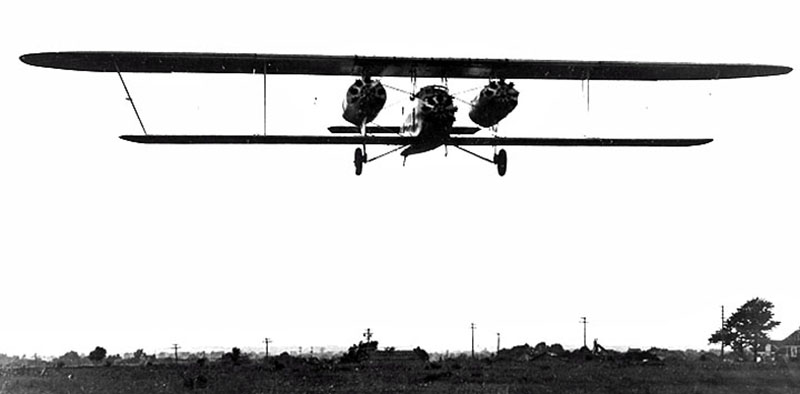
Aug. 23 — The three-engine Sikorsky S-35 biplane completes its first flight, taking off from Roosevelt Field in New York and reaching 233 kph. The aircraft was designed to compete for the $25,000 prize offered by Raymond Orteig to whoever completes the first nonstop flight between New York and Paris. The first transatlantic attempt is aborted due to a fuel leak, and the second crashes shortly after takeoff. The pilot, Capt. René Fonck, and his copilot are not injured, but the other two crewmembers are killed. Dominick A. Pisano and F. Robert Van Der Linden, Charles Lindbergh and the Spirit of St. Louis, pp. 28-29. Sikorsky Product History, Sikorsky S-35.
1951
Aug. 1 — Japan Airlines is established. Under the terms of the Allied Peace Treaty, the government-owned carrier cannot use Japanese pilots and, therefore, initially leases pilots and aircraft from Northwest Airlines. Early operations are limited to domestic routes, with international service beginning in 1954. R.E.G. Davies, A History of the World’s Airlines, pp. 412-423.
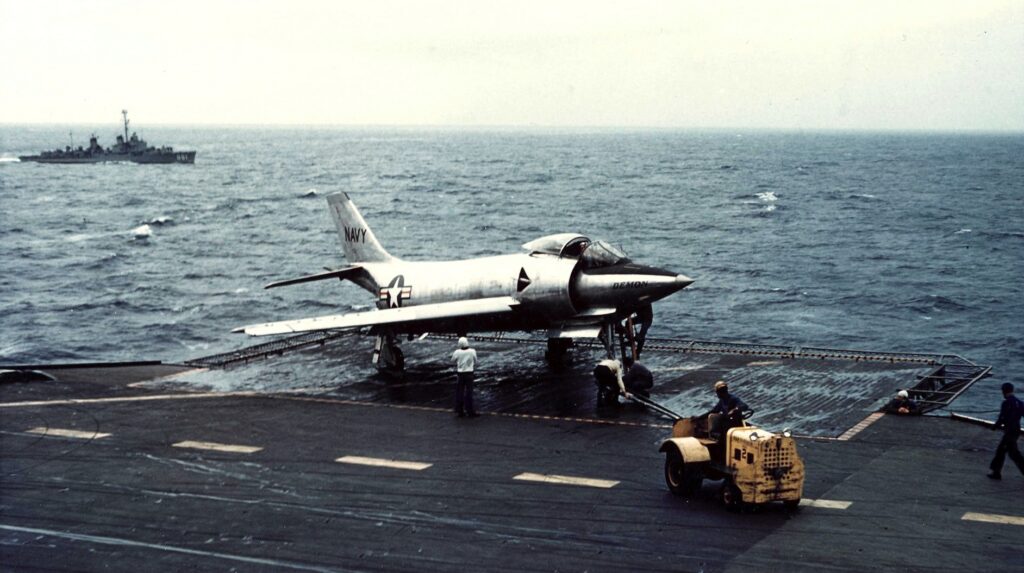
Aug. 7 — McDonnell test pilot Bob Edholm completes the first flight of the XF3H-1 Demon, a prototype carrier-based aircraft for the U.S. Navy. The swept-wing design is the first Navy fighter designed to be armed solely with air-to-air radar-guided missiles, instead of guns. The design initially proves underpowered but is saved by switching engines. Production variants fly operationally until 1965. Gordon Swanborough and Peter Bowers, United States Navy Aircraft Since 1911, pp. 299-300; The Aircraft Yearbook, 1951, pp. 322-323.
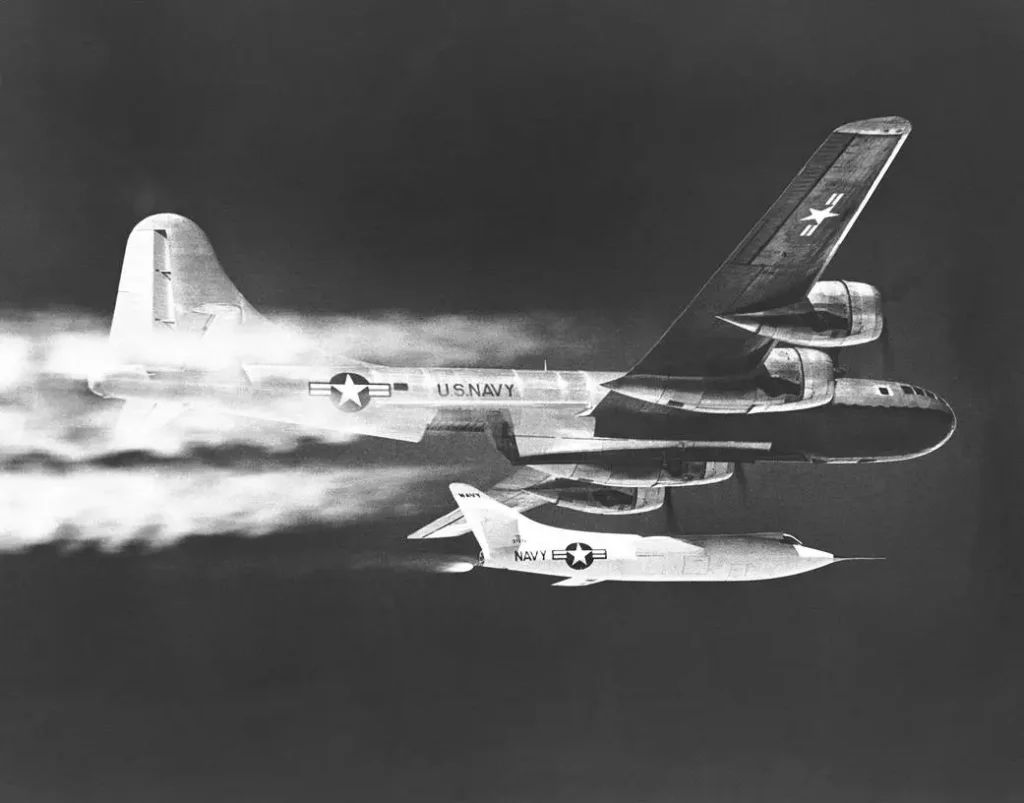
Aug. 15 — Douglas test pilot William Bridgeman reaches an altitude of 79,494 feet in one of the rocket-powered Douglas D-558-2 Skyrockets, an unofficial world record. After being released from a P2B-1S carrier aircraft, the Skyrocket ignites its Reaction Motors Inc. XLR-8 engine and climbs at a speed of Mach 1.35. Richard P. Hallion, Supersonic Flight, pp. 158-159.
1976
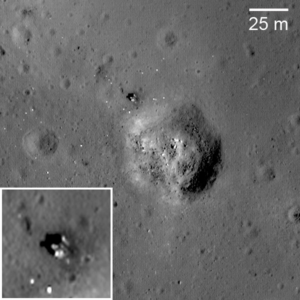
Aug. 9 — The Soviet Union launches Luna 24, its final lunar sample return mission. The probe touches down on the moon nine days later and drills 2 meters into the Mare Crisium plain, collecting 170 grams of regolith. Aviation Week, Oct. 11, 1976, p. 53.
Aug. 19 — The European Space Agency announces it will display a full-scale model of the Spacelab modular laboratory at the upcoming Farnborough International Aerospace Exhibition for the first time. ESA hopes to generate British public and commercial interest in European space activities. Its exhibit will also include a one-tenth-scale model of the Ariane launcher and full-size models of Meteosat and the OTS satellites. NASA, Astronautics and Aeronautics, 1976, p. 192.
Aug. 24 — Soyuz 21 cosmonauts Boris Volyonov and Vitaly Zholobov return to Earth after a 48-day mission to the Salyut 5 space station. The first of three flights to the station, the objectives include assessing the station’s military surveillance capabilities. NASA, Astronautics and Aeronautics, 1976, pp. 193, 220-221, 250-251, 341.
Aug. 30 — The People’s Republic of China launches its sixth satellite from the Jiuquan Satellite Launch Centre. The spacecraft, referred to as China 6, reportedly stays in orbit for about 17 months. NASA, Aeronautics and Astronautics, 1976, p. 195.
Also during August — The journal Science reports the U.S. Air Force files of Project Blue Book, a 20-year investigation of unidentified flying objects, have “drawn many visitors” since July, when they went on public display at the National Archives in Washington, D.C. The project was concluded in 1969, with investigators determining none of the 12,618 cases indicated extraterrestrial activity. Seven hundred and one cases remained unexplained. Science, Aug. 20, 1976, pp. 662-663.
2001
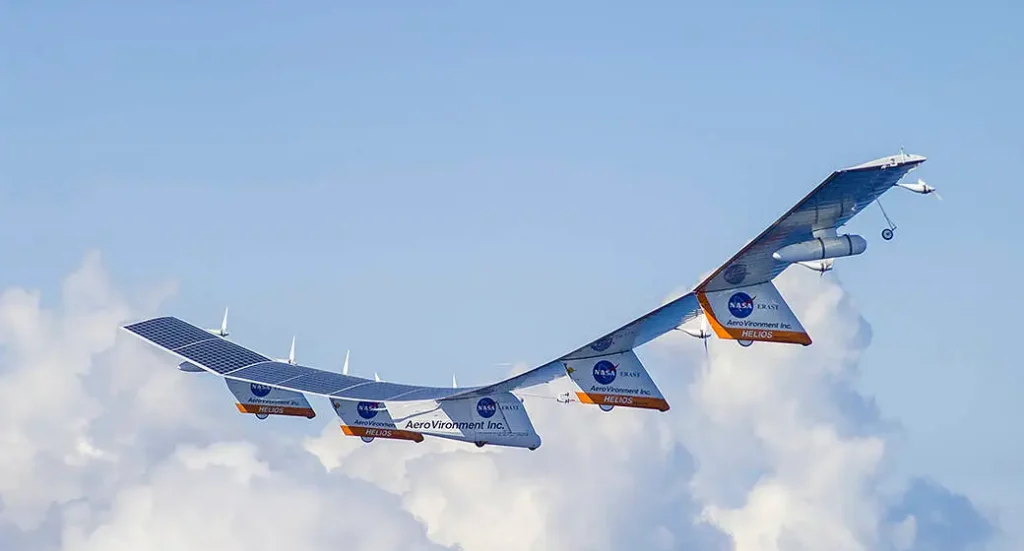
Aug. 13 — NASA’s solar-powered Helios Prototype reaches 96,864 feet, a world altitude record for winged aircraft. The remotely operated craft also demonstrates sustained flight at this altitude, spending 40 minutes above 96,000 feet. NASA Facts, “Helios Prototype,” FS-2002-08-068 Dryden Flight Research Center.
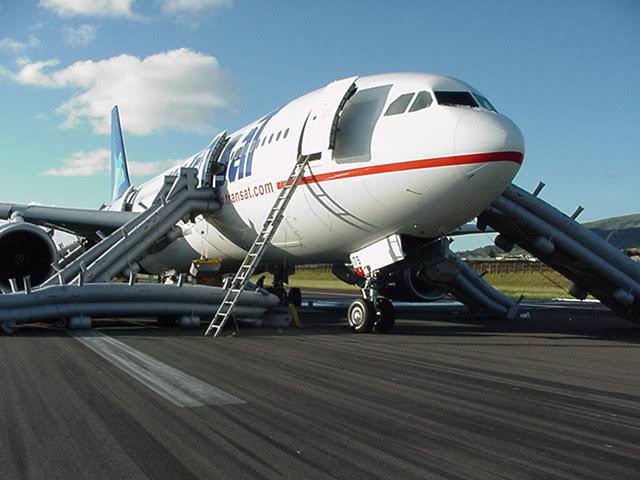
Aug. 24 — En route from Toronto to Lisbon, Air Transat Flight 236 runs out of fuel over the Atlantic Ocean due to a leak. Captain Robert Piché and first officer Dirk DeJager make an emergency landing, gliding to Lajes Airport in the Azores. With limited electrical and hydraulic power, they cannot deploy the Airbus A330’s flaps or spoilers. The aircraft touches down 70 mph (112.7 kph) faster than normal, relying solely on its brakes to stop. Sixteen of the 306 passengers and crew are injured, but none fatally. The incident marks the longest recorded glide without engine power by a jet airliner. Tom LeCompte, “Deadstick Landings,” Air & Space Magazine, January 2010.
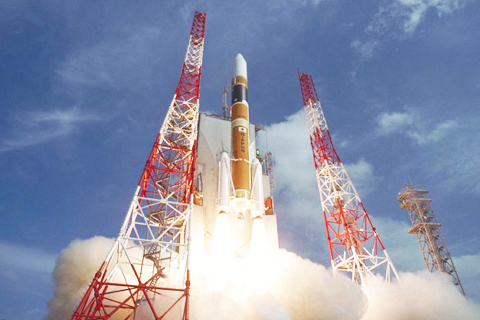
Aug. 29 — Japan’s H-IIA launch vehicle makes its inaugural flight. Among other upgrades, the H-IIA has strap-on solid fuel boosters and is far more reliable than its predecessor, the H-II. Flight International, July 17-23, 2001, p. 30.