

1926
Sept. 15 — Florida Airways completes the first airmail flight between Miami and Atlanta. The arrival of the first aircraft, dubbed “Miss Atlanta,” is marked with a ceremony at Atlanta’s Candler Field and a flyover by two U.S. Army squadrons. The airline goes out of business in June 1927, and rights to its routes are acquired by Pitcairn Aviation, a predecessor to Eastern Air Transport. Aviation, Sept. 27, 1926, p. 563; Walter David Lewis, Eddie Rickenbacker: An American Hero in the Twentieth Century, pp. 286, 288-289.
Sept. 16 — Flying as the chief pilot for Robertson Aircraft Corp., Charles Lindbergh bails out of his mailplane over Illinois when he runs out of fuel. He has a similar experience in November. During this time, Lindbergh learns of the $25,000 Orteig Prize for the first nonstop flight between New York and Paris, which inspires him to enter the competition. Charles Lindbergh, The Spirit of St. Louis, pp. 6-7, 15-17; New York Times, May 13, 1927, p. 3.
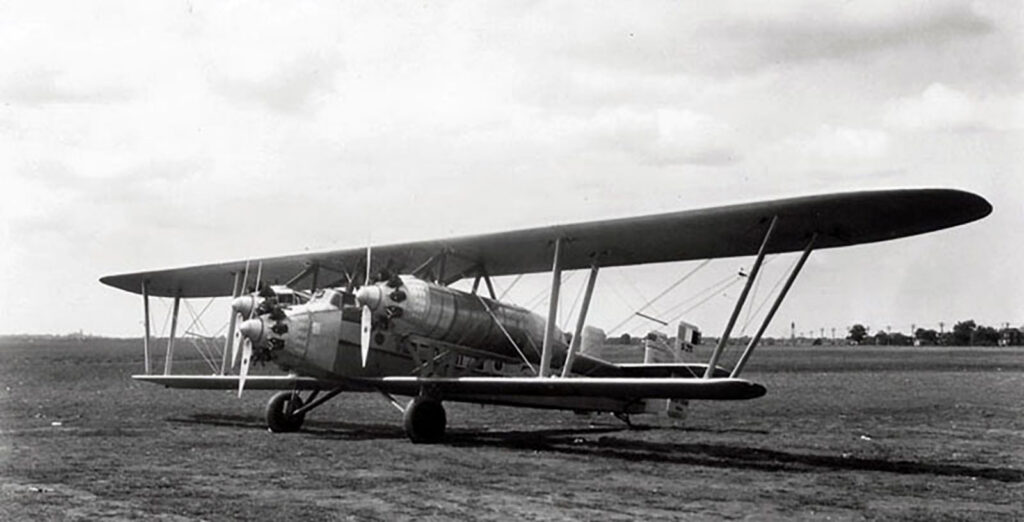
Sept. 21 — The Sikorsky S-35 biplane crashes during takeoff from Roosevelt Field in New York. Fire consumes the aircraft, killing radio operator Charles Clavier and mechanic Jacob Islamoff. Pilot René Fonck and copilot Lawrence Curtin escape with minor injuries. Witnesses report a crosswind that increased drag, although weight records indicate the plane was overloaded. Fonck was competing for the $25,000 Orteig Prize for completing the first nonstop flight between New York and Paris. Aircraft Yearbook, 1927, p. 177.
Also during September — The Peruvian government begins planning to establish airmail and passenger transport service between Lima, the capital, and Iquitos, an inland city in the Upper Amazon. Known as the Peruvian Naval Air Service, the airline will use seaplanes and help map the region. By land, the Lima-Iquitos route takes 20 to 30 days. With the new service, it will take two to three days. R.E.G. Davies, Airlines of Latin America Since 1919, pp. 288-289.
1951
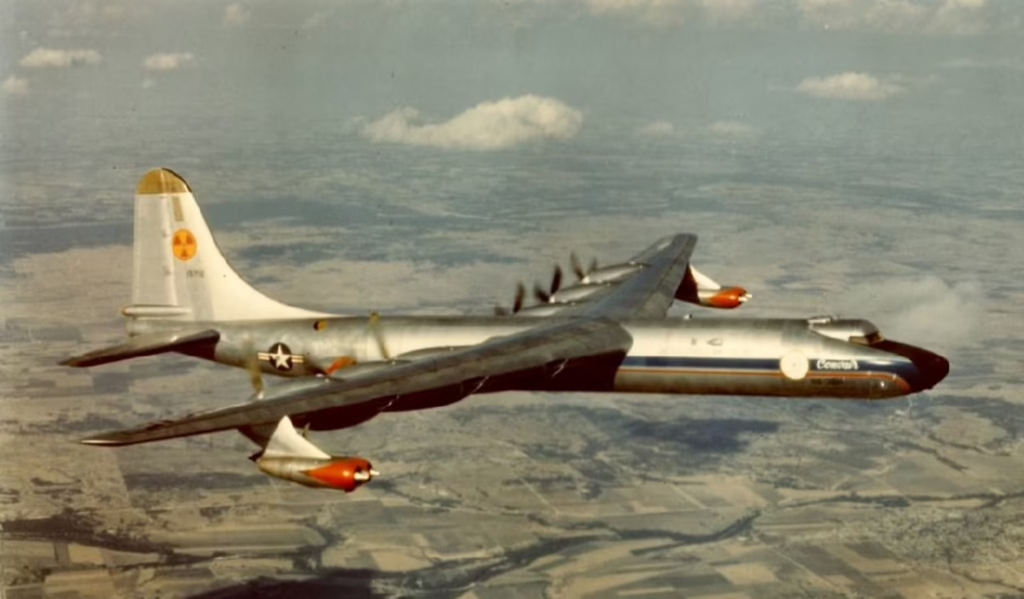
Sept. 5 — The U.S. Air Force awards a contract to Convair to flight test a B-36 with a nuclear reactor aboard as a first step toward an atom-powered plane. For its first flight in 1955, this NB-36H aircraft carries the 3-megawatt reactor in its bomb bay to analyze the impact of nuclear radiation on the aircraft systems and crew. Aircraft Yearbook, 1951, p. 323; Eugene M. Emme, Aeronautics and Astronautics, 1915-1960, pp. 68, 78.
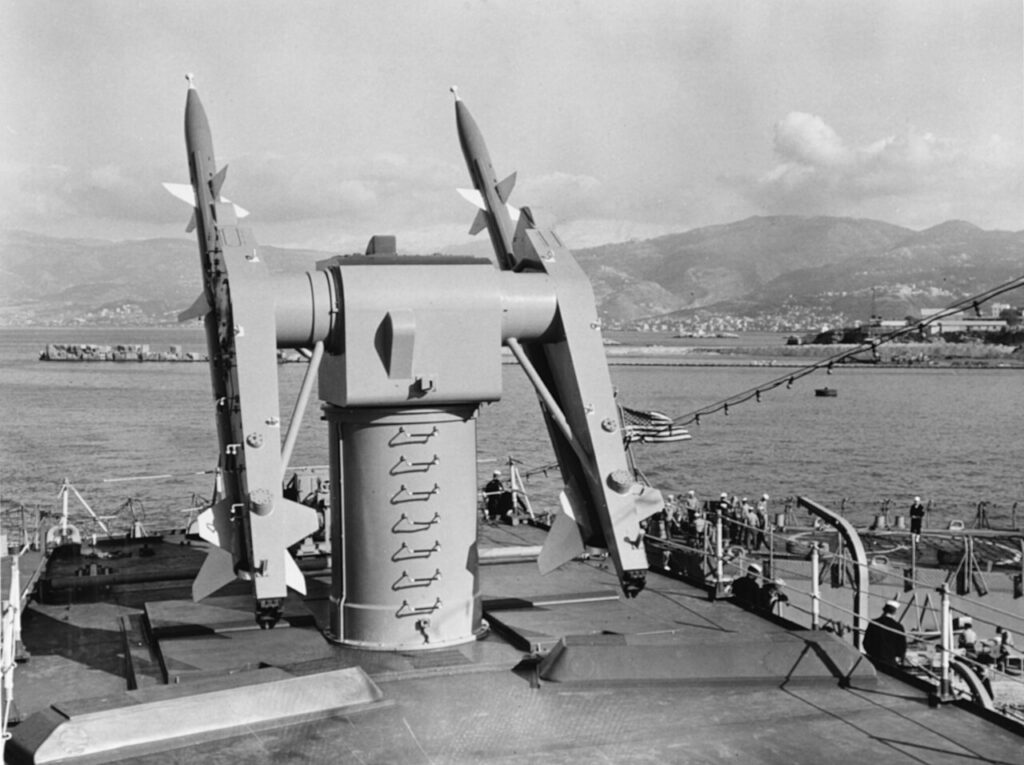
Sept. 7 — A RIM-2 Terrier surface-to-air missile completes its first shipboard launch from the USS Norton Sound, simulating the interception of a Grumman F6F-5K Hellcat target drone. U.S. Naval Aviation 1910-1970, p. 187.
Sept. 20 — The Grumman XF9F-6 Cougar, a carrier-based fighter jet, completes its first flight. This swept-wing aircraft, built for the U.S. Navy, is based on the earlier straight-wing F9F-5 Panther. It can carry up to 3,000 pounds (1,390 kilograms) of bombs and has four 20-millimeter cannons. The production version begins operational service in late 1952. Gordon Swanborough and Peter M. Bowers, U.S. Navy Aircraft Since 1911, pp. 233-236.
Sept. 20 — A rhesus monkey named Yorick becomes the first primate to survive a rocket flight when an Aerobee carries him and 11 mice to an altitude of 236,000 feet above Holloman Air Force Base, New Mexico. During flight, Yorick’s heartbeat, respiration and blood pressure are recorded; nine mice are exposed to cosmic radiation, and two mice are held in separate rotating drums and their reaction to subgravity photographed. The capsule containing the animals lands in the desert via parachute, though Yorick dies several hours later due to overheating. James S. Hanrahan and David Bushnell, Space Biology, pp. 122-125.
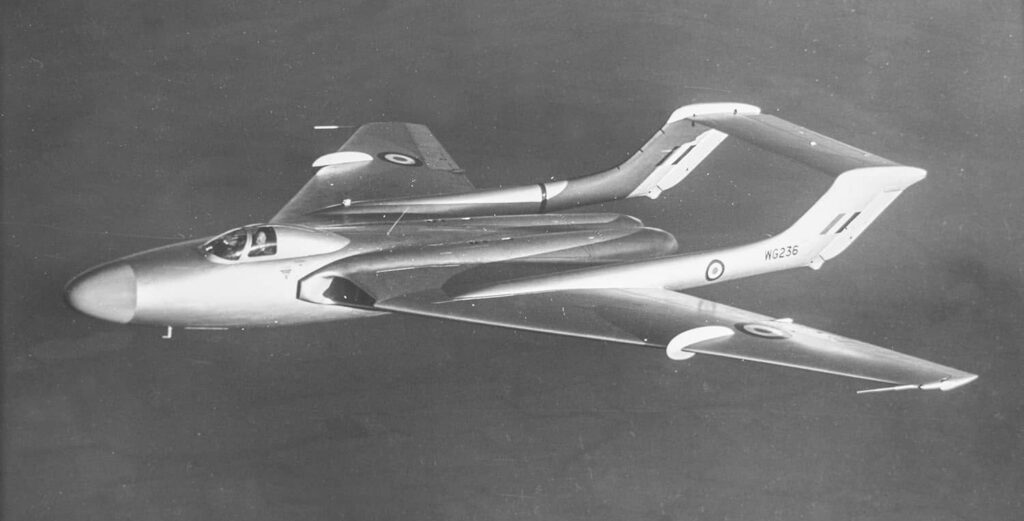
Sept. 26 — The de Havilland D.H.110 all-weather fighter completes its first flight. Easily recognizable thanks to its distinctive twin tailbooms, the design becomes the first two-seat aircraft to exceed the speed of sound in an April 1952 flight. The D.H.110 later enters service with the U.K.’s Royal Navy and becomes known as the Sea Vixen. William Green, The World’s Fighting Planes, Second Edition, p. 60, and Fourth Edition, pp. 117-118.
1976
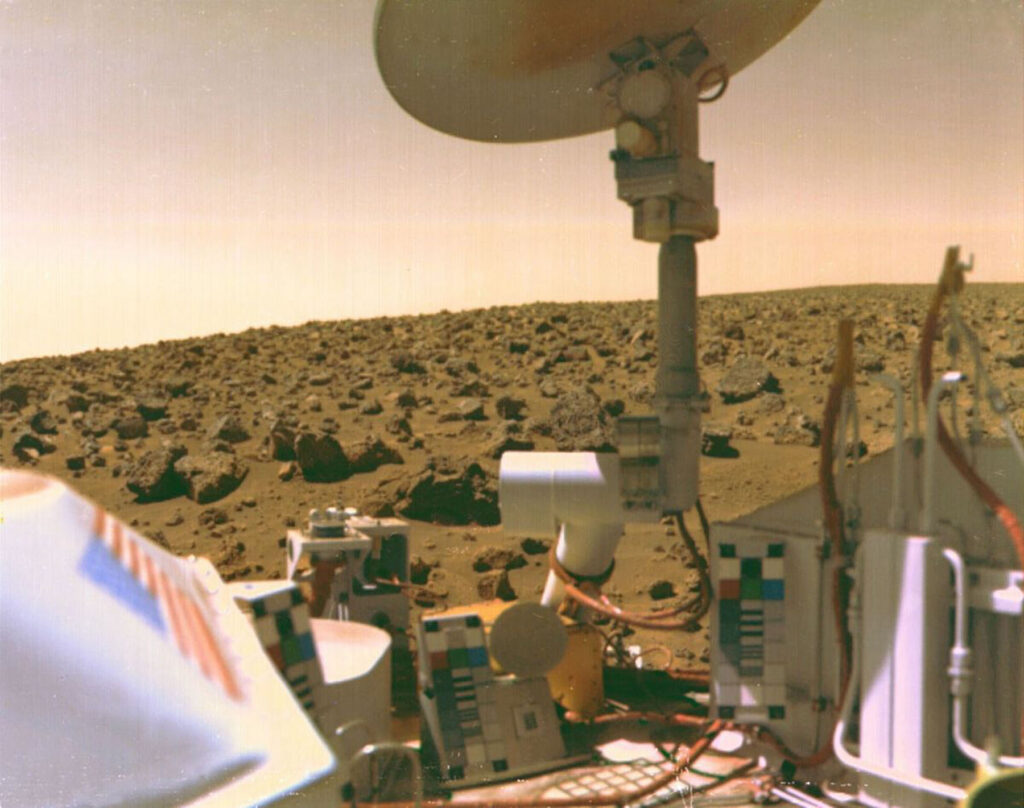
Sept. 3 — NASA’s Viking 2 lander reaches Mars, touching down on the Utopia Plains. Both this lander and its twin, Viking 1, detect organic chemicals in the Martian soil, but NASA ultimately concludes there is no definitive evidence of microbial life at either site. However, thousands of photographs taken by both spacecraft reveal water once flowed on Mars, with huge river valleys indicating floods that carved deep grooves into the bedrock. New York Times, Sept. 4, 1976, p. 1; Edward C. and Linda N. Ezell, On Mars: Exploration of the Red Planet 1958-1978, pp. 364-365, 398.
Sept. 3 — The International Maritime Satellite Organization is chartered in London after four years of study and negotiations. INMARSAT is to operate a satellite communications network for the maritime community to improve exchanges of telephone, telegraph and facsimile messages, as well as ocean navigation. Twenty-eight countries sign the agreement. Stephen E. Doyle, INMARSAT: The International Maritime Satellite Organization-Origins and Structure, 1977, pp. 45-46.
Sept. 10 — Scientists publish the first detailed pictures of Venus’ surface taken using a NASA S-band ground radar. Housed at the Arecibo Observatory in Puerto Rico, the radar system is 50 times more sensitive than previously available equipment, allowing features down to 10 kilometers to be distinguished. New York Times, Sept. 10, 1976, p. A-1; NASA, Astronautics and Aeronautics, 1976, pp. 213-214.
Sept. 15 — The Soviet Union’s Soyuz 22 capsule is launched with cosmonauts Col. Valery Bykovsky and Vladimir Aksenov. This is the country’s first crewed vehicle to carry foreign-made equipment: the Zeiss MKF-6 instrument from East Germany, which takes photos of Earth’s surface and upper atmosphere in six wave bands simultaneously. The cosmonauts spend eight days in orbit. Aviation Week, Sept. 27, 1976, p. 20; NASA, Astronautics and Aeronautics, 1976, pp. 220-222.
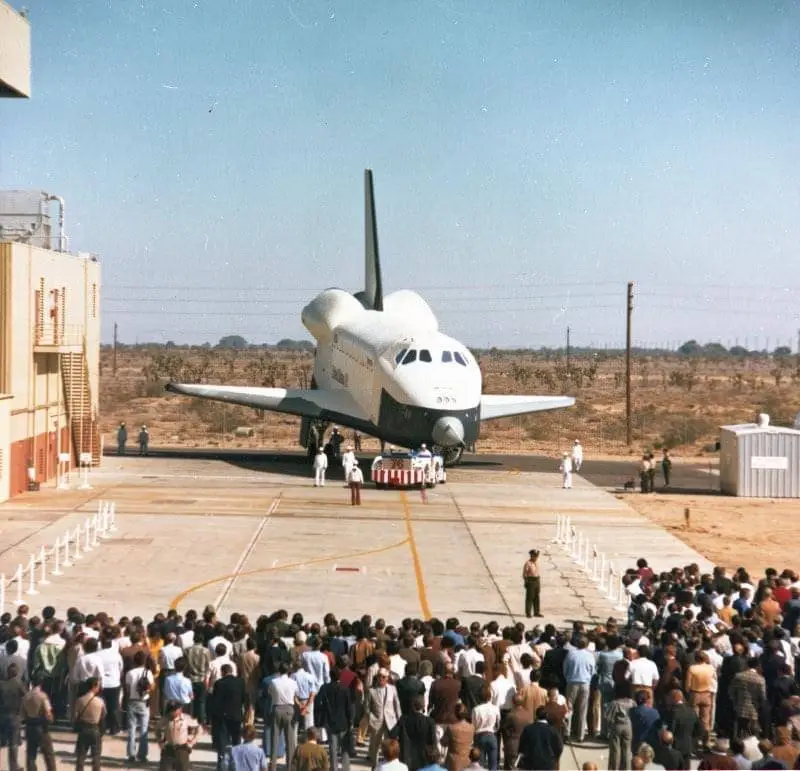
Sept. 17 — NASA’s first space shuttle orbiter, Enterprise, makes its public debut at Rockwell’s facility in Palmdale, California. NASA had planned to name the orbiter “Constitution,” but the agency and the White House receive thousands of letters from Star Trek fans urging the vehicle be named after the series’ famous ship. President Gerald Ford concurs during a Sept. 8 meeting at the White House, telling NASA Administrator James Fletcher, “To explore the frontiers of space, there is no better ship than the space shuttle, and no better name for that ship than the Enterprise.” Aviation Week, Sept. 13, 1976, p. 26 and other issues; Washington Star, Sept. 19, 1976, p. E-1.
2001
Sept. 5 — NASA announces that observations with its Chandra X-ray Observatory have confirmed the existence of a black hole at the center of the Milky Way. NASA, Aeronautics and Astronautics: A Chronology, 2001-2005, p. 37.

Sept. 26 — The MiG-29M2 fighter flies for the first time at a test center in Zhukovsky, Russia. An improved version of the MiG-29, the design features digital fly-by-wire controls, newer electronics and lighter materials. Flight International, Oct. 2-8, 2001, p. 24; Bill Gunston, The Encyclopedia of Russian Aircraft, 19875-1995, p. 227.
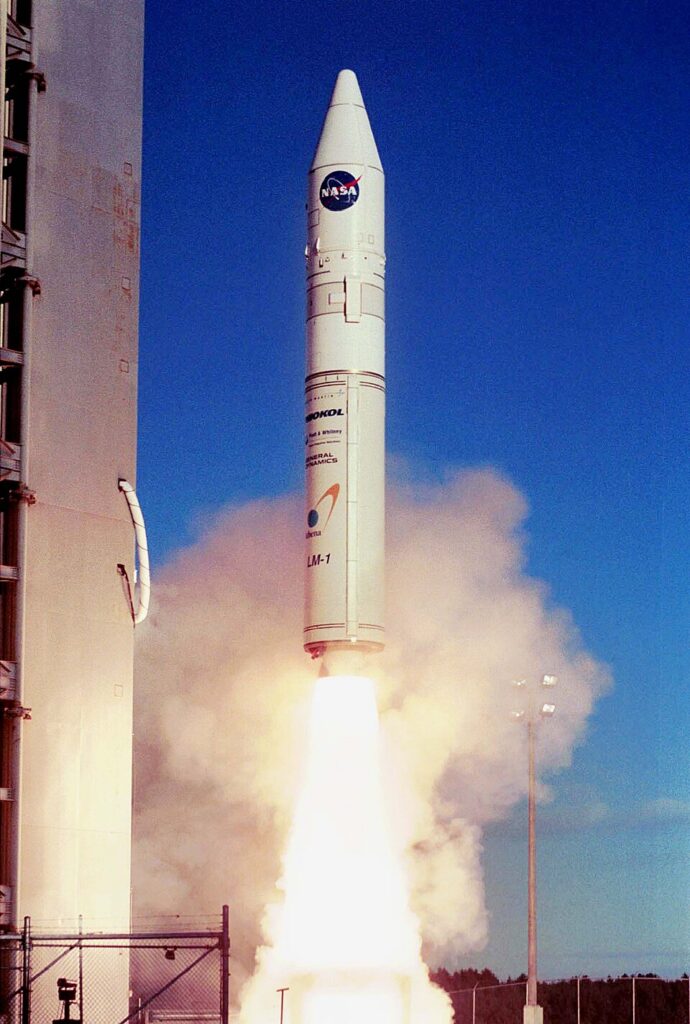
Sept. 29 — A Lockheed Martin Athena I lifts off from Kodiak Island, marking the first orbital space launch from Alaska and the final flight of an Athena. Aboard are four NASA- and Defense Department-funded satellites. NASA, Aeronautics and Astronautics: A Chronology, 2001-2005, p. 40; SpaceNews, Sept. 28, 2001.