Office of Space Commerce’s new authorization framework should balance innovation with safety, lawmakers say


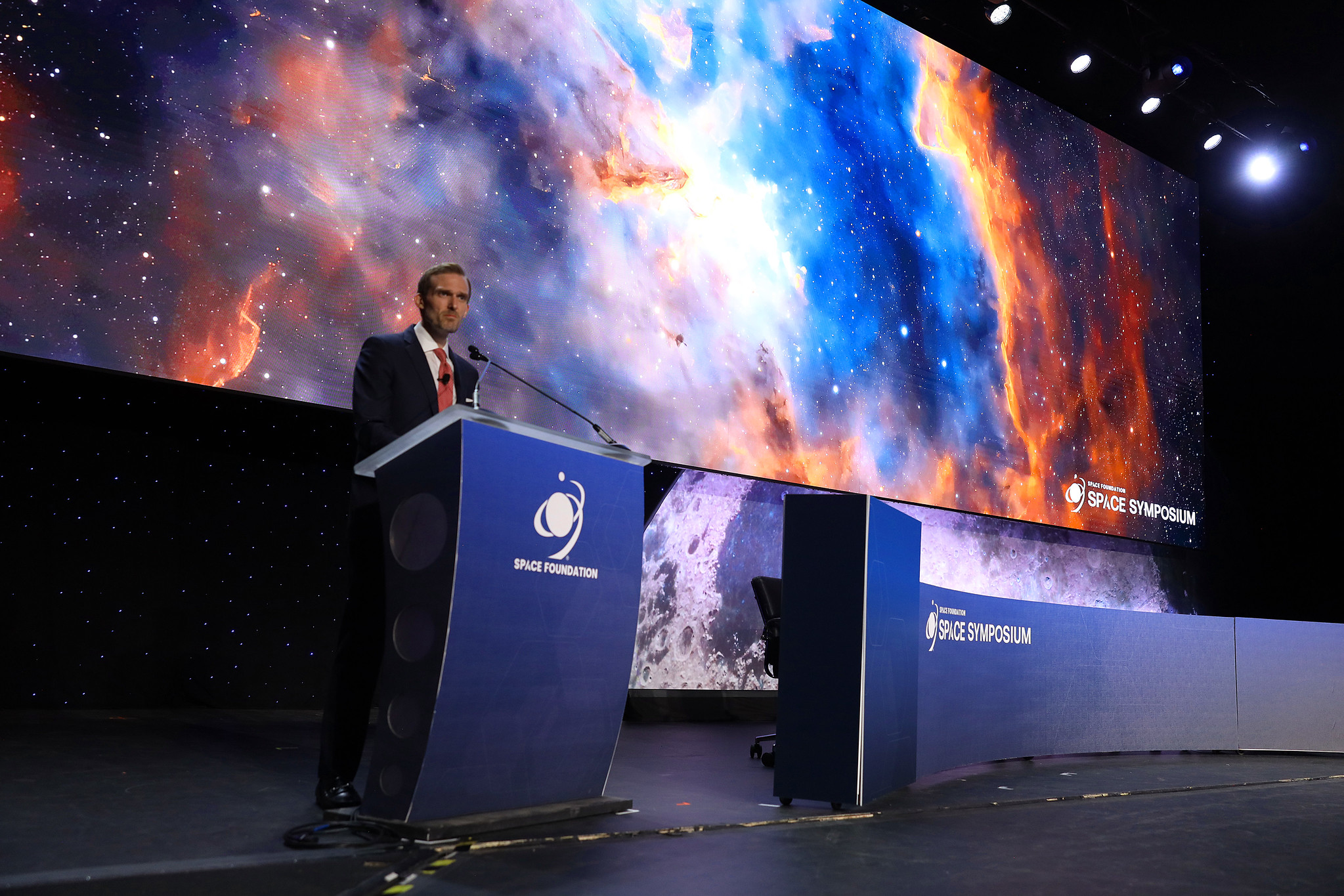
The Office of Space Commerce’s proposed method to streamline and expedite approvals for novel in-space operations must take into account national security and public safety, members of the U.S. House Space and Aeronautics Subcommittee said during a hearing today.
OSC Director Taylor Jordan fielded lawmaker questions about his office’s proposal to create a “Space Commerce Certification” to approve activities ranging from spacecraft servicing to debris removal that don’t neatly fit into current regulations.
According to the draft framework, released in late March, OSC envisions approving such activities with “a light-touch set of requirements” based on various considerations, including national security, international obligations, foreign policy and safety.
“There are real risks, including potential financial liability for U.S. taxpayers” if innovative space missions malfunction, said U.S. Rep. Zoe Lofgren (D-Calif.). “Don’t we have to worry about the potential collision in space, especially as orbits become increasingly congested?”
Jordan said those concerns would be foremost during the Space Commerce Certification review process and noted industry innovation has outgrown the existing regulations.
“U.S. regulations simply do not offer a clear path to ‘yes’ for novel activities. Instead, they risk trapping our industry in an endless maze,” he said. The new certification process would “ensure that we have those core U.S. government interests satisfied, and that’s space safety, international obligations and national security.”
Today, companies seeking to launch and operate spacecraft must receive various permissions, including a launch license from FAA, a radiofrequency license from the Federal Communications Commission and remote sensing approvals from the Commerce Department.
Jordan said the new certification could be viewed as a “clearinghouse” or “one-stop shop” for all permitting related to innovative operations. Companies would choose to use the new process in the hope it would streamline their licensing, he added, unless Congress makes it a mandatory review.
Such operations include in-space manufacturing, orbital computing and commercial space stations — in short, anything that falls outside legislative oversight as defined by statute, according to the proposal.
Approving a larger number of these activities could provide “substantial potential benefits to the United States’ economic and national security, and underpin key Administration priorities such as the Artemis program,” OSC notes in the proposal, which was prompted by an August executive order directing the Commerce Department to “streamline commercial license and permit approvals for United States-based operators.”
U.S. Rep. Valerie Foushee (D-N.C.) noted during the hearing the White House requested “just $11 million” for OSC for fiscal year 2027, which amounts to an 80% cut from its fiscal 2026 budget. At the same time, “the department is also proposing to add responsibilities,” Foushee said.
“That sounds like trying to fit a square peg in a round hole,” she said.
The House Appropriations Committee bill allocates $50 million for OSC and the Senate Appropriations version $60 million; both bills are in the committee markup process.
Jordan said “we have not built into our budget if we need additional staff” to create the new certification.
“But I will say we do envision this being a light touch administratively,” he added. “We will rely on our interagency partners who have expertise in many of these new technologies and missions.”