

As NASA maps out missions to test nuclear power and propulsion, a panelist at the U.S. Space Nuclear Industry Symposium on Thursday said cost will be a key hurdle.
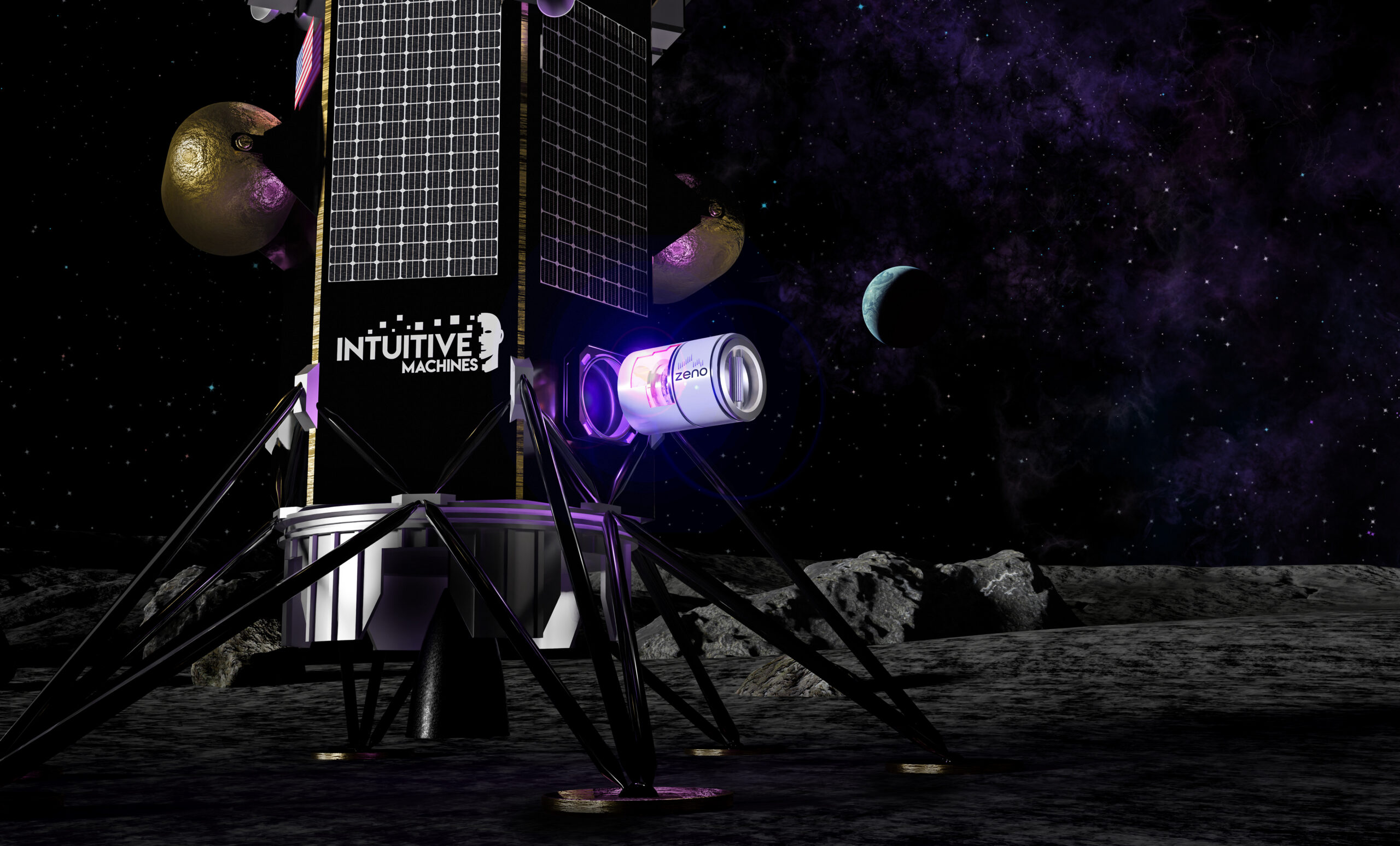
“The lunar surface at the south pole, where we want to land, is a very challenging environment where you need to be able to survive the lunar night,” said Vince Bilardo, executive director of nuclear space programs for Intuitive Machines. He added that “we see RPS [radioisotope power systems], survive-the-night generators as being key to that.”
The Houston company is part of a multi-company team led by Zeno Power that in 2023 received a $15 million award from NASA to develop a radioactive generator that can be integrated into lunar landers. The generator is to use the isotope americium-241 instead of plutonium. NASA has used plutonium 238 to power the multi-mission radioisotope thermoelectric generators for its Mars rovers, but Bilardo noted that substance is in short supply.
“It is produced by the Department of Energy for NASA’s outer planetary deep space science exploration missions, and we do not believe that plutonium 238 is going to be made available in sufficient quantities for the number of commercial generators we would need to support Moon Base,” he said, referring to NASA’s goal to establish the initial elements of a lunar surface base by 2030.
Americium is expensive, Bilardo noted, and there’s “work that needs to be done across government, NASA, [the Department of Energy] and commercial industry to try to drive the price down for that material if we’re going to be able to use it in a sustainable fashion on the lunar surface.”
Additionally, he said there is currently no way to insure or indemnify a private commercial mission carrying radioactive material.
NASA is targeting 2030 to launch the first fission reactor for the planned Moon Base. Speaking on the same panel, Nujoud Merancy, NASA’s Moon Base chief architect, agreed the agency needs to facilitate the use, production and indemnification of these materials.
“Uncovering these production gaps is where we need to focus,” Merancy said. “And being able to do things like incentivizing things to get launched, to work through the production, to work through the launch indemnification — we have to start attacking these problems. And americium is one that comes up frequently” in lunar base planning.
Aaron Miles, coordinator for strategic capabilities at the White House Office of Science and Technology Policy, said the Trump administration wants to see initial tests of in-space nuclear power and propulsion in the next two years. In addition to the lunar surface reactor, he referenced Space Reactor-1 Freedom, a nuclear-electric spacecraft slated to launch in 2028 to deliver three scientific helicopters to Mars.
“We believe the general success of American space nuclear power efforts may depend on making this significant achievement during this term,” he said.