

1926
June 7 — Contract air mail service begins between Chicago and the Twin Cities of Minneapolis and St. Paul by way of Milwaukee. The flights are conducted with Laird Swallow three-seater biplanes and link northern states with the transcontinental air mail service operated by the U.S. Post Office Department. The contract is originally held by Charles Dickinson but later taken over by Northwest Airways. Aviation, June 28, 1926, p. 979.
June 21 — Four Fairey IIID seaplanes touch down in Lee-on-Solent, England, a month after concluding a 22,500-kilometer (14,000-mile) roundtrip between Cairo, Egypt, and Cape Town, South Africa. A four-plane group had never flown such a distance without changing personnel, aircraft or engines. Led by Wing Cmdr. C. W. H. Pulford, this Royal Air Force mission began in Cairo on March 1 and ended May 27 when the planes returned, but the U.K.’s Air Ministry asked the group to continue on to England. Flight, June 24, 1926, pp. 360-361.
June 26 — Capt. Ludovic Arrachart and his brother, Sgt. Maj. Paul Arrachart, depart from Paris for Basra, Iraq, in an attempt to set a new nonstop distance flight record. The pair succeed, flying 4,345 km (2,700 miles) in 26 hours, 30 minutes. This previous record was set in 1923 by Oakley Kelly and John Macready of the U.S., who flew 4,055 km (2,520 miles) in 26 hours, 50 minutes in the first nonstop transcontinental flight from New York to San Diego. Aviation, Aug. 9, 1926, p. 256; Eugene M. Emme, Aeronautics and Astronautics, 1915-1960, p. 17.
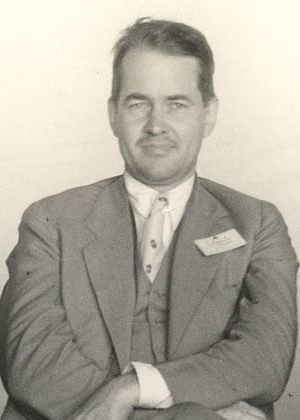
June 30 — U.S. President Calvin Coolidge nominates Edward Warner as assistant secretary of the Navy for aeronautics, a position created by the passage of the Air Commerce Act. Previously, he was a professor of aeronautical engineering at MIT, where he taught Army and Navy aeronautics courses. He also worked as chief physicist for NACA and directed aeronautical research at Langley Field. Aviation, July 12, 1926, p. 56.
1951
June 11 — Douglas test pilot William Bridgeman sets an unofficial speed and altitude record in the D-558-II Skyrocket, reaching Mach 1.79 at 64,000 feet. He reaches Mach 1.85 in a subsequent flight, extending his unofficial record in the air-launched supersonic swept-wing research airplane. Richard P. Hallion, Supersonic Flight: Breaking the Sound Barrier and Beyond, pp. 157-158.
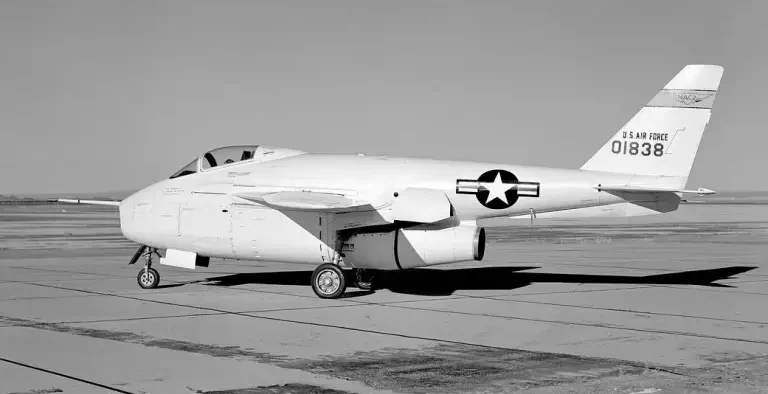
June 20 — Test pilot Jean “Skip” Ziegler completes the first flight of the Bell X-5 variable-sweep-wing testbed from Edwards Air Force Base, California. Subsequent flights demonstrate the usefulness of variable wing sweeping, but the aircraft proves too complex and heavy for service use. A.J. Pelletier, Bell Aircraft Since 1935, pp. 94-96.
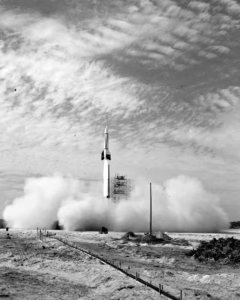
June 30 — U.S. testing of captured German V-2 rockets ends. Under Project Hermes, sponsored by the Army Ordnance Corps and managed by General Electric, 67 missiles were launched over five years from White Sands, New Mexico, and Cape Canaveral, Florida. The V-2s generate extensive knowledge on the launch and operation of large high-altitude liquid-propellant rockets and set several flight records. Eugene M. Emme, Aeronautics and Astronautics, 1915-1960, p. 67; Willy Ley, Rockets, Missiles, and Space Travel, pp. 450-451, 458-460.
Also during June — The U.S. Navy’s Goodyear ZPN-1 prototype completes its first flight. Designated the ZPG-1 in 1954, this patrol airship features angled tail surfaces in place of more conventional vertical-horizontal fins. It serves as a prototype for the ZP2N, or ZP2G, series of blimps, one of which sets an endurance record in 1954 for 200 hours of non-refueled flight. Gordon Swanborough and Peter Bowers, United States Naval Aircraft Since 1911, pp. 516-517.
1976
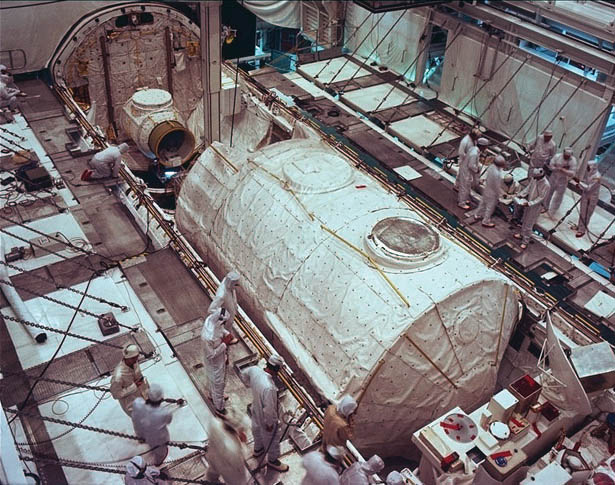
June 1 — ERNO of West Germany begins assembly of a fully metallic replica, or “hard mockup,” of the European Space Agency’s Spacelab, a reusable lab to be flown in the cargo bay of NASA’s space shuttle orbiters. The mockup is to ensure compatibility of all non-electrical elements. From 1983-1998, several dozen Spacelab missions are conducted with some 800 experiments. New York Times, June 4, 1976, p. 15.
June 6 — A Grumman A-6 Intruder attack bomber test fires the tactical version of the Tomahawk missile using the Terrain Contour Matching, or TERCOM, guidance system. Tomahawks could be launched from tactical and strategic aircraft, surface ships, submarines and land platforms as long-range weapons. Roy A. Grossnik, United States Naval Aviation 1910-1995, p. 316.
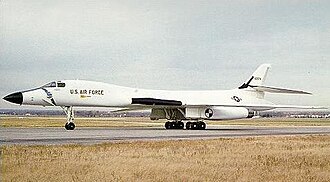
June 14 — The third B-1A bomber prototype completes its inaugural flight, taking off from the U.S. Air Force plant in Palmdale and landing two hours later at Edwards Air Force Base. The primary objective of this flight is to gather data on design loads at subsonic and supersonic speed. The B-1A program is eventually canceled but paves the way for the B-1B. NASA, Astronautics and Aeronautics, 1976, pp. 123. Air Force Life Cycle Management Center History Office release, June 13, 2022.
2001
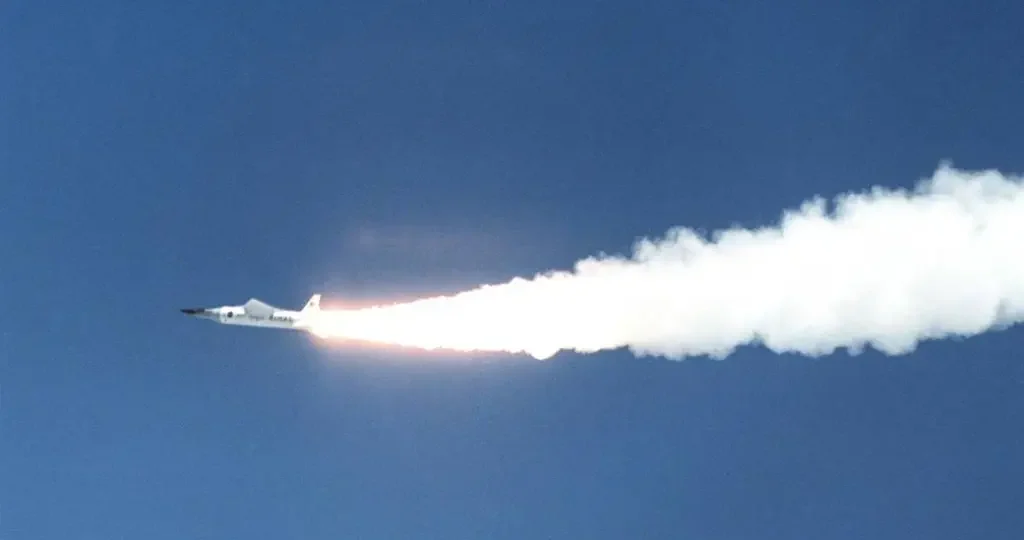
June 2 — NASA’s first X-43A hypersonic research aircraft is destroyed during a flight test over the Pacific Ocean. Seconds after the B-52 carrier aircraft releases X-43A and its Pegasus booster, the booster loses control and NASA terminates the flight. An investigation identifies no single cause of failure, but several inaccuracies in the developmental models. This particular aircraft is one of three expendable scramjet-powered vehicles constructed for hypersonic flight tests. NASA, Aeronautics and Astronautics: A Chronology, 2001-2005, p. 23. NASA Release 03-43, July 23, 2003.
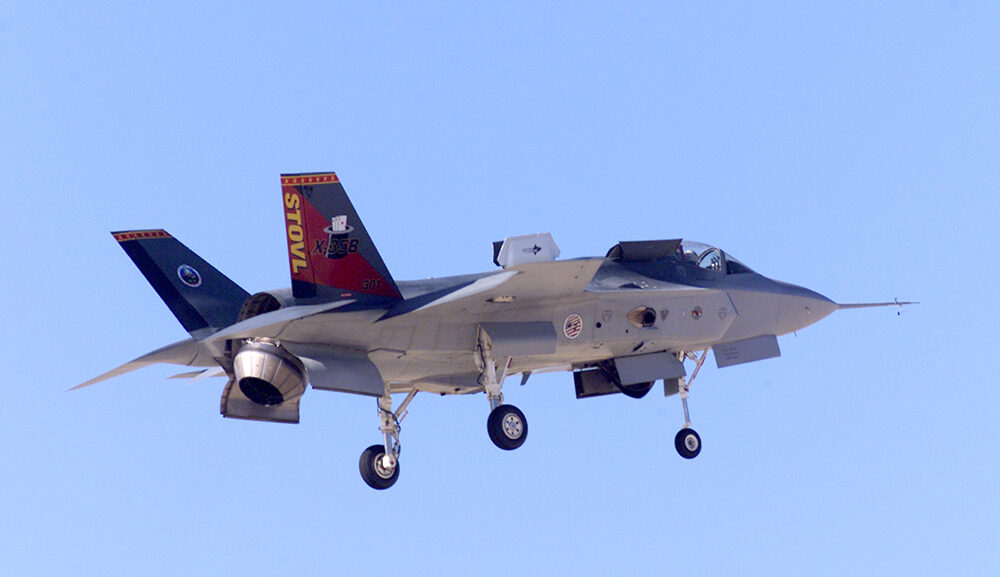
June 23 — The X-35B, the prototype of the Lockheed Martin Joint Strike Fighter, completes its first vertical takeoff and landing during a flight test campaign in Palmdale, California. The following day, it completes its first sustained hover. Lockheed Martin release, June 23, 2001.
Also in June — Lockheed Martin delivers its first Atlas V flight booster, dubbed AV-001, to Cape Canaveral. Four months later, the rocket is fully assembled. Lockheed Martin release, Oct. 18, 2001. Mark C. Cleary, Atlas and Titan Space Operations at Cape Canaveral 1993-2006, pp. 60-61.