Vertical moves to finalize air taxi design this year, begin building prototypes


U.K. air taxi developer Vertical Aerospace plans to finalize the design of its Valo electric aircraft this year and is now aiming for certification in 2029, according to chief engineer David King.
That amounts to a slight delay from the schedule the company laid out late last year, when it unveiled the six-passenger Valo. Vertical was originally hoping to get type certification from the U.K.’s Civil Aviation Authority and the European Union Aviation Safety Agency in time for the Valo to enter service in 2028.
By 2027, the company plans to build and certify parts for seven Valo prototypes and begin flight testing with them. These prototypes will be larger than the four-passenger versions Vertical has been flying since 2022.
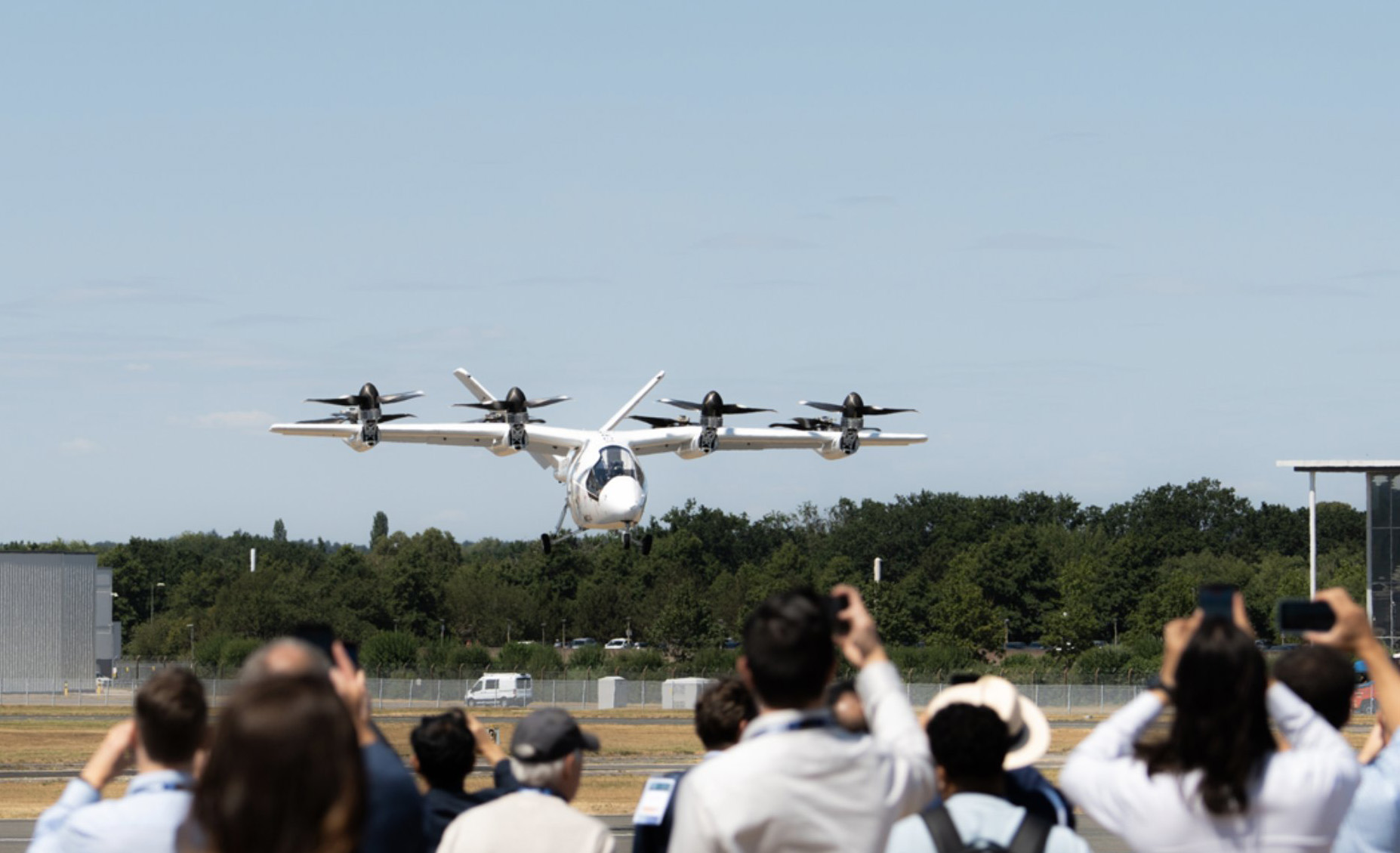
King spoke to me via video call Wednesday after one of the prototypes, the VA-1X, completed two demonstration flights at the Farnborough International Airshow outside London. These displays, which include vertical takeoff and landing and a complete transition to horizontal or forward flight, started Monday and were slated to continue throughout the week.
“One of the objectives of us here this week is to spread the word that the technology is mature,” King said. “Now we can and are flying these transitions smoothly, effectively.”
During the Monday flight, the aircraft appeared to move smoothly through an approach in forward flight to a vertical landing. However, one of the four forward tilt-propellers tilted up a moment earlier than the other three, the broadcast showed.
Vertical told me the aircraft’s flight control software “commanded the inner left tilt earlier than usual in response to a sudden large gust of wind.”
“When we looked at the data, this was the normal and correct response to a change in conditions in landing,” a spokesperson said via email. “As a number of people have observed, the aircraft stayed incredibly stable throughout. This is a testament to the aircraft’s ability to operate safely and comfortably in unexpected circumstances.”
In the interview, King had told me the company is continually adjusting its aerodynamics and control software for the Valo, which would allow two rows of passengers seated three abreast.
“It’s not the exact same software build, but for the purposes of understanding the aerodynamic characteristics, the majority of the software design is behind us,” he said.
The two VA prototypes currently in flight testing are all-electric, but the next the company plans to build will have hybrid-electric propulsion, King said.
“We’re going to keep doing flight testing to learn as much as we can. On aircraft three later this year, we will install a turboelectric generator system that we have in our lab, essentially the baggage bay of the aircraft,” King told me. “And then we will do the risk reduction technology demonstration of our hybrid-electric derivative next year.”
In the meantime, Vertical is negotiating with the U.K. government for a grant of up to £10 million ($13.5 million USD) that would partially fund the construction of the company’s initial aircraft production site.
That amount is “small from a finance perspective” for a publicly traded company that has raised $800 million, King said, but it’s important regardless. The funding amounts to “a commitment from the government to say we’re going to work with you, to do something new and innovative in commercial aviation,” he added.