


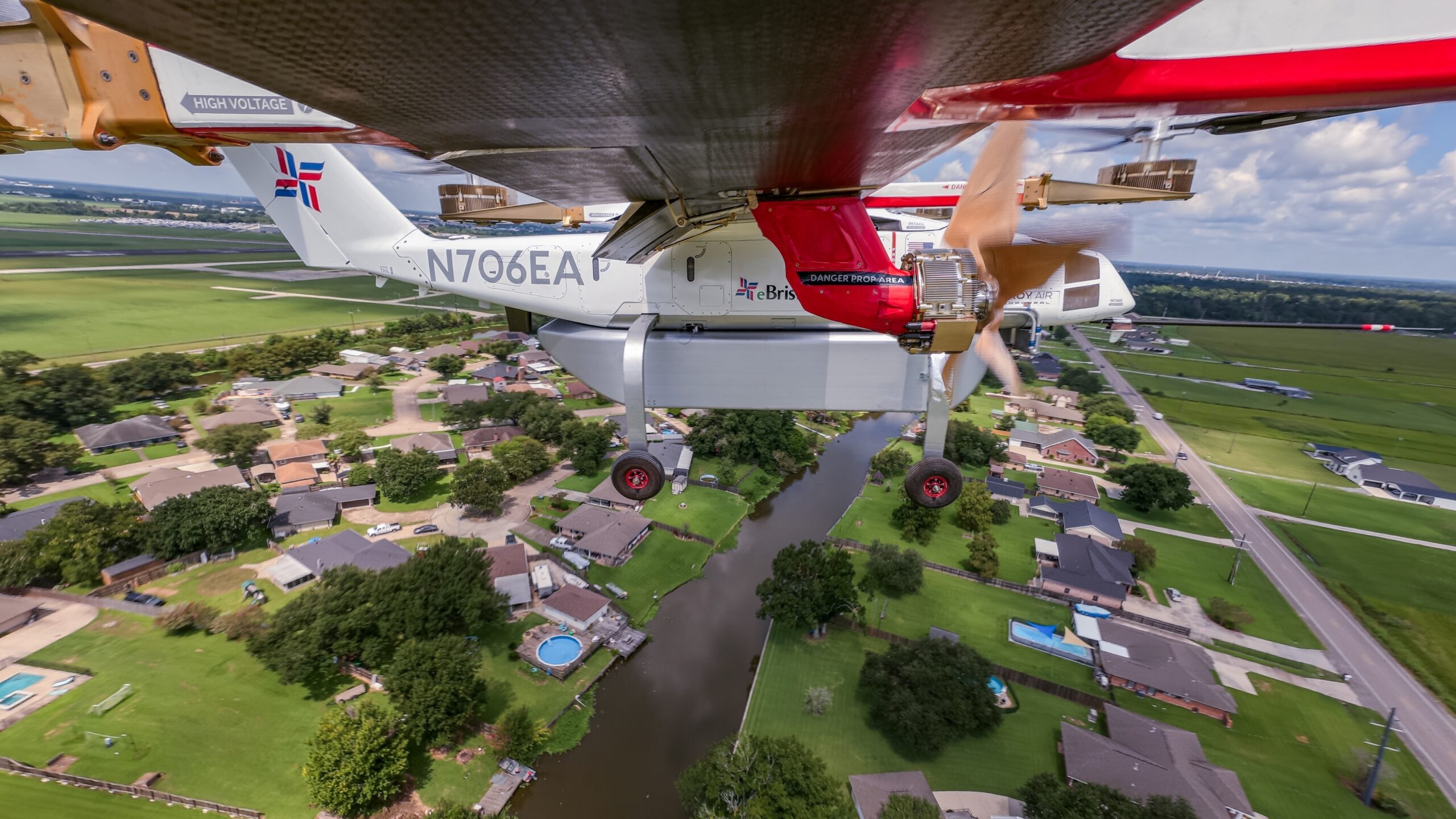
FAA’s eIPP program is moving as fast or faster than expected, with upcoming flights planned in Florida, New Mexico and the New York-New Jersey area, according to the program director.
Flights have been conducted in a handful of states, “and some companies have flown several times,” Tina Buelo said in an interview. “Now we want to move from having just one flight or series of flights to establishing some kind of regular schedule, or repeatable operations, to gather the data on that.”
FAA established the eIPP, or eVTOL Integration Pilot Program, last year in an effort to “demystify” advanced air mobility with demonstrations around the U.S. The first flight took place almost three months ago, and demonstrations so far have been conducted in Louisiana, Maryland, New Jersey, North Carolina, Pennsylvania, Texas, Utah and Virginia.
Thus far, all of the flights have featured onboard pilots and carried cargo or medical supplies, with the exception of several by California company Elroy Air, which used its Chaparral drone to autonomously fly cargo in Louisiana.
Buelo said she noticed the public reaction to a September flight by BETA Technologies, in which one of the company’s electric aircraft landed at the Dare County Regional Airport in North Carolina carrying medical supplies.
“People were gathered to watch the flight, and they were really excited about not just the delivery of medical supplies and that benefit, but also the jobs that this could bring to their town,” she said. “This is going to have real-world applications.”
Routine cargo or passenger service for paying customers, she said, remains a possibility later in the program, which is slated to continue for at least three years.
Kristen Costello, BETA’s head of government and regulatory affairs, said the eIPP flights are providing the company the chance to experience real-world challenges, such as wet runways.
“It’s one thing to say we can make these things happen in a perfect environment, but that’s not aviation,” she said. “Now we apply some real-world parameters and show over a course of time what this will look like to our operators.”
Specifically, she said, the company is learning the optimal placements for charging stations and cargo offloading docks.
“These flights have tremendous value to customers because they’re getting to actually see how this technology is going to integrate into their fleet,” Costello added.