

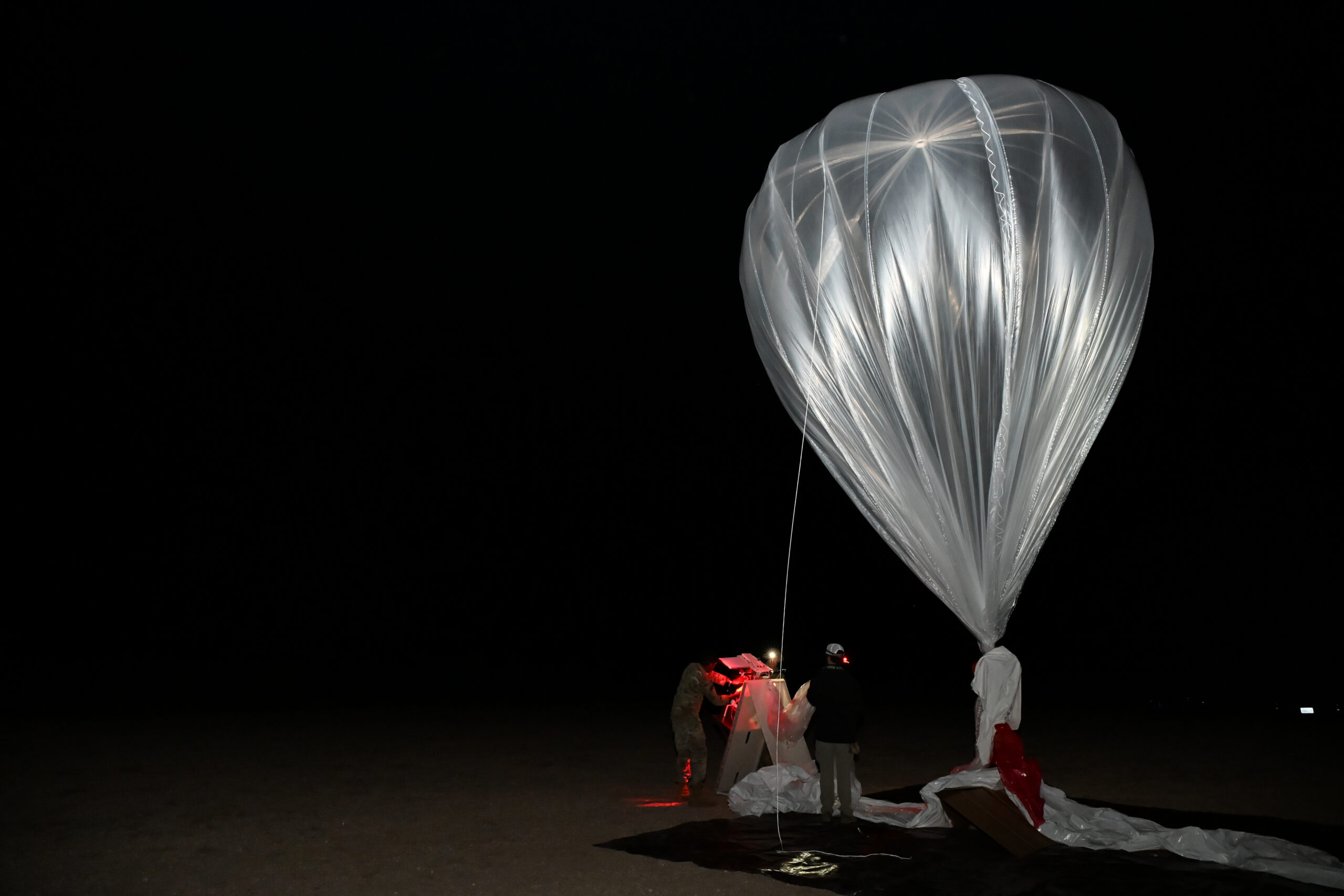
WASHINGTON, D.C. — The U.S. Army, seeking to expand its space operations, expects over the next year to focus more attention on the stratosphere and experiments with high-altitude balloons, command leaders said Wednesday.
“I went from nowhere to a huge believer very quickly once I saw [high-altitude balloons] in action,” Lt. Gen. John Rafferty, who heads the Army’s Space and Missile Defense Command, told reporters at the Association of the U.S. Army’s annual conference here.
“We’re really excited about this next year, about what we’re going to do to further the program for high-altitude balloons and stratospheric operations,” he added.
Col. Joseph Mroszczyk, head of the Transformation Integration Directorate for Space Superiority within the same command, said stratospheric operations are part of the Army Space Vision document released in 2024.
Stretching between about 60,000 to 100,000 feet, this atmospheric region serves as “a transition point between what is normally considered the aerial layer and the space domain,” Mroszczyk said.
Operating at these altitudes “allows some persistence and broad coverage in an area where you can deliver space-like capabilities in terms of payloads, but then also take advantage of the deep access that you get from a stratospheric ballooning,” he said. Example capabilities include “sensing and communications and extension of the launched effects portfolio.”
“That is a way that we can help exploit the stratosphere,” Mroszczyk said, “and we’ll do that throughout multiple experiments over the course of the coming year.”
In addition to high-altitude balloons, the command is interested in “long-endurance, unmanned solar-powered aircraft,” according to a press kit shared at AUSA.