AstroForge preps for second attempt at reaching an asteroid


Roughly 15 months after its first spacecraft was lost, deep-space mining startup AstroForge is readying for a do-over.
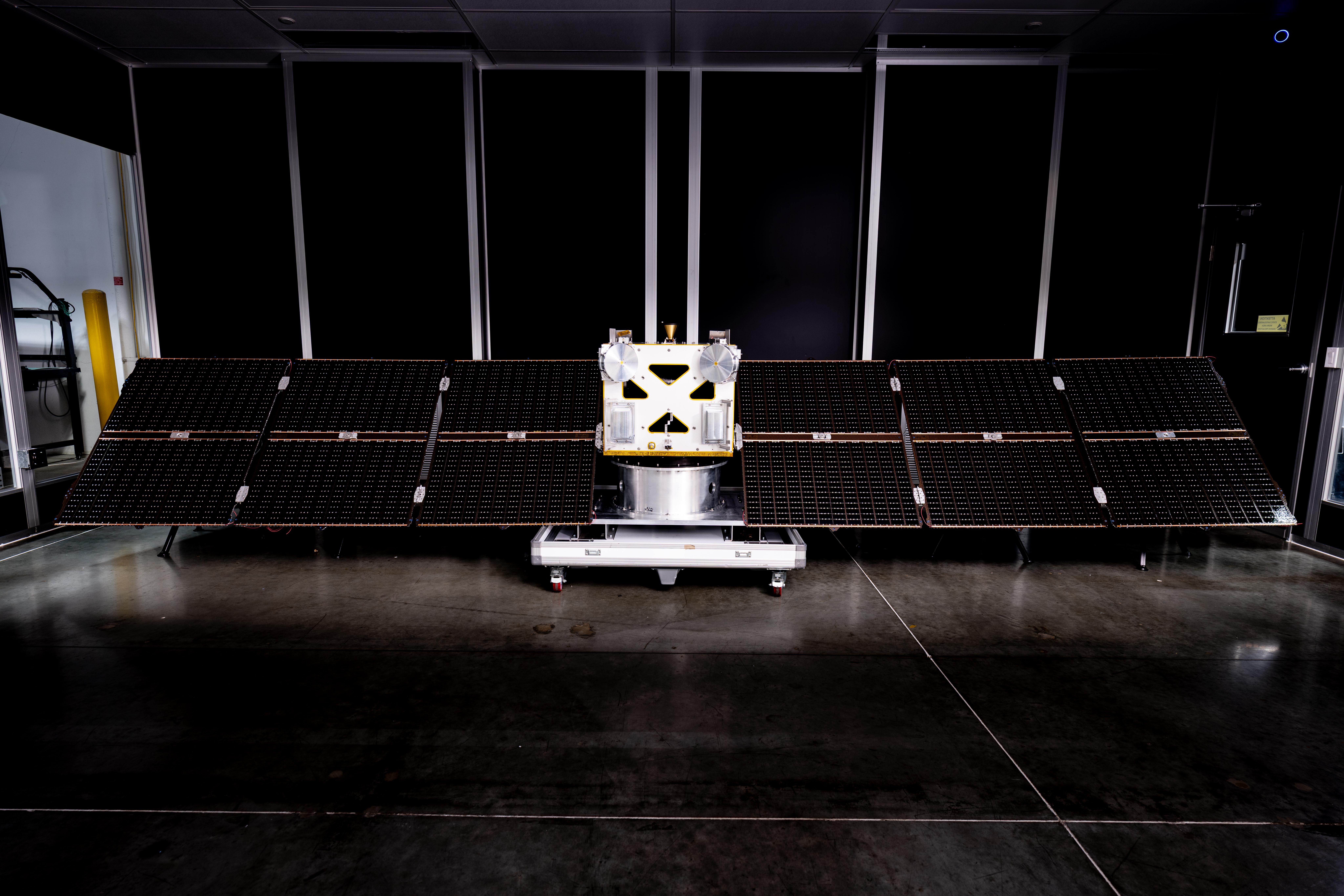
The California company announced on June 3 it has completed assembly of its DeepSpace-2 spacecraft, slated to be launched aboard Intuitive Machines’ IM-3 lunar lander “this year,” said Matthew Gialich, co-founder and CEO.
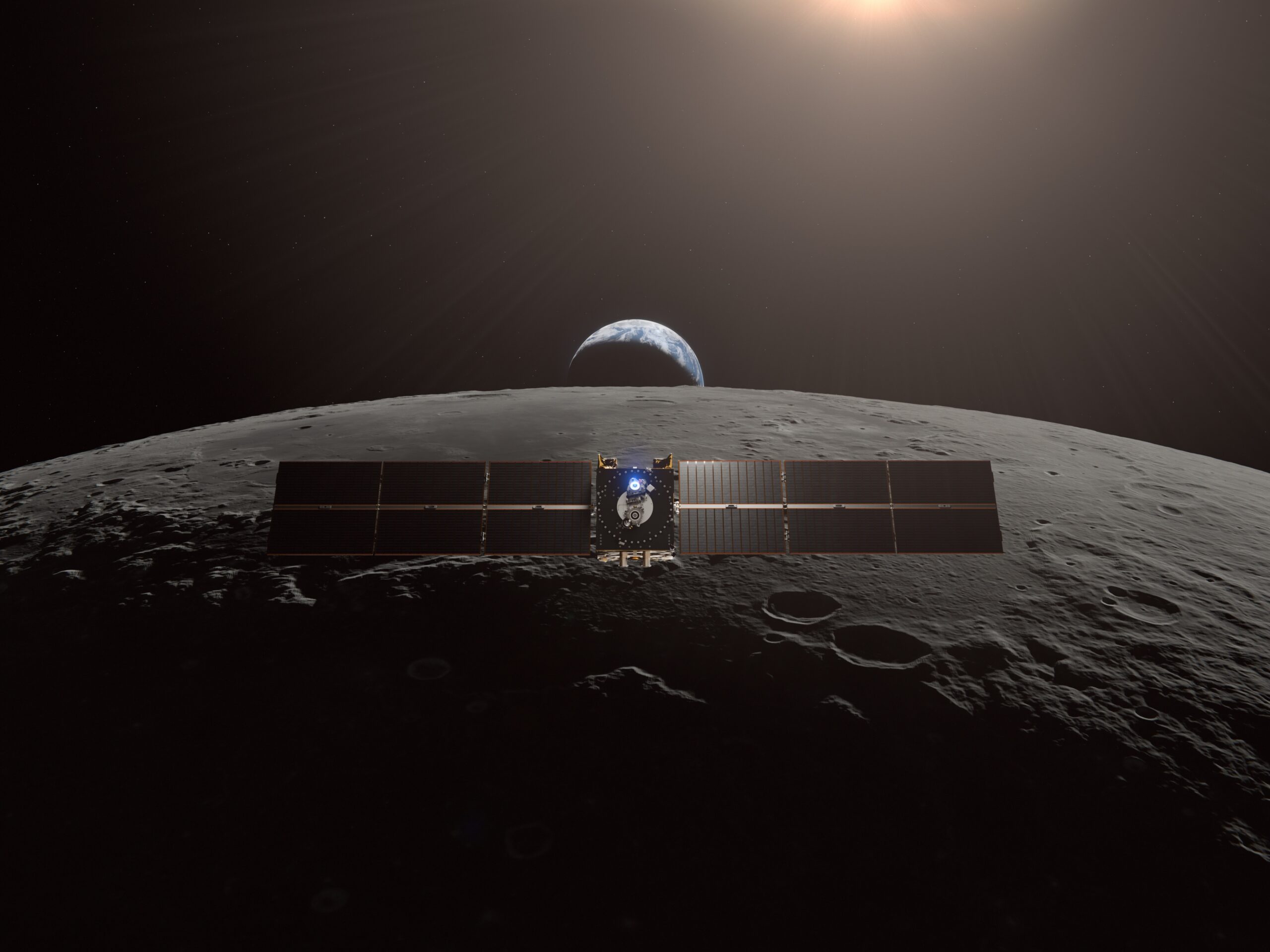
Once deployed from the lander, the 200-kilogram spacecraft is to “slingshot around the moon” and begin a three- to-nine-month journey toward its target: one of “about 28 candidate asteroids” thought to be made of metal. AstroForge will choose among them closer to launch.
Although the main objective is to verify the spacecraft’s performance, DeepSpace-2 will also attempt to photograph the target asteroid and perhaps attempt to land — or at least crash into it.
Demonstrating this rendezvous is a crucial step toward AstroForge’s long-term goal of mining near-Earth asteroids for precious metals and, in the process, opening up deep space to routine exploration and further commercialization.
AstroForge is self-funding DeepSpace-2, which Gialich said will cost around $10 million. This is the company’s second asteroid rendezvous attempt since its founding in 2022. The first spacecraft, named Odin, was lost due to a communications failure that arose roughly 24 hours after its launch in February 2025.
AstroForge redesigned the DeepSpace-2 spacecraft to prevent a similar issue, Gialich said, and now “we go into the testing campaign.” The company tested individual components throughout the development process, so this campaign will focus on the integrated spacecraft.
Based on the lessons learned during the Odin mission, AstroForge changed aspects of its testing equipment, methodology and regimen, Gialich said.
“It’s not really a small upgrade or step change in how we think about testing,” he said. “It is a fundamentally different way to look at a spacecraft.”
First, rather than relying heavily on external testing facilities, “we bought the equipment to be able to test it all in-house,” he said. The company added or improved its on-site thermal vacuum chamber, solar simulators, vibration table and anechoic chamber, a room with specialized soundproofing to mimic the deep space environment.
Next, the team reworked its testing processes, recognizing that methods used to prepare satellites for low-Earth orbit will not prepare a spacecraft for deep space.
For instance, satellites in LEO have day-night cycles that assist in balancing their thermal loads, but DeepSpace-2 will have one side permanently facing the sun and another facing “the coldness of space,” Gialich said. As a result, “we don’t do thermal cycles; we do thermal stagnation points for long durations,” meaning the spacecraft is put under maximum heat and pressure, then monitored for extended periods.
Even with these changes, “thermal and communication are always going to be the things that are the hardest to test and the hardest to do,” he noted.
Altogether, Gialich said, these facilities upgrades and new processes will enable an increased focus on testing “early and often.”
The pivot to more in-house work also contributed to a shorter development timeline for DeepSpace-2, he said.
The company outsourced construction of the Odin spacecraft, which took about two years, but ultimately deemed the spacecraft unusable upon its delivery 10 months before launch. As a result, “we had to go build a spacecraft in eight and a half months,” he said.
The experience convinced Gialich that if AstroForge is going to make asteroid mining economically feasible, “we have to be an exceptional engineering team.”
“There’s still a lot of work to go” with DeepSpace-2, he said. “There’s a lot of testing to go. We’re probably going to have changes and discoveries during testing.”
He added: “If we don’t, we’re not testing hard enough.”