FAA releases draft of new commercial supersonic flight regulations


FAA is proposing a maximum pressure-wave reading at ground level, not a decibel level or human annoyance standard, as a future regulating condition for commercial supersonic flight, according to a notice of proposed rulemaking published today in the Federal Register.
This new metric, which the agency calls a “noise-based certification standard,” would replace the 53-year-old ban on commercial aircraft flying at speeds of Mach 1 and greater over the continental U.S., enacted due to public complaints about annoyance and damage from military aircraft testing that generated thunderous sonic booms. President Donald Trump signed an executive order in July 2025 directing FAA to craft a new standard permitting overland supersonic flight.
Specifically, the 63-page draft rule states that such flights would only be permitted if “the aircraft be operated such that sonic boom overpressure at the surface does not exceed 0.11 pound per square foot (psf),” among other conditions.
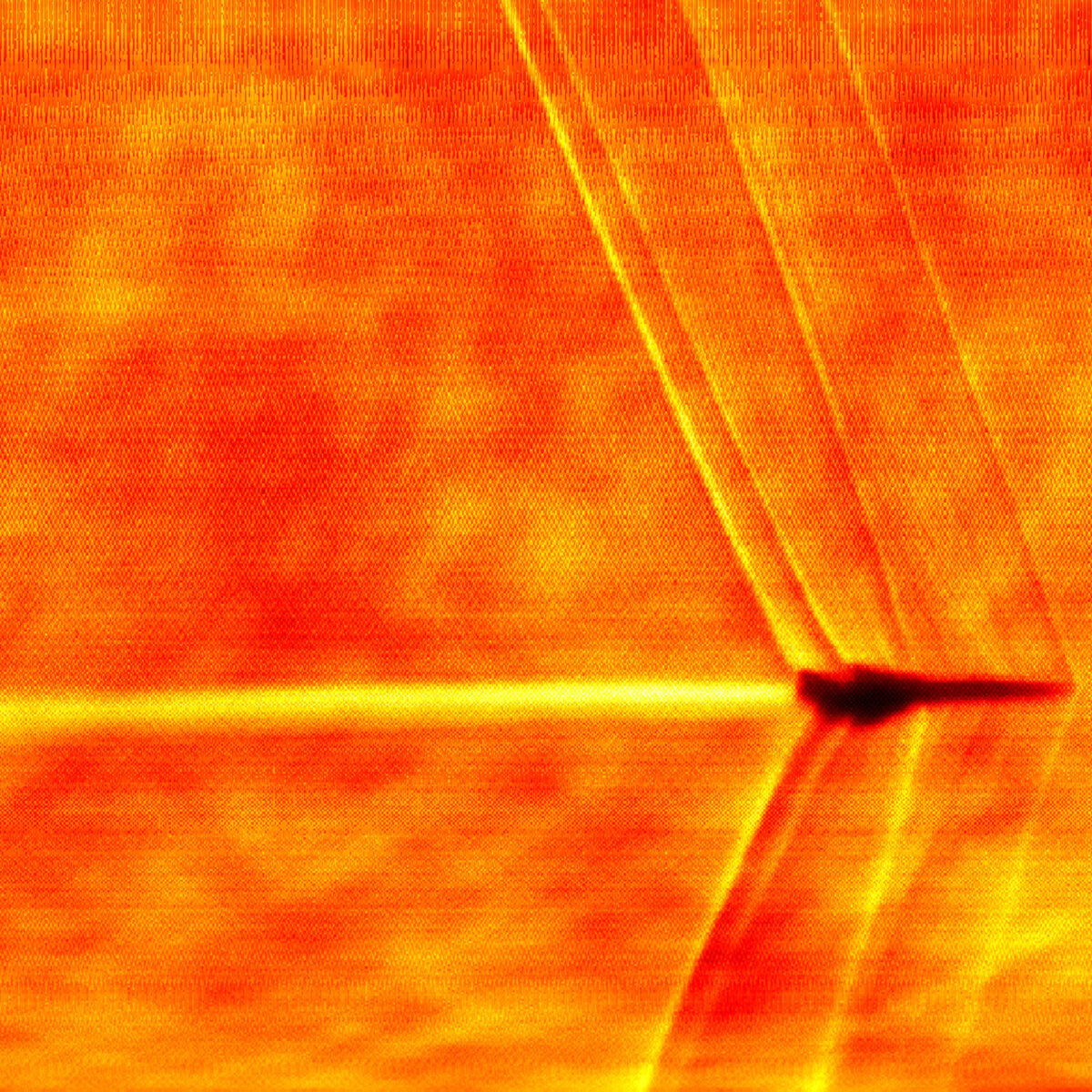
The draft referenced NASA’s ongoing research into sonic boom mitigation with its X-59 demonstrator, which broke the sound barrier for the first time in early June. This experimental aircraft was designed so that the shock waves it generates while flying supersonically would not coalesce into ear-splitting sonic booms, but rather a “sonic thump” similar to the sound of a car door shutting about 6 meters (20 feet) away.
The document also references Boom Supersonic, which has embraced a different approach to quiet supersonic flight. The Colorado company is developing an autopilot mode that’s meant to leverage the Mach cutoff phenomenon, in which sonic booms refract away from the ground when the aircraft is flown at the correct speed and altitude.
“This refraction prevents potential sonic boom with an overpressure greater than 0.11 psf from reaching the surface,” FAA’s draft reads. “Manufacturers have stated it may be possible with avionics technologies to scale MCO [Mach cutoff] such that operators can use the technique to operate at supersonic speeds and abate sonic booms at the surface.”
A Boom spokesperson told me the company welcomes the draft rule but is still reviewing the document. The company “will provide our comments to the FAA after a full assessment,” the spokesperson said.
“With today’s FAA action, a renaissance in supersonic passenger air travel is now inevitable,” Boom CEO Blake Scholl said in an emailed statement.
Two sonic boom researchers I spoke to cautioned that a pressure limitation like the one FAA is proposing doesn’t necessarily correspond to noise, which is determined by human perception.
William Crossley, professor of aeronautics and astronautics at Purdue University in Indiana, said a “simple pressure level is not sufficient to determine how annoying” overland supersonic flights will be to people on the ground. Instead, it might be more straightforward for FAA to propose a noise standard, possibly using decibels or a similar standard tuned to match how the human ear perceives different frequencies known as dBA.
But in the view of Victor Sparrow, professor of acoustics at Pennsylvania State University, FAA’s proposed standard of 0.11 psf at the surface is likely sufficient to protect the public.
“There is always more work to do, and the rule can be refined, but this is a good step in a good direction,” Sparrow told me by email. “I think FAA’s proposed rule will work until we have more scientific data to improve upon it.”
“There is a good chance this will protect the public from the additional noise impacts of the new supersonic flights,” he added. “It’s particularly important that the rule covers both the sound directly below the aircraft and as well as secondary sonic booms a substantial distance away.”