
Flying blind: How NASA’s X-59 could bolster the windowless cockpit


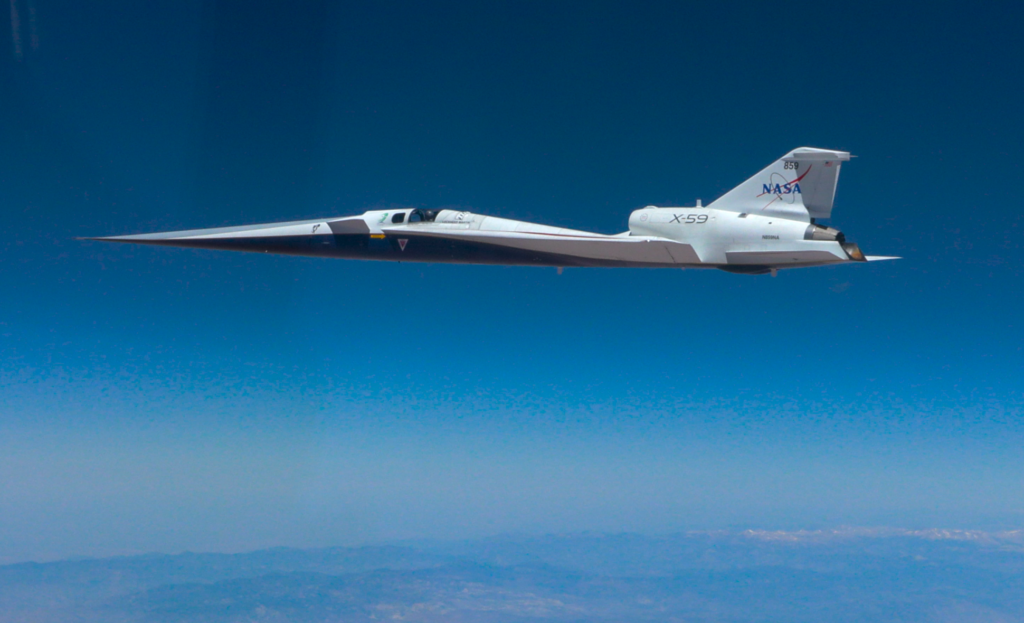
When NASA’s experimental X-59 aircraft broke the sound barrier for the first time on June 5, it marked a big step toward the return of commercial supersonic flight. But the aircraft could help foster innovation in another area as well: the cockpit.
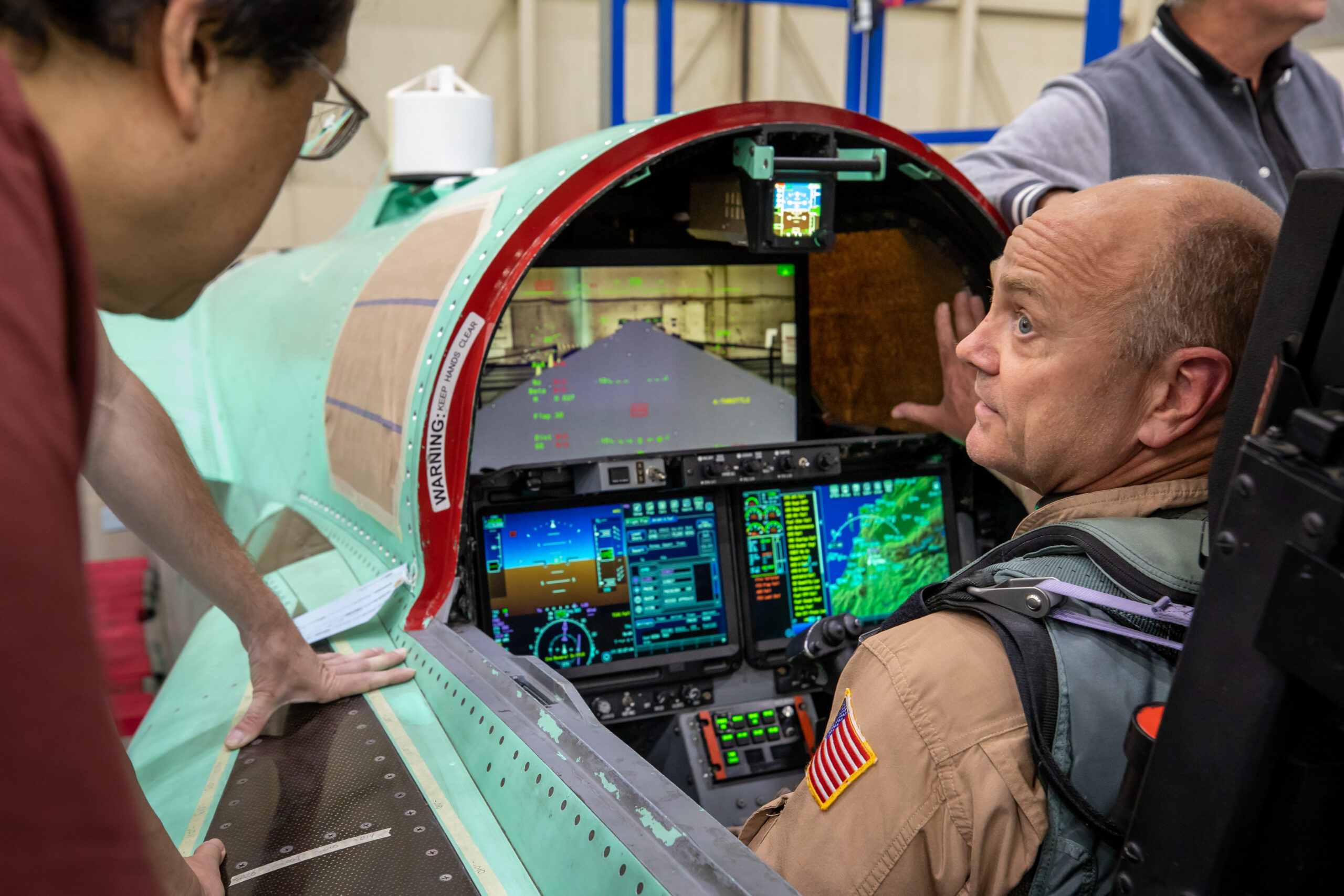
To mitigate the thunderous sonic boom produced when aircraft exceed Mach 1, NASA and prime contractor Lockheed Martin Skunk Works designed X-59 with an elongated, needle-like nose to help break up the supersonic shock waves — a configuration that also obstructs the forward view. So instead of a traditional windshield, the pilot navigates with the eXternal Vision System (XVS), a 4K monitor that displays images from two high-tech cameras: one on top of the aircraft’s nose and another below the fuselage.
While airlines have for decades toyed with removing windows to cut weight and boost fuel efficiency, X-59 and its Quesst mission — short for quiet supersonic technology — is a real-world proof-of-concept that pilots can safely fly with windowless technology, according to NASA.
Peter Coen, the agency’s Quesst mission integration manager, says the risk if the technology fails is no higher than that of flying a traditional jet in bad weather.
“It gives you a very good view,” Coen said of XVS. “The view is as good as you get with your eyeballs, but you can also take information from other sensors, like the radar or an infrared sensor, and integrate that with the display. So you pick up the traffic a lot faster than you would if you were just trying to gaze through the murk.”
Some military jets already have windowless cockpits, but they’ve yet to be adopted for passenger airliners, despite Airbus patenting a version of the concept in 2014.
One reason for this may be the recent maturation of the display, camera and computer technology. Coen noted that although NASA and Boeing first explored XVS in the 1990s, the technology wasn’t ready to be flown on an aircraft at that time. It continually improved during X-59’s development, and he predicted such systems will become even more capable in the future.
For supersonic jets, windowless cockpits could solve the problem of how to see past the long noses common in such aircraft. Although X-59 is not completely windowless — it has a canopy and two small windows for backup visibility — the lack of a forward windshield is a big shift.
Even so, NASA test pilot David Nils Larson told me his more than 500 hours in the flight simulator prepared him well for flying X-59. Larson was in the cockpit when the demonstrator took to the air for the first time in October.
“It’s a lot like a video game,” he said of how it feels to fly the aircraft. “At the end of the runway, we have a flare key that comes up at about 200 feet. It starts marching up, and then we basically just follow that thing up, and then stop right below the horizon. Then the airplane sets down, so it makes it very easy to do.”
Larson noted that the change in perspective due to the different camera positions takes some getting used to. The difference in height between the lower and upper cameras can cause some parallax, or observational inaccuracy. The upper camera is also a bit further forward than the lower one while the landing gear is behind the pilot, meaning the pilot sees a turn on the screen before it’s time to actually make the turn.
“But it’s amazing how quickly you compensate for that, and you figure out, ‘OK, now is about the time you know you turn,’ and then everything starts lining up again,” he said.
Conventional aircraft design leaves a lot to be desired from an efficiency and weight standpoint, said Guy Gratton, a flight instructor and professor of Aircraft Test and Evaluation at England’s Cranfield University. Windows introduce vulnerabilities, as seen in the mid-air breakups of several de Havilland Comets in the 1950s, which investigators concluded were partially caused by the jet’s square windows.

Windows also add extra manufacturing cost and weight. Still, they have always been a feature of aircraft for safety and comfort reasons.
“There are some really sound reasons to get rid of the windows,” Gratton said. “If you can do a good enough camera system, there’s a definite advantage. You could certainly eliminate a lot of the blind spots, and the vast majority of cockpits have dozens.”
The windowless design also raises the question of whether the cockpit could be moved nearer the plane’s center of gravity, he said, which would allow for a sleeker nose design and improved aerodynamics.
However, bringing this technology to commercial flight would be challenging due to the safety considerations that come into play with potentially hundreds of passengers, as well as the hurdle of public acceptance, Gratton noted.
“You might find a lot of traveling public, and the normal airline pilots, are quite nervous of that big change, so perception could well be a major player here,” he added.
Another potential obstacle is ensuring the technology is as reliable as the traditional windshield, he said.
“A sheet of glass doesn’t generally go wrong unless it breaks, so you’re probably looking at multiple cameras, multiple screens, just for the levels of certainty you’ve got to have,” Gratton said. But “we’re heading in the direction where they should all be possible.”
In emailed comments, an FAA spokesperson said the agency requires flight deck windows to provide pilots with an “extensive, clear, and undistorted view,” adding that it will “thoroughly evaluate any proposed new technologies and aircraft designs to ensure they meet our rigorous safety standards.”
And a spokesperson for the European Union Aviation Safety Agency said the regulator would want to ensure any new technology is as safe, if not more safe, than the current cockpit designs with windows.
Replacing the cockpit windows with digital screens would require additional training for pilots, Gratton said, which would amount to an increased near-term cost for airlines. However, he noted that could be offset by savings from reduced fuel consumption because the aircraft would weigh less.
So when might this technology start appearing on passenger planes? Gratton said he sees the industry moving in this direction already. He pointed to the proliferation of Head-Up Display, or HUD, which replaces much of the traditional cockpit instrumentation with a transparent glass screen that projects information the pilots need in front of them. This feature is standard on aircraft including Boeing’s 787 Dreamliner and 737 MAX, while Airbus has it on the A350 and as an optional add-on for newer iterations of the A320 family.
“I think it’s going to start becoming something seriously in 10 to 20 years,” he said of the windowless cockpit. “If it’s done well, particularly if it fuses information together, it will be an easy sell to most aircraft.”