Canadian startup nears full-scale prototype featuring stowable-fan design


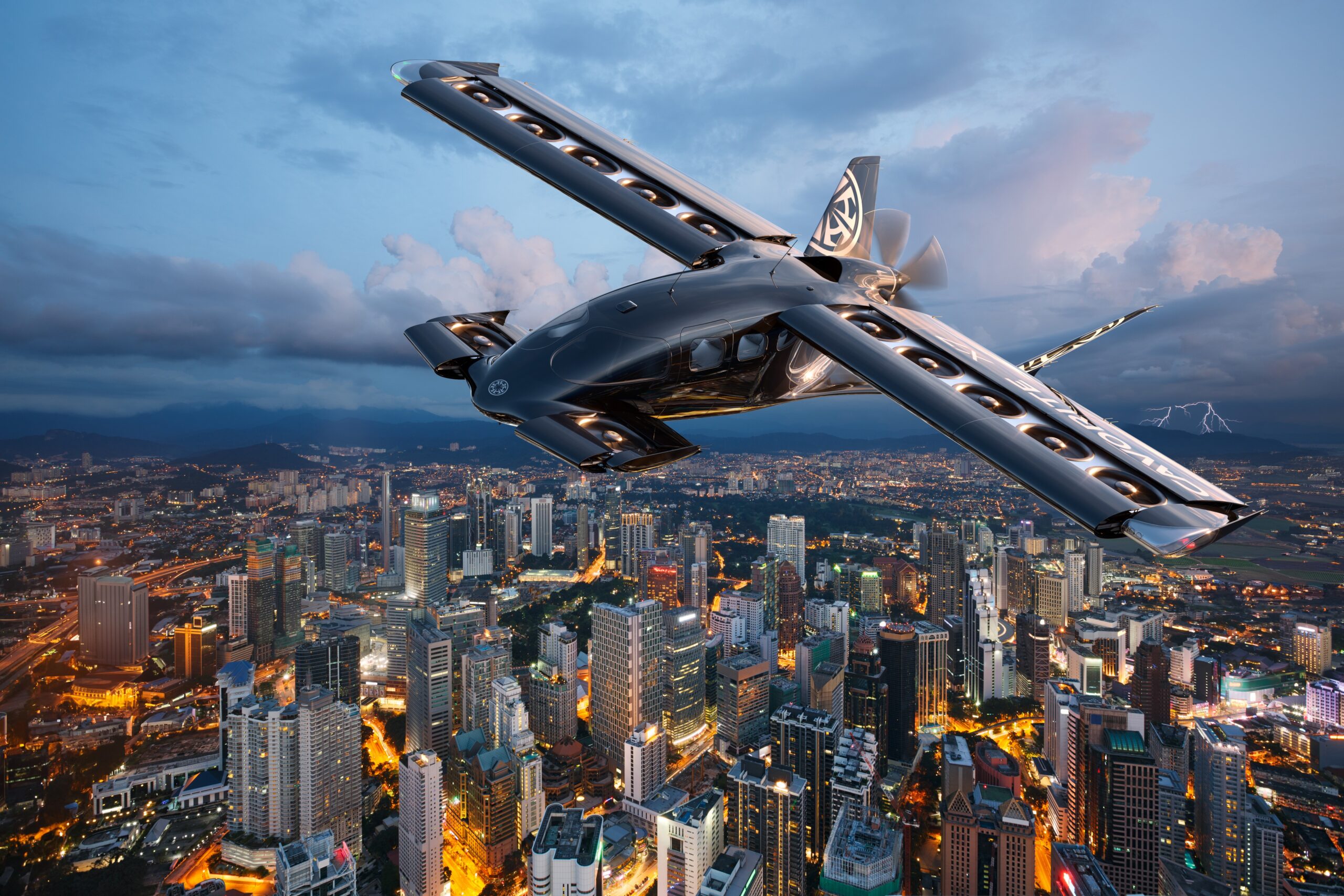
Among the many experimental electric aircraft designs that have emerged over the past decade, Horizon Aircraft’s Cavorite stands out for how its ducted fans disappear under sliding wing covers during forward flight.
The Toronto-based company demonstrated this capability in 2025 with a half-scale demonstrator and is now assembling systems and parts for the full-scale prototype, the Cavorite X7, CEO and co-founder Brandon Robinson told me. The goal is to complete assembly by the end of the year.
“We consider ourselves a second-wave eVTOL company,” Robinson said, referring to the handful of startups and established companies who have already unveiled electric aircraft designs. Based on its observations of those companies, Horizon designed the Cavorite for longer trips — up to 800 kilometers — and opted for hybrid-electric propulsion.
This approach, Robinson said, means “it doesn’t have a crazy amount of heavy batteries on board and it still leverages a good old-fashioned jet fuel turbine engine.”
The publicly traded company describes its aircraft as being able to “move people and cargo at almost twice the speed of a traditional helicopter” at 30% lower direct operating costs, due to its 12 stowable, ducted-lift fans in the main wing and front canard. The X7 variant is designed to seat one pilot and six passengers.
The X7’s fan-in-wing design is meant to combine the agility and versatility of a helicopter with the speed and strength of a conventional aircraft. This placement takes advantage of the wing structure to support the fans, rather than simply adding duct or shroud to a rotor that juts out from the aircraft body, Robinson said. The company now refers to this configuration as a hover wing.
NASA tested a similar configuration with the Ryan XV-5 Vertifan, two of which were flown in the 1960s. These experimental aircraft had hinged covers on the upper wing surface that could be opened for vertical takeoffs and landings. That effort was canceled after fatal crashes of both aircraft due to problems unrelated to the fan-in-wing structure.
Horizon’s hover wing Cavorite will be an eVTOL, but Robinson said he plans to first offer a CTOL version, meaning one that takes off and lands via runways. This variant would have only a pusher propeller. This approach is similar to that of BETA Technologies of Vermont.
The now-defunct German company Lilium also developed fan-in-wing aircraft, though their designs were not retractable. Tennessee-based Whisper Aero has also tested fan-in-wing configurations.
Horizon’s configuration offers benefits in terms of aerodynamics in flight, analyst Sergio Cecutta told me.
However, the complexity of the design and moving plates to cover the fans may add additional failure points, said Cecutta, whose company SMG Consulting produces the AAM Reality Index of electric aircraft rankings.
“My bigger concern is just whether any new players can come in and raise enough money when this industry has already seen so many billions of dollars poured into new designs,” he said.
Horizon raised about $10 million when it went public in 2024 through a special purpose acquisition company. The company has since raised $45 million in two funding rounds, and reported in an investor presentation earlier this month that it has more than $75 million in cash.