
Norway seaplane startup prepares for propulsion tests


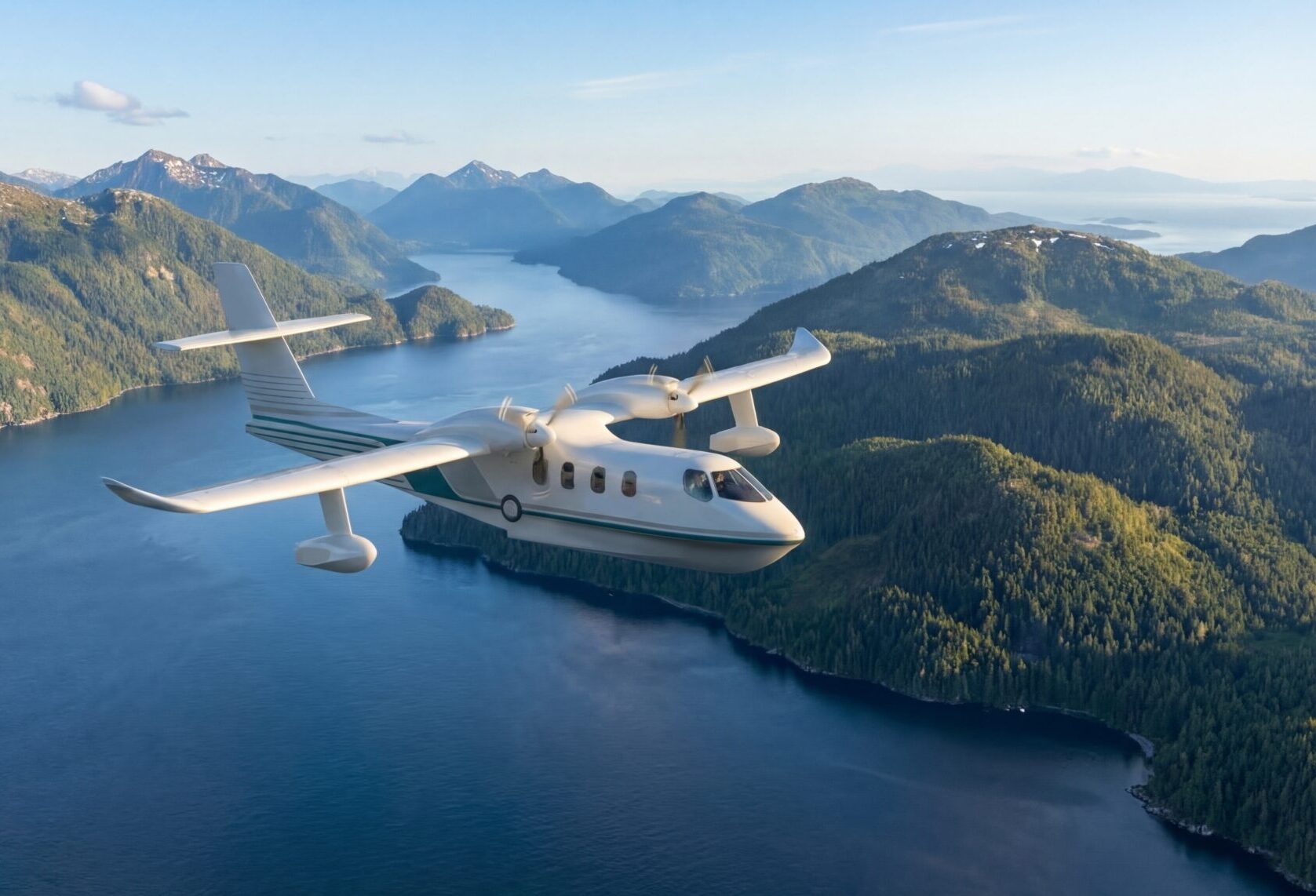
NOEMI Aerospace of Norway is targeting “this summer” to begin testing the propellors for a planned nine-passenger electric seaplane, with the goal of beginning commercial service in 2030, the company’s chief engineer said in an interview.
The company, formerly known as Elfly, believes the aviation industry is long overdue for a clean-sheet seaplane design that takes advantage of aeronautics advancements, particularly distributed electric propulsion and carbon fiber composite structures. Most seaplanes in use today are based on far older designs, dating to the 1960s.
Construction of the first full-scale demonstrator is scheduled to be completed in “mid-2027,” said Simon Bendrey, NOEMI’s chief engineer, who joined the company in January, and “there’s still quite a bit to do.” He previously held similar roles at Dufour Aerospace and Magellan Aerospace.
By “this summer,” Bendrey said, “we should have a full propeller test rig up and running with a full propeller on it” and begin construction on the primary structure.
NOEMI’s initial design will rely on fully electric propulsion, and the company plans to add in hybrid-electric and conventional fuel options as development progresses.
“Because of savings on fuel, you’d have a lot cheaper running costs with the hybrid electric, and because the aircraft is built of composites, you don’t have the corrosion that you get with an aluminum aircraft, so your maintenance time and costs are reduced,” Bendrey said.
When NOEMI founder Eric Lithun announced the company in 2021, the aircraft development was driven partly by the desire to modernize Norway’s many seaplanes that service remote, difficult-to-reach locations separated by steep fjords. Since then, the company has redesigned the hull and propeller positions to reduce spray and drag.
Lithun said the company has been communicating with the European Union Aviation Safety Agency about certifying the NOEMI aircraft but hasn’t initiated a formal application for a type certificate.
Cargo and passenger transport to remote areas remain the initial target markets, Bendrey said, but he noted that NOEMI has since identified additional applications, including military logistics and water scooping for aerial firefighting.
“We’ve researched it specifically over the last three or four months” to determine broader uses, he said. “There’s an immediate market for the electric or hybrid electric seaplane, particularly in Europe and Norway, and other island markets like the Maldives.”
Few modifications are needed to address firefighting, he said — chiefly the addition of a hatch that opens to allow water to flow into a bladder in the aircraft fuselage. The NOEMI design already accounts for issues like porpoising, dangerous skidding or swishing back and forth on a water surface, he added.
“There’s a huge demand for wildfire fighting, and people are trying to convert any kind of aircraft to do it, but that’s generally not a good way of meeting the mission,” he said. “Our aircraft is already a seaplane, designed to fly low and safely land on the water, and if you can land on the water, you can scoop up the water.”