Keep pilots engaged and make autonomy ‘subordinate,’ professor says


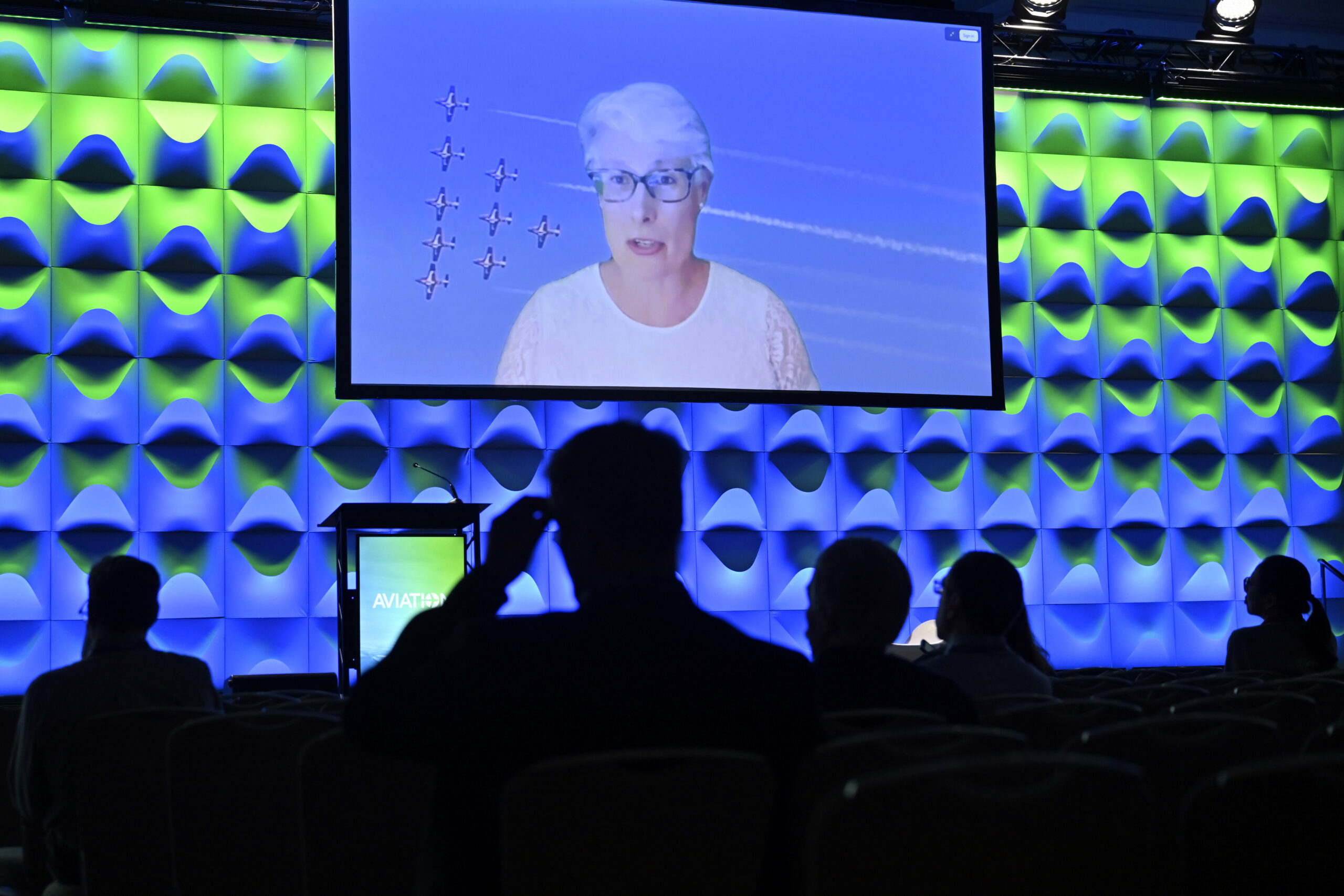
AIAA AVIATION Forum, San Diego — The “challenge of our age” for aviation is to design autonomous systems that are interactive and interdependent with human pilots and technicians, rather than an independent function that simply “takes over” human tasks, said Amy Pritchett, professor and head of the aerospace engineering department at Pennsylvania State University.
“Right now, we have evolved to an architecture where the autonomy does what it wants, how it wants, and the human monitors it — and this is unfortunate,” Pritchett told attendees here during a Friday morning keynote. “In basic management of human organizations, we learn about the need for an autonomous subordinate, someone you can delegate the authority to, who can go away and do its own things” without the need to supervise constantly.
In other words, she said, it’s undesirable to have autonomous technologies that require human supervisors to “sit there and wait for something to happen” to determine when they should take over. Instead, aviation needs autonomous assistants or subordinates who “know their limits and when to call for help.”
This is particularly relevant to pilots, said Pritchett, who has a private pilot license and is also licensed to fly commercial sailplanes. “I would love it, as a pilot, if we train the autonomy to do the boring and dull stuff. I would love autonomy to tune the radios. I would love autonomy to regularly do the system checks and let me know if things are going wrong, but not just leave me as the checklist follower.”
Simply monitoring autonomous systems would increase the risk of pilots losing their skills and not staying current with the latest aircraft technology and flying techniques, she noted.
“Keep pilots current, keep them engaged,” she said. “When we say autonomy should be explainable, the measure here should be that it should be explainable in operationally relevant ways to a busy pilot or controller, sufficient to be easily and quickly monitored.”
She added: “It is hard to just sit and stare at a screen, or to simply monitor a flight. We humans have many superpowers, but that is not one of them.”