New test campaign will put AI pilots in most realistic flight conditions yet, DARPA official says


In pursuit of more capable autonomous software, DARPA has begun allowing artificial intelligence agents to fly modified F-16s under “exactly the same conditions” as human pilots in training, according to the program manager.
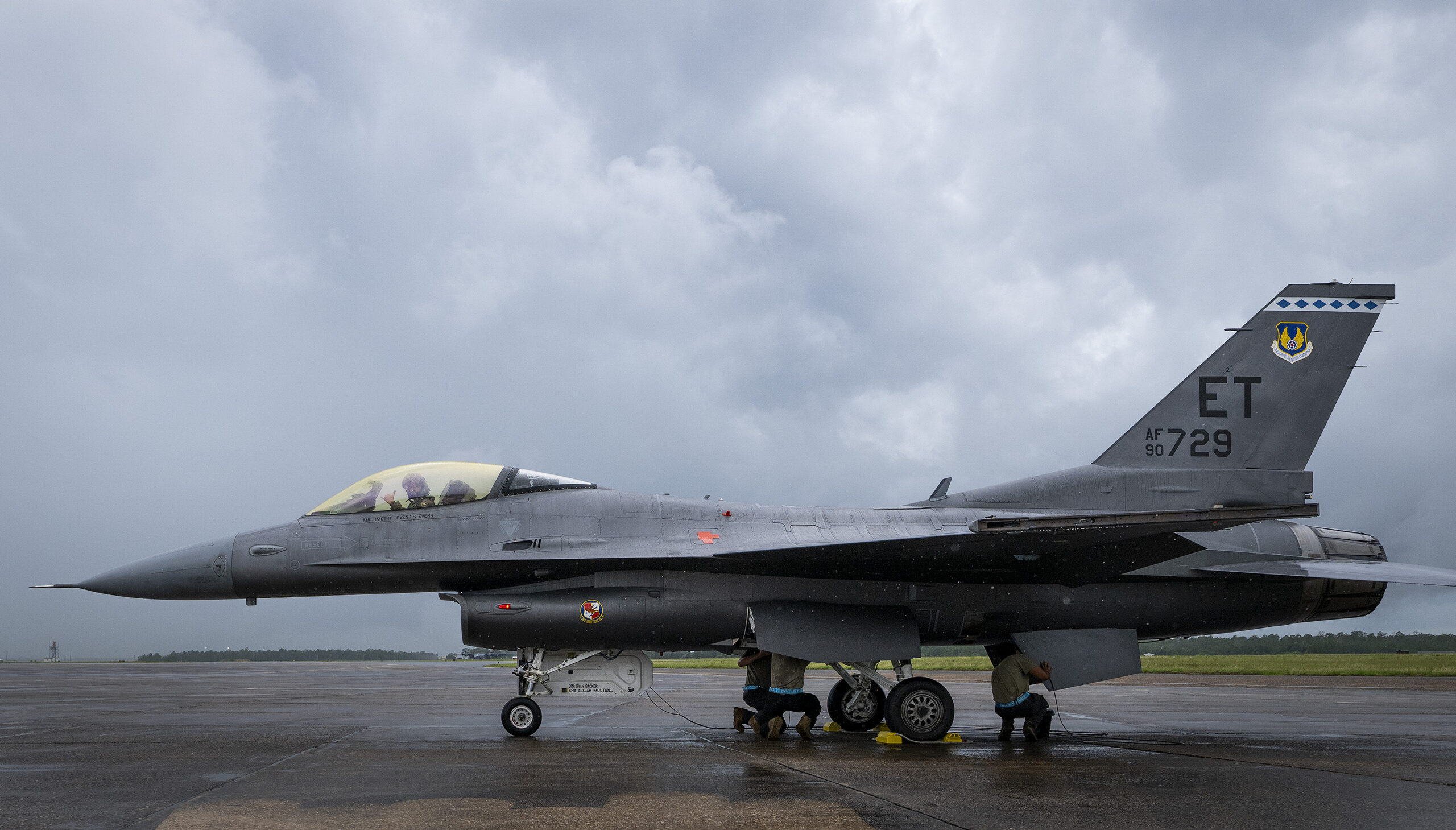
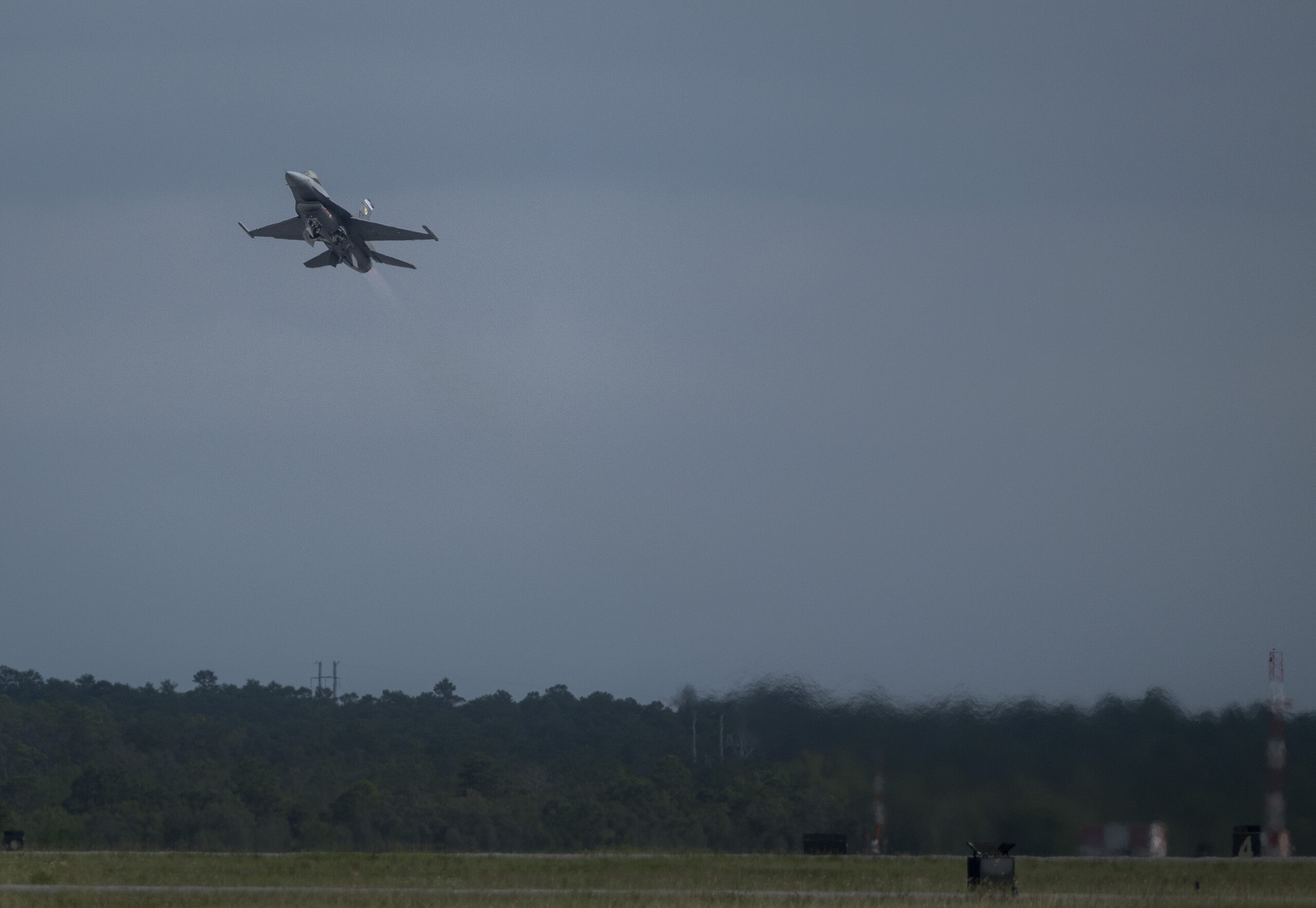
The joint DARPA-U.S. Air Force AIR program, short for AI Reinforcements, marked its first autonomous flight earlier this month at Eglin Air Force Base in Florida, according to a July 16 release. During the flight, a test pilot took off in a modified F-16, gave control to the onboard AI software and later retook control to land.
Going forward, the test flights will put AI agents in increasingly complex scenarios, with an ultimate goal of developing “combat autonomy for beyond-visual-range multi-ship combat in realistic operational conditions,” Brig. Gen. James Valpiani, the DARPA program manager, told me after the announcement.
“What distinguishes this program from all the previous programs is that we are operating autonomy on operationally representative aircraft,” he said.
DARPA has previously tested various AI agents aboard the X-62A VISTA, a highly modified F-16 testbed. For these flights, Valpiani said, the agents had “perfect” information and engaged with simulations, not live sensors.
In contrast, AIR flights will be conducted with a handful of F-16s recently equipped with VENOM, the Viper Experimentation and Next-generation Operations Model kit, to enable AI-controlled flight without changing the jets’ original software.
That means the various agents piloting VENOM-equipped aircraft must engage with “exactly the same sensors, exactly the same weapons flyout models, exactly the same dynamics and communication systems as every other aircraft that’s in the operational fleet,” Valpiani said. They’ll also have to make decisions with the same knowledge limitations as human pilots.
“This really is a sea change,” he said. “All the previous research that DARPA has done and the Air Force has done up to this point with AI-based combat autonomy has involved some kind of white card — or some kind of simulation — standing in for what the real human experience is.”
DARPA has invested over $132 million in AIR, according to budget documents, and spent just over three years developing and implementing the VENOM autonomy kit while in parallel training AI agents through thousands of hours of simulation and modeling. DARPA declined to identify what contractors developed the AI agents.
With the first autonomous VENOM flight completed, DARPA and the Air Force are now shifting focus to the upcoming campaign.
Once the various AI pilots demonstrate basic flight operations, they will be put through increasingly complex scenarios in a process similar to that used for training human pilots, Valpiani said.
Plans call for beginning with dogfighting, or “basic fighter maneuvers,” Valpiani said. Next, the AI pilots will go through one-versus-one scenarios at growing distances, initially within the traditional visual range of a human pilot and then beyond it.
“Then we start to bring in multiple wingmen” with two-versus-two scenarios, he said. This “adds a whole extra degree of complexity” in communicating and deconflicting with another aircraft, targeting and managing weapons and abiding by safety and training rules.
Finally, the AI pilots will undergo four-versus-four scenarios, which are “challenging” and take “perhaps one to two years to become proficient in as a new pilot,” Valpiani said.
At some point, the AI pilots will also face electronic warfare scenarios and engage with simulated weapons and missiles.
Once AI agents complete these live flights and the DARPA program ends, plans call for transitioning the “advanced AI-based combat agents” to the Air Force’s Collaborative Combat Aircraft program, Valpiani said.
Ultimately, the upcoming flights will “explore how effectively combat agents can operate in the conditions of uncertainty, deception and degradation that normal human pilots operate under,” Valpiani said.
He added: “It’s really kind of the final step in proving out the technology.”