Remote supervisors can oversee three autonomous aircraft at a time, Wisk study concludes


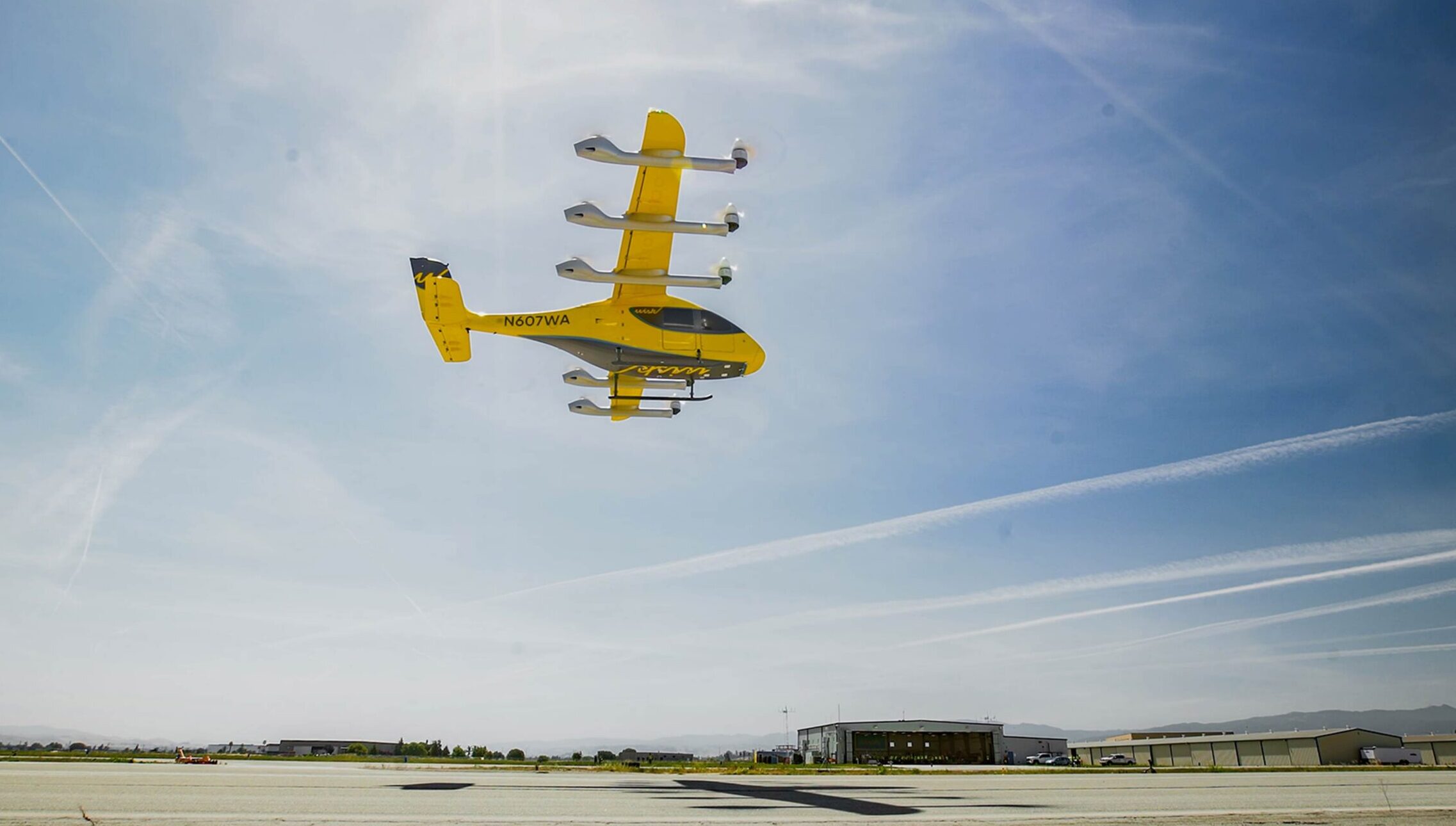
Four days of flight simulations conducted by NASA and electric air taxi developer Wisk showed that a single technician or “remote vehicle supervisor” can safely manage three autonomous aircraft in the air simultaneously, the California company announced today.
Wisk, a Boeing subsidiary headquartered in Mountain View, has been researching autonomous flight with NASA for six years, signing a Space Act Agreement in 2020 and a similar agreement last year. The agency and Wisk jointly developed simulated flight scenarios to test how many aircraft a single person could monitor successfully, and both evaluated the findings, Wisk said in a news release.
The four-passenger air taxi Wisk is developing, the Gen 6, has no cockpit or space for a pilot as it is intended to be monitored by a supervisor on the ground. Today’s announcement builds on NASA findings presented at AIAA’s SciTech Forum in January that monitoring more than four aircraft at a time could overwhelm one person.
Wisk said the latest simulations mark the first such study in controlled airspace.
Annie Cheng, Wisk’s lead program manager for operations, told me NASA provided air traffic controllers for the simulated flights, which were conducted at the agency’s Ames Research Center in Silicon Valley. Remote aircraft supervisors from Wisk monitored the simulated missions between Moffett Federal Airfield and San Martin Airport, about 65 kilometers apart.
The objective was “to understand how we eventually scale up the number of flights, not just for Wisk, but for [advanced air mobility] operations in general,” Cheng said, and to convince the public and the industry that remotely supervised flights are “doable without major changes in air traffic control.”
“Without requiring one pilot to each aircraft, it lowers the operating costs,” Cheng added.
At times, the simulations introduced complications to see how remote supervisors responded, she said. “If there’s some kind of emergency, we may have a missed approach and land at an alternate location,” she said. “We also demonstrated how one pilot might get more than one of these emergencies at a time.”
Wisk declined to state how many flights were simulated at a time or per day, but Cheng said “we’re not darkening the skies with these flights, but it’s more than one flight in the air at a time.”