Congressman calls on Air Force to turn retired aircraft into autonomous testbeds


A House Armed Services Committee member wants the U.S. Air Force to consider retrofitting old aircraft to augment its current testbed fleet.
The committee’s fiscal year 2027 defense policy bill includes an amendment submitted by Rep. Abe Hamadeh (R-Ariz.) that directs the service to “develop a plan to regenerate, restore, modify, and use a limited number” of retired aircraft for autonomous testing.
The Air Force declined to comment on the provision.
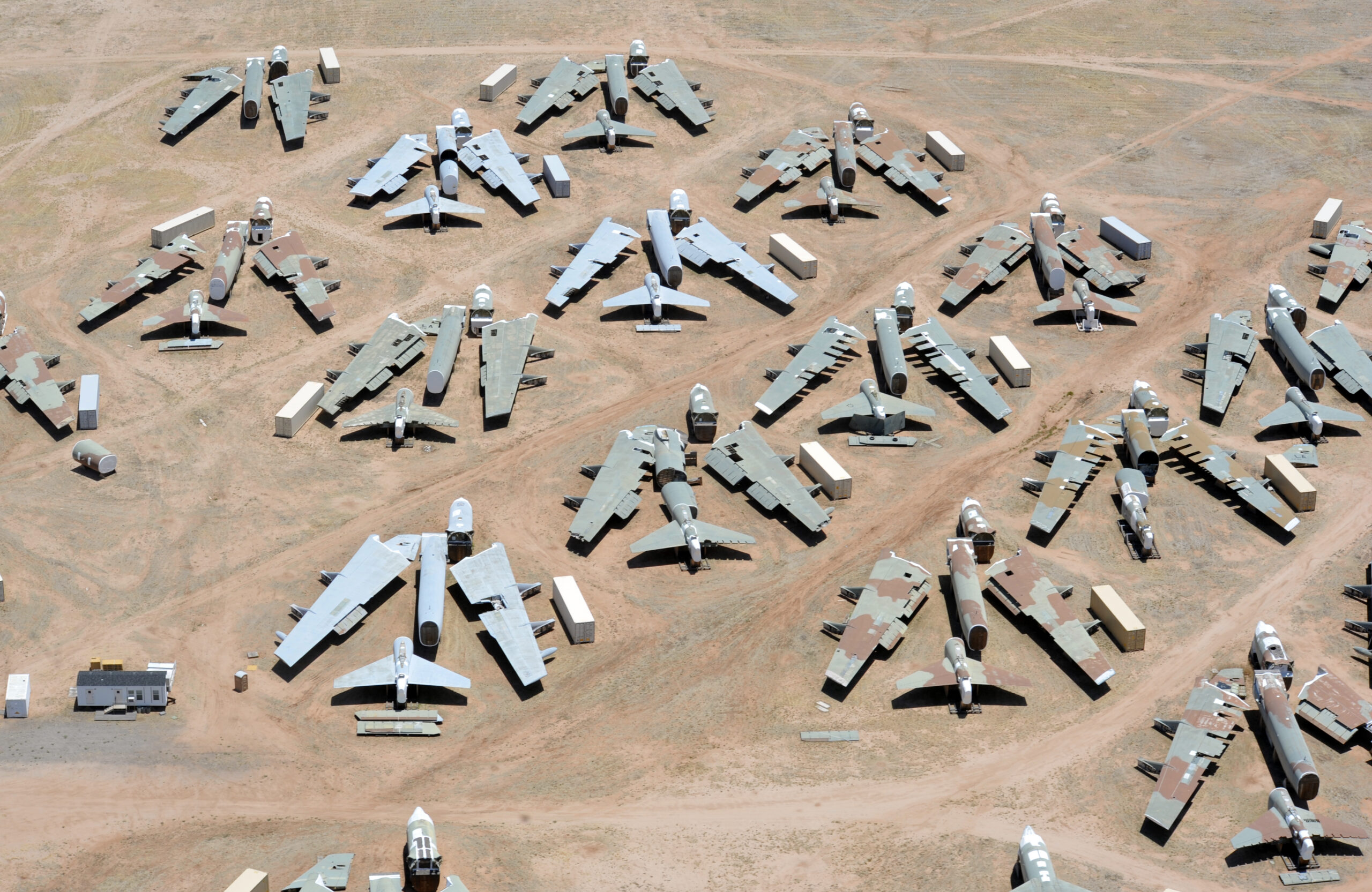
“We have thousands of aircraft that end up at the boneyard in Tucson, Arizona,” Hamadeh said in written comments to me. “Instead of using these aircraft strictly for spare parts and components, I thought it was prudent to examine whether it’s feasible to repurpose some of these iconic airframes as autonomous or semiautonomous aircraft.”
“How special would it be to see A-10’s, F-4 Phantoms, EA-6B Prowlers flying again as autonomous drones?” he said.
The committee’s version of the bill, which was approved June 4 but has yet to be passed by the full House, said these retrofitted aircraft could support research and testing of “human-machine teaming,” “tactics development” and “battlefield networking.”
Although such a proposal “is probably technically feasible, I think it would be very expensive,” said Andrew Hunter, a defense consultant who previously served as Air Force acquisition chief, “and — from my own point of view — of limited utility.”
Hunter pointed to the service’s experience with the X-62A VISTA, the retrofitted F-16D the Air Force Test Pilot School uses for student training and autonomous flight research.
“The reason the Air Force did that was not because they wanted to operate F-16s operationally as autonomous platforms. It’s because it gave them the ability to have a pilot in the seat observing the autonomous software in operation,” he said.
“Given that the Air Force has already done that with the F-16, doing it with the A-10 doesn’t add much, if any, benefit that I could see to the development of autonomy,” Hunter added.
Hamadeh said adding more testbeds would allow the Air Force to “rapidly validate AI software in live environments without risking frontline fighter jets” because “perfecting next-generation autonomous flight software and human-machine teaming demands thousands of hours of real-world flight testing.”
He added: “The overarching goal of this amendment is to accelerate U.S. military innovation by transforming ‘The Boneyard’ from a passive aircraft graveyard into an active catalyst for autonomous technology.”
The committee’s version of the bill also includes provisions directing the Pentagon to develop military doctrine on unmanned autonomous systems, accelerate resourcing for these platforms under a dedicated “Autonomy Integration Account” and to fully fund the Air Force’s requested $1 billion for Collaborative Combat Aircraft procurement.