AACES 2050 research prompts NASA to pursue LNG for aviation


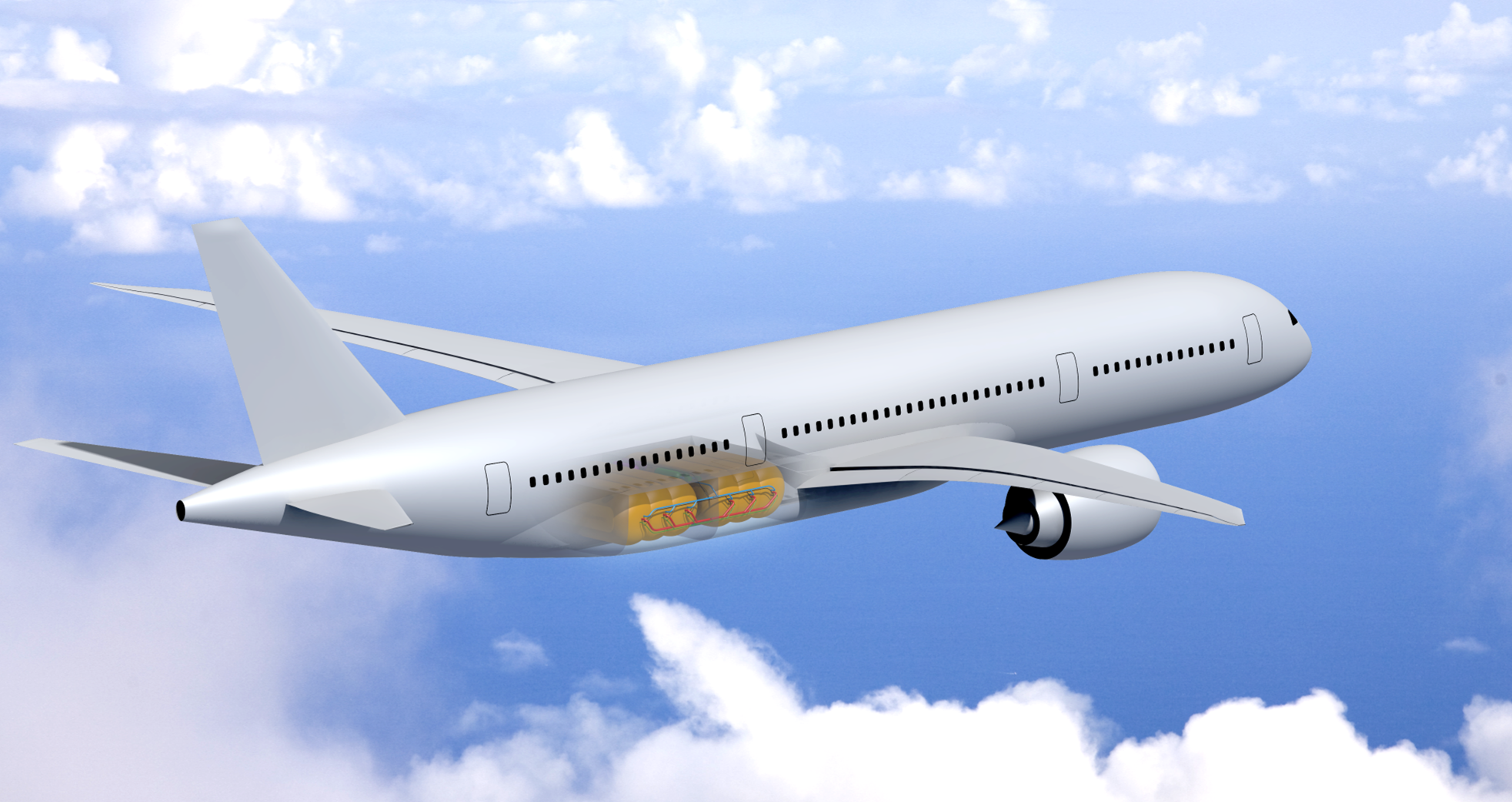
AIAA AVIATION Forum, San Diego — NASA intends to further study the potential of cryogenics, particularly liquified natural gas (LNG), as a future aviation fuel to aid in cutting aircraft emissions and lowering operating costs, officials announced today during a panel here.
The decision stemmed from the results of 18-month-long studies conducted under the agency’s AACES 2050 initiative, short for Advanced Aircraft Concepts for Environmental Sustainability. NASA in late 2024 awarded a combined $11.5 million to Aurora Flight Sciences, a Boeing company; Electra of Virginia; Georgia Tech; JetZero of California; and Pratt & Whitney to study revolutionary aircraft designs and propulsion technologies that could dramatically cut emissions of carbon dioxide and other greenhouse gases.
Each awardee submitted study reports to NASA and presented its findings here.
“Because of these studies, we are really thinking in terms of LNG as a future aviation fuel,” said Nateri Madavan, director for NASA’s Advanced Air Vehicles Program, in an interview ahead of today’s announcement. “We cannot claim to transform airframes and propulsion if we keep relying on the same fuel like we have for 70-plus years in aviation. We have a once-in-a-lifetime opportunity where we can cut operating costs in half with LNG and other efficiencies.”
Transitioning aviation to LNG — which is predominantly liquid methane — would be advantageous for numerous reasons, Madavan said. Among them is that these fuels would require airports to install new cryogenic fuel handling infrastructure that would smooth the future adoption of liquid hydrogen.
“If we transition to LNG for aviation, we can learn some things about managing cryo-fuels that could benefit us in a later move to hydrogen,” he said. “Or LNG could be a solution in itself.”
Today’s announcement did not include details of new LNG studies or funding for such research. Madavan said the agency plans to unveil those at a later date, pending the agencywide realignment Administrator Jared Isaacman announced last month. This reorganization will combine the Aeronautics Research Mission Directorate with the Space Technology Mission Directorate to create a new division, known as the Research and Technology Mission Directorate.
“We won’t be announcing any specifics today, except that we are sort of focusing our efforts on LNG as a fuel,” Madavan said. “It will be a big effort by academia, the Department of War, Department of Energy and FAA, among others.”
During today’s panel, he noted that he doesn’t view a U.S. focus on LNG as being at odds with Europe’s ongoing investment in hydrogen.
“There’s a lot of good work that came and is still happening both here and definitely in Europe. All that is good learning,” he said.
The majority of the natural gas in the U.S. comes from domestic fracking, but it can also be sourced renewably from waste materials, resulting in renewable natural gas or biomethane. Madavan told me NASA’s own studies indicate that using LNG as an aircraft fuel “can reduce emissions by 70% or more.”
“This would directly benefit the U.S. flying public and the industry, and do it with a fuel that is transformational but also familiar, because we already burn LNG in gas turbines on the ground,” he said.
The AACES work has also sparked a new internal research focus for Boeing.
“Basically, we chose methane,” Aaron Kutzmann, an associate technical fellow for Boeing Engineering & Technology Innovation group said during a presentation Monday on Aurora’s AACES research. That fuel’s cost, practicality and safety drove Boeing’s decision to choose what it calls “renewable natural gas.”
The aviation industry for years has touted the use of sustainable aviation fuel, or SAF, made from plants and other feedstocks, he noted. “But in order to achieve any significant environmental improvement, you’re going to need to be able to manufacture a lot of SAF, and it’s very expensive. Feedstocks are limited,” Kutzmann said.
By contrast, natural gas “can be made much more inexpensively,” he said. “It does require some new designs and some new infrastructure. It does require all the things the liquid hydrogen requires, but in easy mode. The infrastructure, to some extent, exists.”
Aurora’s AACES report also describes the possibility of a dual-fueled aircraft that can be powered by either natural gas or conventional jet fuel. The natural gas — or Jet M, for methane — would be the fuel for most shorter trips, while long-haul trips would rely solely on jet fuel.
“This is a job we would like to start doing with NASA, but there’s a lot of things that are beyond the scope of NASA and Boeing,” Kutzmann said. “This is going to be an industry-wide effort to go make this happen.”