


This story has been updated.
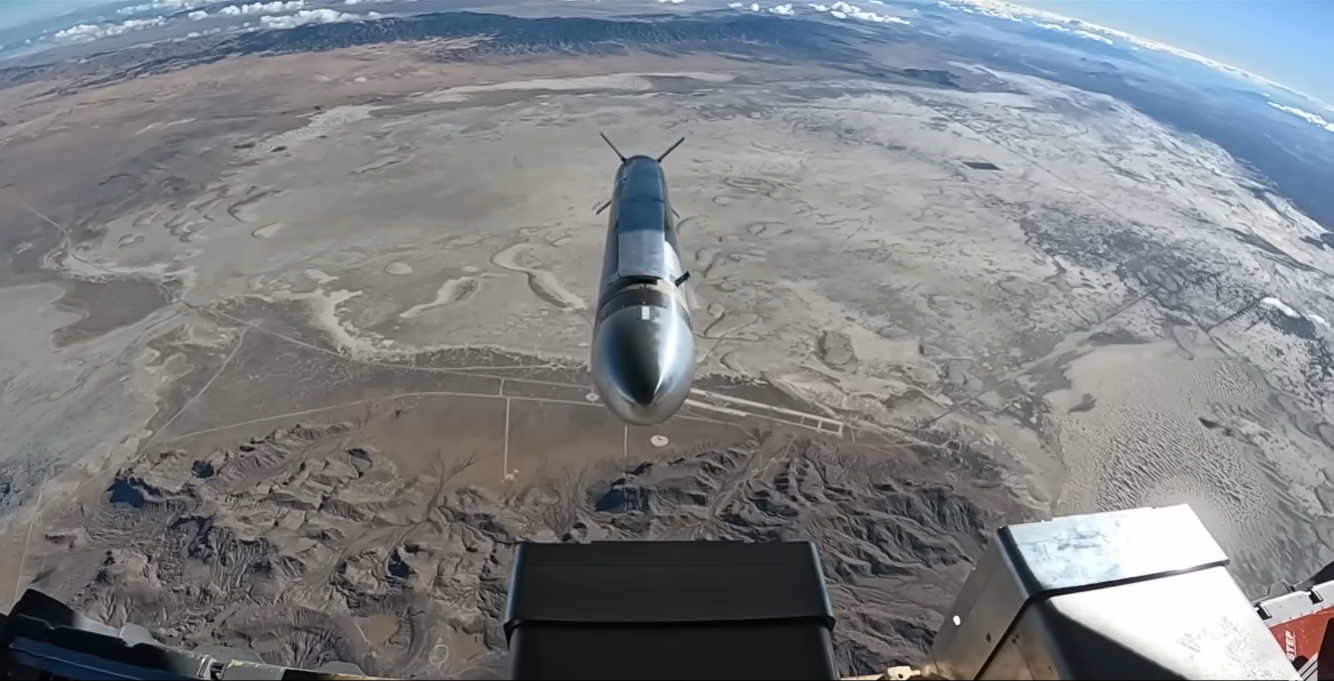
The AGM-190A small cruise missile “meets requirements to become an available weapons system for broader real-world use,” U.S. Air Force Special Operations Command announced today.
AFSOC said the missile, developed by Leidos and dubbed Havoc Spear, was used in combat for the first time during spring of this year at an unspecified location within U.S. Africa Command’s area of responsibility. AFSOC officials told reporters at a roundtable that two of the missiles were launched from an AC-130J at two ground targets.
The test “confirmed that the Havoc Spear is both accurate, reliable and operationally ready,” Col. Robert Johnston, director of AFSOC’s strategic plans, programs and requirements, told reporters. Although only integrated with the AC-130 so far, “our ultimate goal is to try to get this on every type of SOF platform as well as conventional platform possible in multiple launch modes.”
Earlier this year, Leidos described Havoc Spear as a 200-pound class munition with a range of over 400 nautical miles (741 kilometers). The company previously said it began designing the missile in 2021.
Doug Jones, the Leidos Defense chief technology officer, said at the Air & Space Forces Association’s Air, Space & Cyber Conference here today that the missile is built in Huntsville, Alabama, where “we’ve now added additional manufacturing capacity to produce up to 15,000 a year.”
At its current low-rate production, the per-unit cost of Havoc Spear is “around $600,000,” Joshua Cantera, who works on AFSOC’s requirements staff, told reporters.
Jones confirmed this, adding the missile’s per-unit cost is targeted to be between mid-$200,000 and $350,000 once at full-rate production.
In July, U.S. Special Operations Command awarded Leidos a $27.2 million contract for Havoc Spear. Cantera said the first delivery of 45 missiles is expected “around next fall.”
That initial batch will be used for “further development on other platforms and other launch mechanisms,” Johnston said, but if “we need to employ in theater, then we have the confidence that it does work and we can use it.”
The next platform for integration “really depends on what’s available,” Johnston said. “With current operations, we have to piecemeal what assets we can actually employ and get test dates on.”
“In the short-term,” Cantera said, “AFSOC is going to continue training the crews on how to both mission plan and employ the current Havoc Spear missile, and we’re going to work with our industry partner to increase production.”
He added: “Long term, the Havoc Spear is a very modular missile, and so we can go many different directions with new payloads and new missions. But we are not that far yet.”