


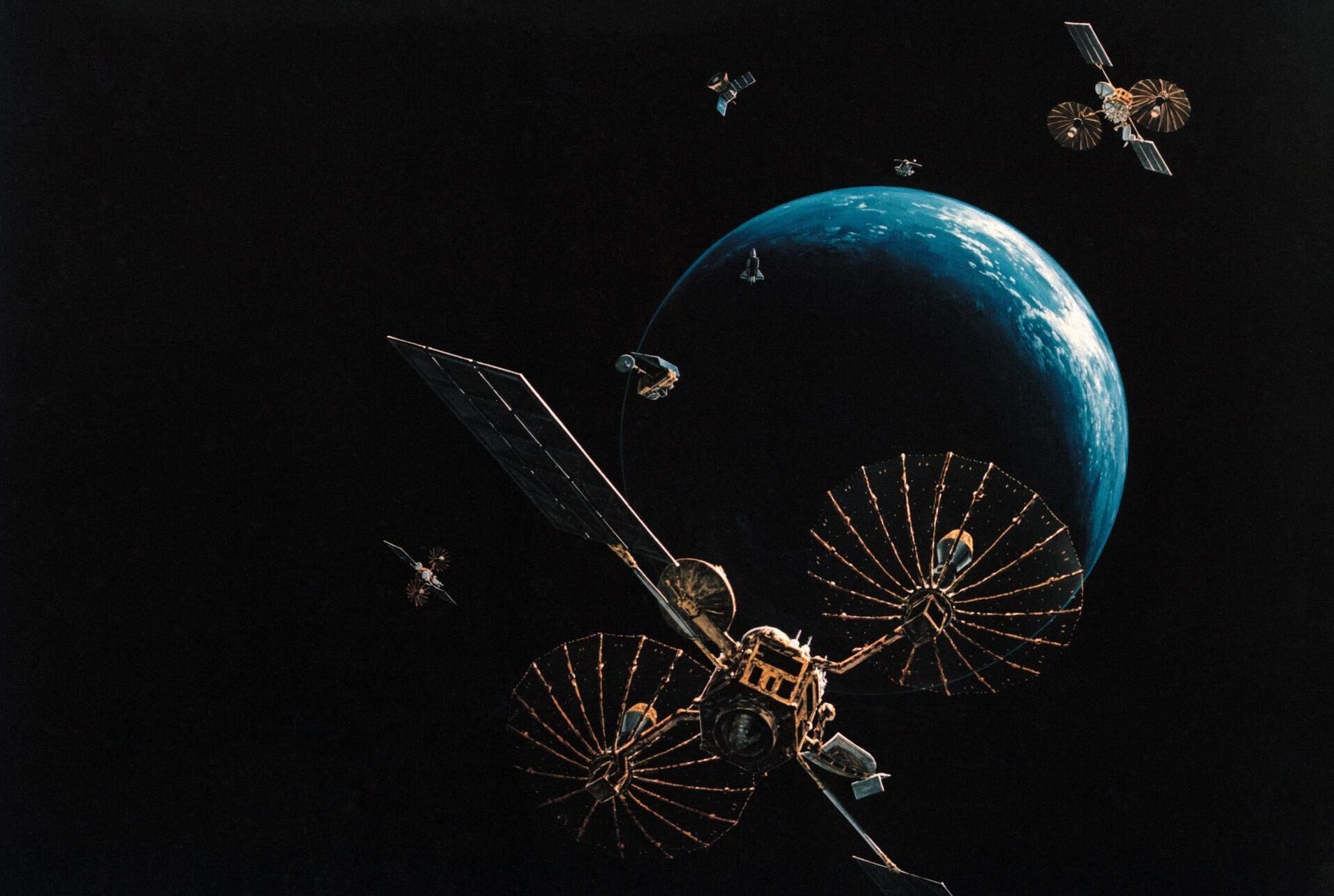
California satellite operator Viasat is readying for the launch of a communications satellite that aims to demonstrate commercial spacecraft can take over the duties of NASA’s aging Tracking and Data Relay Satellite (TDRS) network.
The Maxwell satellite, built and operated by Rocket Lab, is set for a journey into orbit on the upcoming SpaceX Bandwagon-5 launch from Florida, said Skylar Cox, chief technology officer of Viasat Space & Mission Systems, during a Payload Space webinar last week. SpaceX hasn’t yet announced a launch date.
The demonstration is part of NASA’s ongoing Communications Service Project (CSP) to eventually replace TDRS, the first of which began operations in 1983. NASA in late 2024 stopped using TDRS for new missions, but noted “current TDRS users, like the International Space Station, Hubble Space Telescope, and many other Earth- and universe-observing missions, will still rely on TDRS until the mid-2030s.”
With TDRS, mission controllers have experienced regular, if brief, communication dropouts as their spacecraft antennas switch from one satellite to another. The goal of CSP is to improve on that record by demonstrating continuous relay communications in low-Earth orbit, Cox said.
Viasat in 2022 received $53.3 million, one of several such awards NASA made under the project that year, totaling $278.5 million. Others with CSP contracts are Amazon’s Kuiper, SES Satellite, SpaceX and Telesat.
“We’ve been preparing for this for a long time,” Cox said of the Maxwell launch. “We’re in the last stretch here, so the team’s exhausted. But the vehicle is fully integrated on the launch vehicle, and we’re just kind of waiting now to turn it on and get it going.”
He continued: “With Maxwell, we’ll be demonstrating a kind of end-to-end service, so we’re moving away from these rigid, constrained windows of communication opportunities, and we’re starting to see this always-on, persistent communication emerge as an available option.”
NASA is also applying this strategy of partnering with commercial providers to establish communication networks around the moon and eventually Mars, rather than the agency owning and operating them, said Greg Heckler, deputy program manager of capability development for NASA’s SCaN (Space Communications and Navigation) Program, during the webinar.
He noted NASA’s larger goal is to someday establish a unified “Solar System Internet.”
“TDRS was a workhorse for the agency for decades,” Heckler said, “but we made a decision in the agency several years ago to not build anymore, and so we needed to maintain what we call Earth relay capability for our science and human exploration missions.”
Other companies with CSP awards are progressing toward demonstrations. SpaceX’s award, for example, is for $69.95 million to connect its existing Starlink constellation and extensive ground system to spacecraft through optical links. NASA is equipping the Orion spacecraft for the upcoming Artemis III mission with two SpaceX Starlink mini laser terminals to demonstrate this capability.