NASA awards second round of contracts for Moon Base development


NASA today announced it has awarded $600 million in contracts for four lunar landings slated for late 2028, the latest details of the agency’s plan to establish the initial elements of a lunar surface base by 2030.
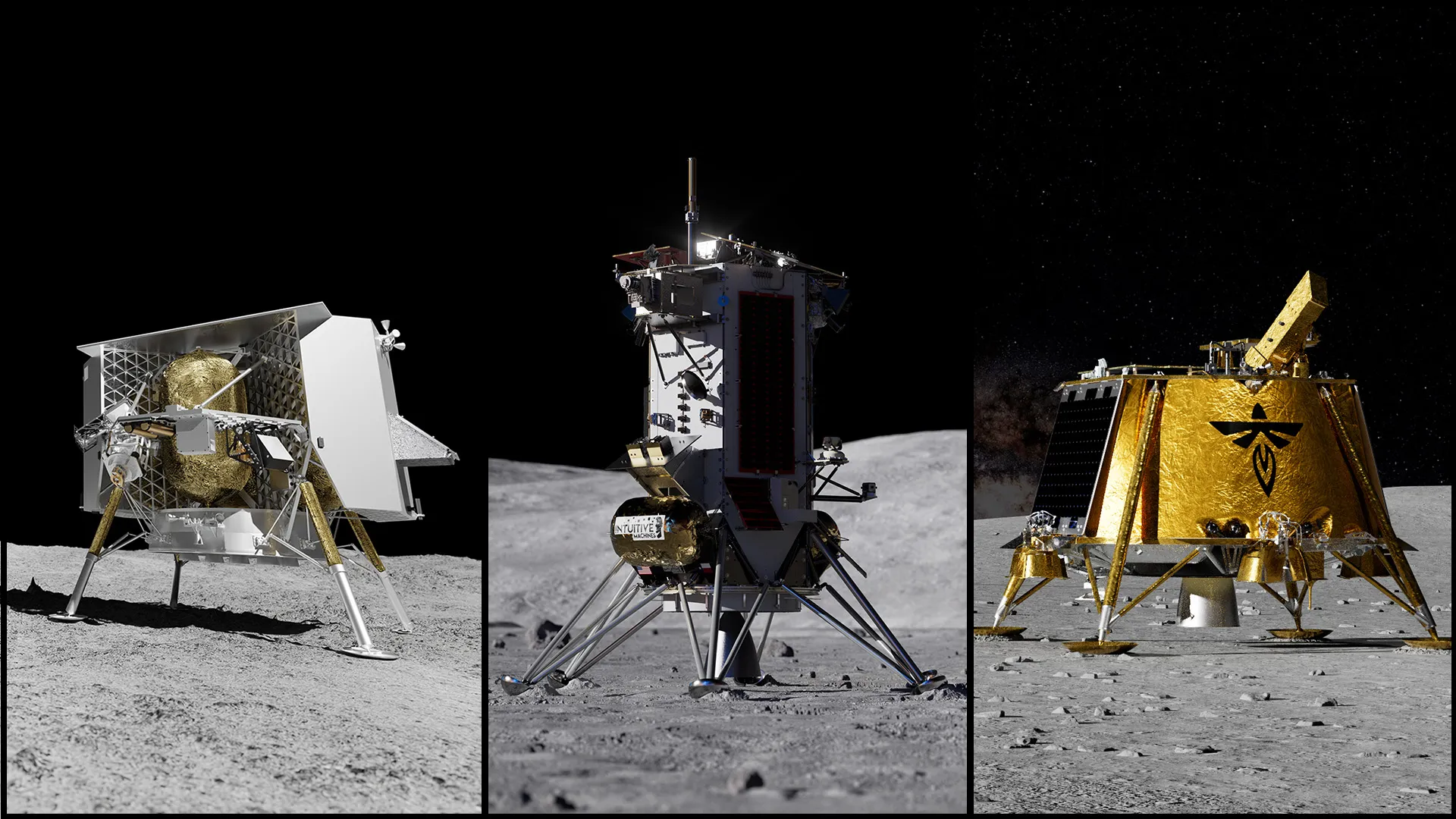
Pittsburgh company Astrobotic received a combined $297.9 million for two lunar landings. Firefly Aerospace of Austin, Texas, and Houston-based Intuitive Machines received $144.2 million and $148.3 million, respectively, to complete one landing each, according to a news release. NASA said all three companies plan to utilize “updated versions of already-flown lander designs to enable NASA’s increased mission cadence.”
These missions are among the 17 lunar landings NASA has contracted with various companies, which are still slated to commence by the end of this year, said Carlos García-Galán, the agency’s program manager for Moon Base.
“We’re working with our science partners on making sure that we understand what the objectives for science are, picking some of the instruments and developing those,” García-Galán said during a fireside chat with NASA Administrator Jared Isaacman. “In a month or two, we’re going to put that broad agency announcement for Moon Base out, and we’ll be soliciting for ideas starting with power generation on the moon, and habitation.”
NASA in late May announced contracts to Blue Origin, Astrobotic and Intuitive Machines for the first three Moon Base missions, all of which were to occur this year. However, García-Galán acknowledged today that schedule may not hold.
“We expect to have at least one mission in 2026 with Astrobotic, but things happen, and we’ll keep monitoring,” he said.
For the first mission, Moon Base I, a New Glenn rocket was to launch Blue Origin’s inaugural Blue Moon Mark I lander “no earlier than fall,” NASA said at the time. The lander was to touch down on Shackleton Connecting Ridge in the lunar south pole region to demonstrate capabilities that reduce risk for future crewed Artemis lunar landings.
NASA is now assessing whether the launch can still take place this year, after a different New Glenn exploded on the launch pad in Cape Canaveral during testing in late May.
“We’re working with Blue Origin very closely to understand their timelines to recovery and also looking at other options,” García-Galán said, including whether Blue Moon might fly on another rocket.
As for future missions, those might include a lunar rover, Isaacman said. NASA is “thinking about” repurposing an “engineering development unit” that the agency’s release describes as “a hybrid engineering development version of the Mars Perseverance and Curiosity rovers” currently traversing Mars.
This rover, named PROMISE (for Polar Rover for Observation, Mapping, and In-Situ Exploration), is “something that taxpayers already invested into,” Isaacman noted.
Like Curiosity and Perseverance, PROMISE is equipped with a radioisotope thermoelectric generator, which would make it a “highly capable vehicle for the south pole of the moon, and we can get it there fast versus any kind of new project,” he added