After NASA contract change, Sierra Space seeks path forward for Dream Chaser


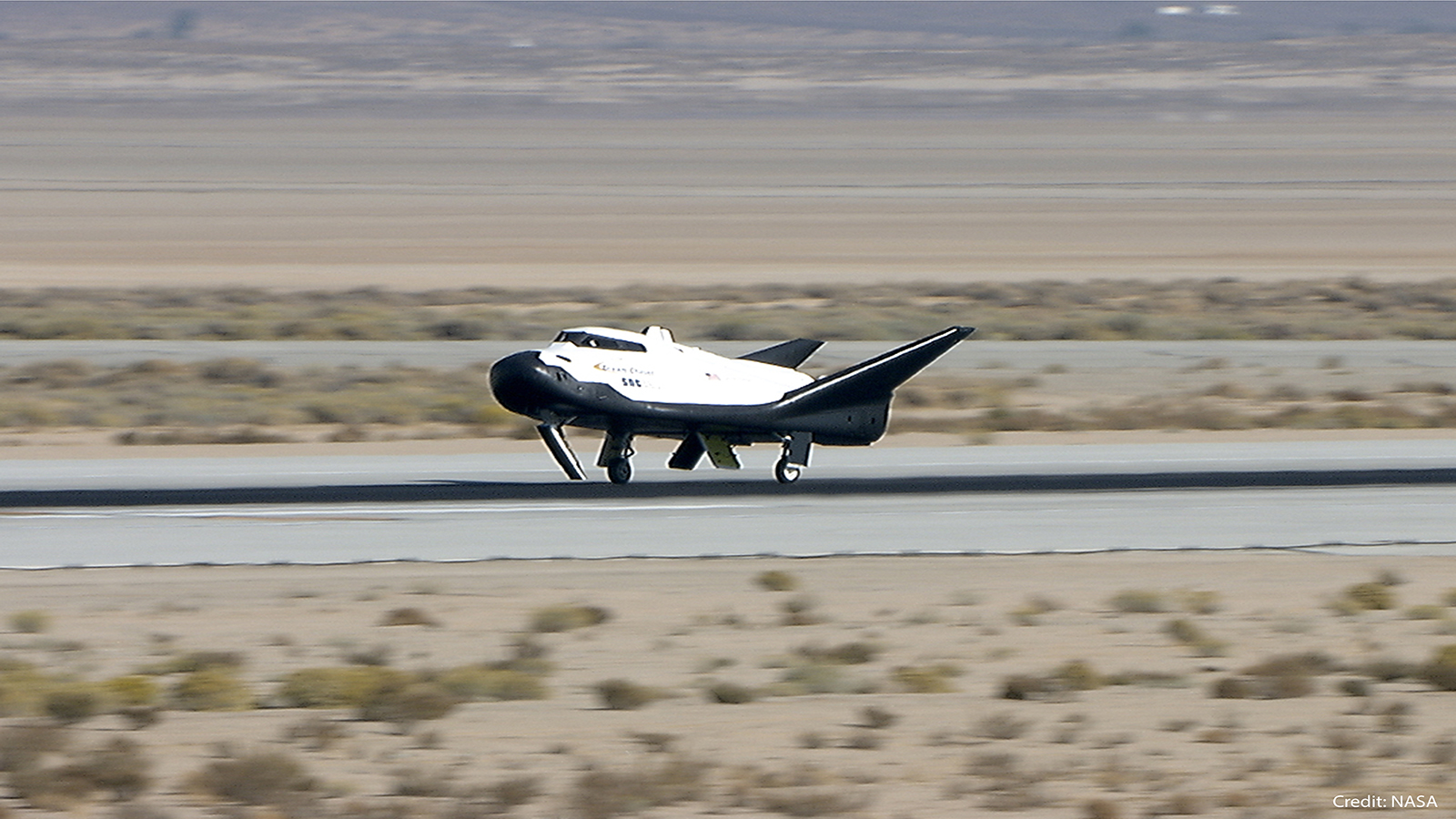
Nearly nine years ago, a helicopter hoisted a prototype of the Dream Chaser spaceplane into the sky above Edwards Air Force Base, California, then dropped it. The winged vehicle ultimately skidded — by design — to a successful runway landing.
That drop test was a milestone in a deal between what’s now Sierra Space and NASA to conduct a minimum of seven cargo resupply flights to the International Space Station. The company’s Dream Chaser had received a contract alongside Orbital ATK’s Cygnus (now Northrop Grumman’s) and SpaceX’s Cargo Dragon capsules.
In 2019, Sierra Nevada Corp. — which in 2021 spun out its space division into a standalone company, Sierra Space — was targeting 2021 for the inaugural launch of the first Dream Chaser, since named Tenacity.
But that date has since been pushed back multiple times, and last year NASA said the agency and Sierra had agreed to modify the contract, as the agency prepares to retire ISS by the end of the decade. The agency said it’s “no longer obligated” to use Dream Chaser for a specific number of resupply missions. It could still contract Sierra for future deliveries, but that would largely depend on the results of Tenacity’s inaugural flight, now slated for late 2026. Instead of visiting ISS, the spaceplane is to conduct a “free-flyer demonstration mission” to low-Earth orbit.
Separately, Sierra described that shift as part of a larger “strategic transition” to market Dream Chaser “for future national security and defense demonstrations.” But the change also left some industry observers wondering whether the spacecraft will ever actually go into service.
Sierra Space replied by email to select questions for this story.
Even without the ISS missions, observers identified a handful of potential applications for a vehicle like Dream Chaser.
Sierra Space could, in fact, be better off bypassing the space station, contends George Nield, who led FAA’s Office of Commercial Space Transportation from 2008 to 2018 and now owns consulting firm Commercial Space Technologies.
Rather than needing to check off every NASA requirement to safely berth with ISS, Sierra instead can position Dream Chaser to meet the needs of future customers, said Nield, who also managed NASA’s Flight Integration Office.
With a cadre of commercial space stations on the horizon, a vehicle like Dream Chaser makes sense to have in the mix as a “nice complementary capability” to capsules, he said.
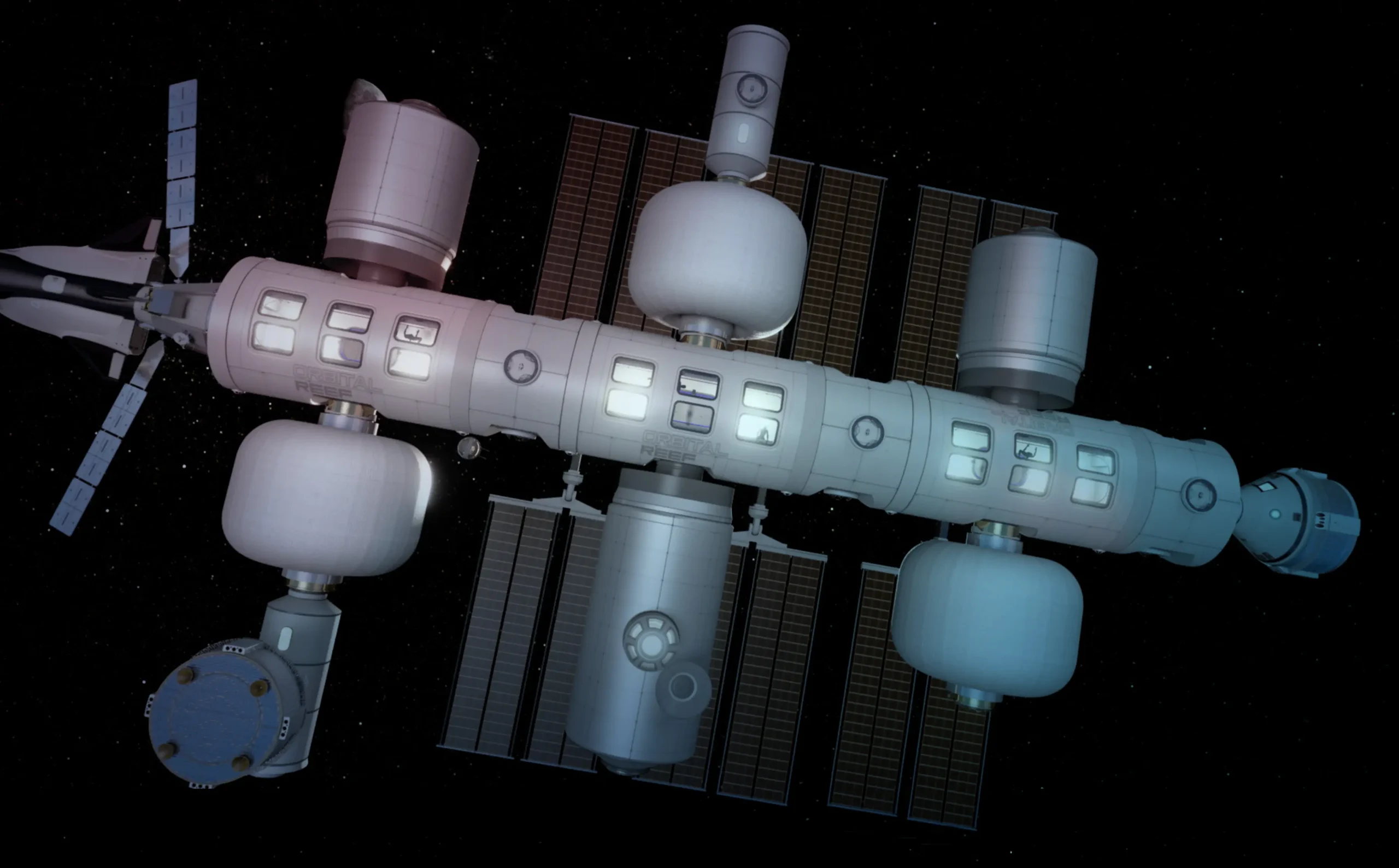
Indeed, Dream Chasers appeared prominently in early renderings of Blue Origin’s Orbital Reef space station, for which Sierra Space is supplying inflatable habitat modules.
At the time of publication, only a single vehicle resembling a Dream Chaser appeared on Blue Origin’s “LEO Destinations” website page, alongside capsule-type vehicles. Blue Origin didn’t reply to a request for comment, and Sierra Space didn’t address a question about Dream Chaser’s continued involvement in cargo and crew transportation plans for Orbital Reef.
In its overall statement, Sierra said it continues to “invest in in-space infrastructure including the LIFE Habitat for future commercial space programs.”
The Pentagon might also be interested in Dream Chaser, said Doug Ligor, who worked at the RAND Corp. before founding the Space Governance Institute in November to provide consulting and legal services. Considering the U.S. Space Force already operates one model of spaceplane, Boeing’s X-37B, it stands to reason the service would want to financially back multiple makers for the sake of redundancy, he noted.
In his view, Dream Chasers could be appropriate for activities including in-space satellite servicing or other operations requiring maneuvers, potentially making it a versatile option for “national defense work … that is only going to grow,” Ligor said. “You could also launch satellites from their vehicle.”
In its statement, Sierra said Dream Chaser could serve as a technology testbed for various defense applications, thanks to “its designed ability to carry pressurized and unpressurized payloads, return to a runway in a low-G environment, and support rapid post-mission analysis.”
On the other hand, maybe Dream Chaser “is caught in limbo in many ways,” said Todd Harrison, senior fellow at the American Enterprise Institute. After being on the market for so long, perhaps Dream Chaser is now “being overcome by all these other developments.”
SpaceX, for one, has pitched its Starship-Super Heavy vehicle for point-to-point suborbital delivery, Harrison pointed out. Assuming Starship goes into service, SpaceX would have the advantage of not needing to rely on a separate launch provider for Starship the way Sierra must rely on ULA, whose Vulcan Centaur is contracted to launch the first Dream Chaser.
“They’ve been working on [Dream Chaser] for so long, and it’s been so delayed” that Sierra’s new CEO, Dan Jablonsky, might opt to move on, Harrison said. “One of the big decisions a CEO needs to make is, ‘Do you fish or cut bait?’”
In the meantime, preparations for Tenacity’s debut continue, Sierra told me, with the company continuing to target “year-end.” Plans call for a United Launch Alliance Vulcan Centaur to launch the spaceplane from NASA’s Kennedy Space Center in Florida.
Sierra and NASA haven’t publicly disclosed any more details about the mission.
The flight is to conclude with Tenacity touching down on a runway at Vandenberg Space Force Base in California, a Sierra spokesperson said, rather than back at NASA Kennedy as originally planned for the ISS mission.
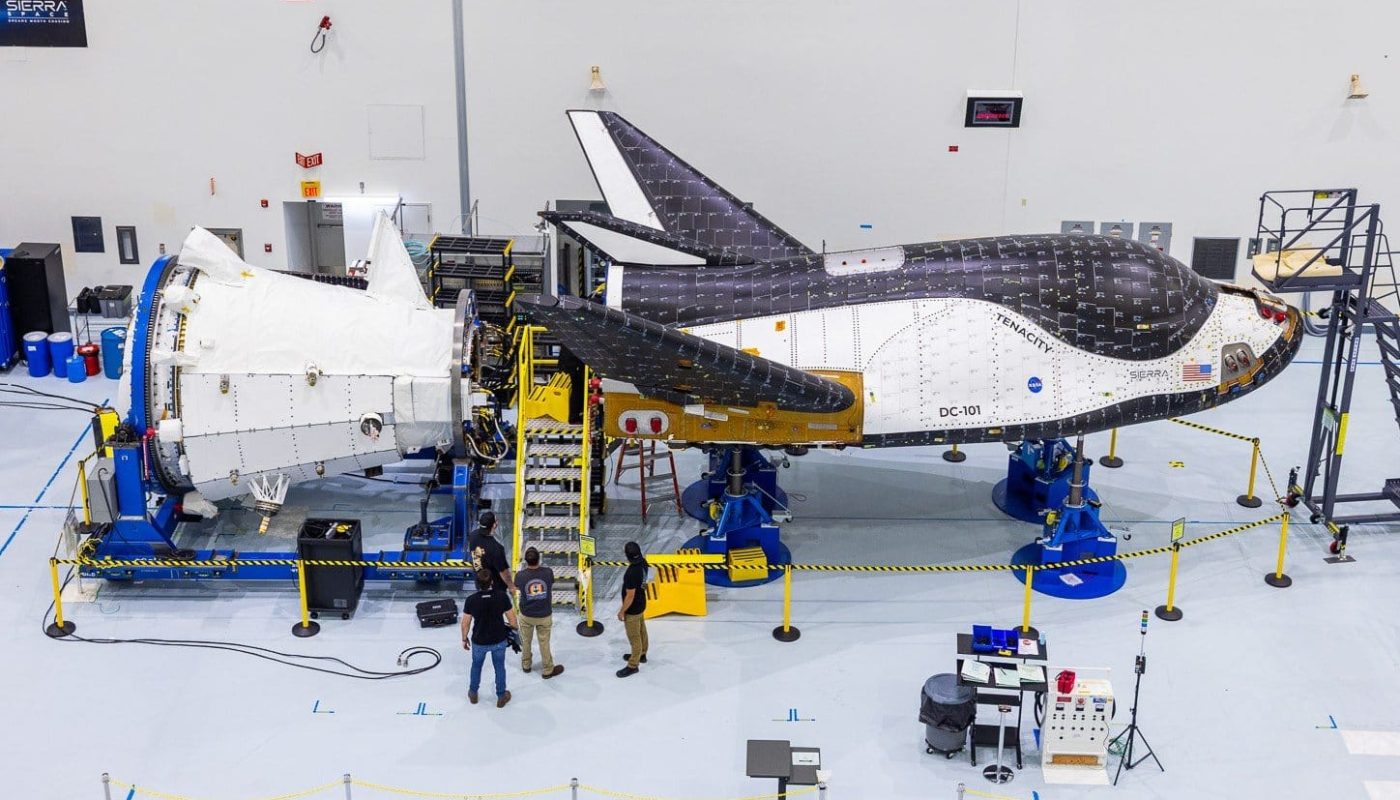
So far in 2026, the company has completed prelaunch qualification checks of Tenacity at NASA Kennedy, including the final launch certification requirement of acoustic testing to simulate launch conditions.
Tenacity is now back at Sierra’s factory in Louisville, Colo., and “the team is completing final thermal protection system closeouts,” the company said. Along with launch qualification, Dream Chaser has also completed flight software qualification. Sierra plans “day in the life” testing in the coming months “to bring the vehicle and its flight software together in a fully integrated, mission-representative environment that emulates complete vehicle operations.”
It then “expects to move into final mission-specific payload integration, targeting completion by December in preparation for a year-end first flight.”