Panel says industry, academia must pivot following government spending changes


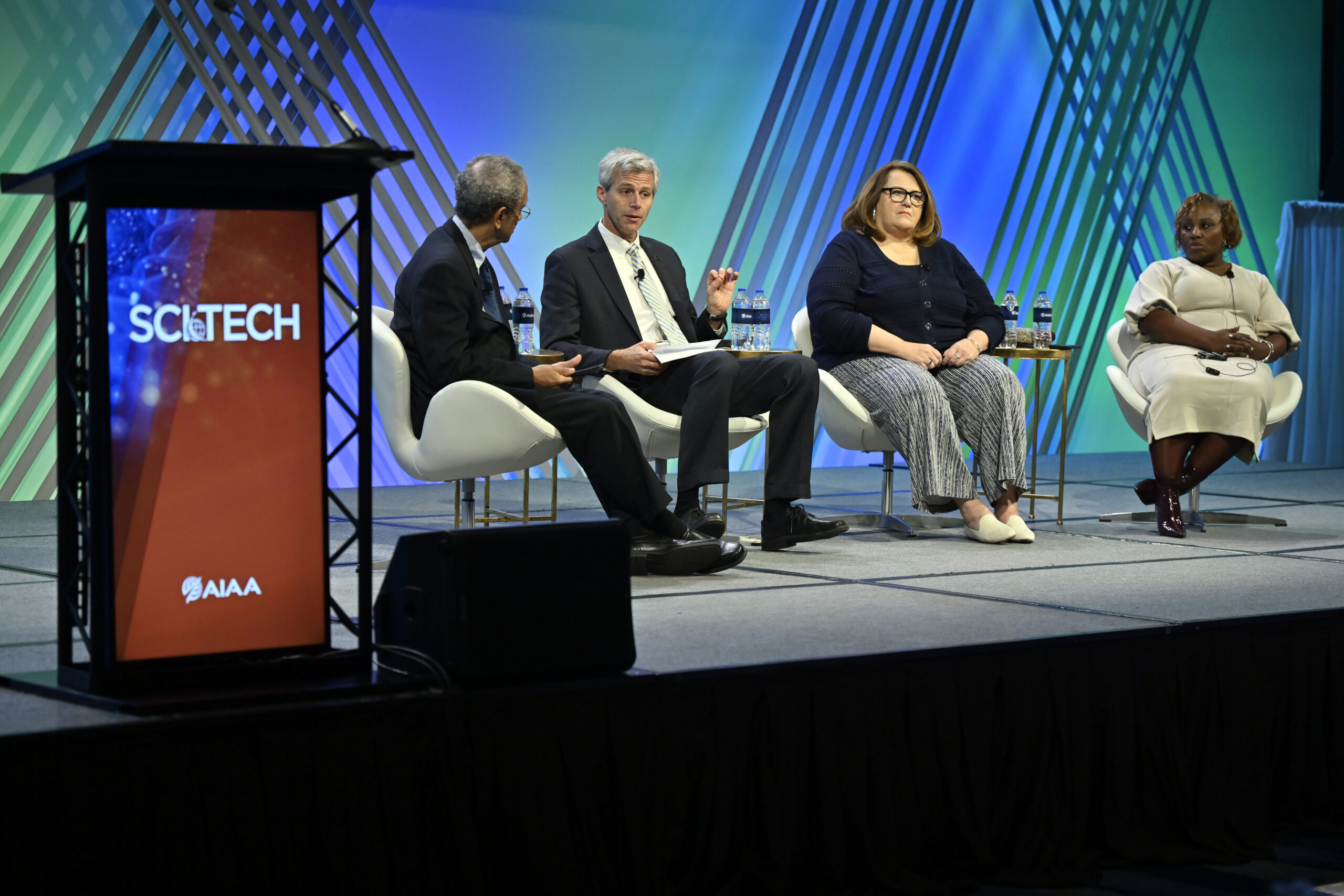
AIAA SCITECH FORUM, ORLANDO, Fla. — Getting U.S. government funding for aerospace research today means connecting the work to major military and space missions, such as the Golden Dome missile defense initiative or NASA’s Artemis lunar program, one panelist said here Tuesday.
“Obviously, there’s a lot of dust in the air, there’s a lot of concern” about changes to federal spending over the past year, said panelist Tim Lieuwen, executive vice president for research at Georgia Tech. He cited budget and staffing cuts made by the U.S. DOGE Service.
To cope, he added, researchers should seek to align their efforts with the Trump administration’s acquisition reform plans.
“Let’s be good listeners,” Lieuwen said. “Acquisition reform is certainly a very real and legitimate thing to do, and so let’s figure out how we can align it to support that.”
He said research universities, facing reduced public standing, should seek to connect their work in artificial intelligence, additive manufacturing and other emerging areas with real-world developments.
“Many institutions have shown they are not willing to reform themselves. But I think if we read this trend as less anti-university and more pro-accountability, I think we can learn a lot,” he said, adding that he’s not defending any particular action or movement.
Carissa Christensen, founder and CEO of Virginia consultancy BryceTech, said observers are still calculating the impact of the DOGE cuts and the outlook for future government spending.
“We still don’t have a full accounting of what that looks like,” she said, but noted that Congress has moved to prevent some of the deepest cuts, including rejecting the $6 billion reduction to NASA’s budget that the White House proposed for fiscal 2026.
Artemis is among the programs that received additional funding from President Donald Trump’s signature tax and spending legislation. Though the legislation allocated $24.4 billion for Golden Dome and $10 billion for Artemis, “it’s difficult to say exactly how much of that funding is going to be spent in 2026,” she said.
Christensen said industry and academia must build “new relationships,” given the high turnover in federal contracting personnel.
“We saw very significant outflows of senior contracting and other professionals from the agencies that we work with. And that means that for just about everyone, long-standing relationships have been disrupted. That is challenging; that’s also an opportunity to build the new relationships,” she said.