

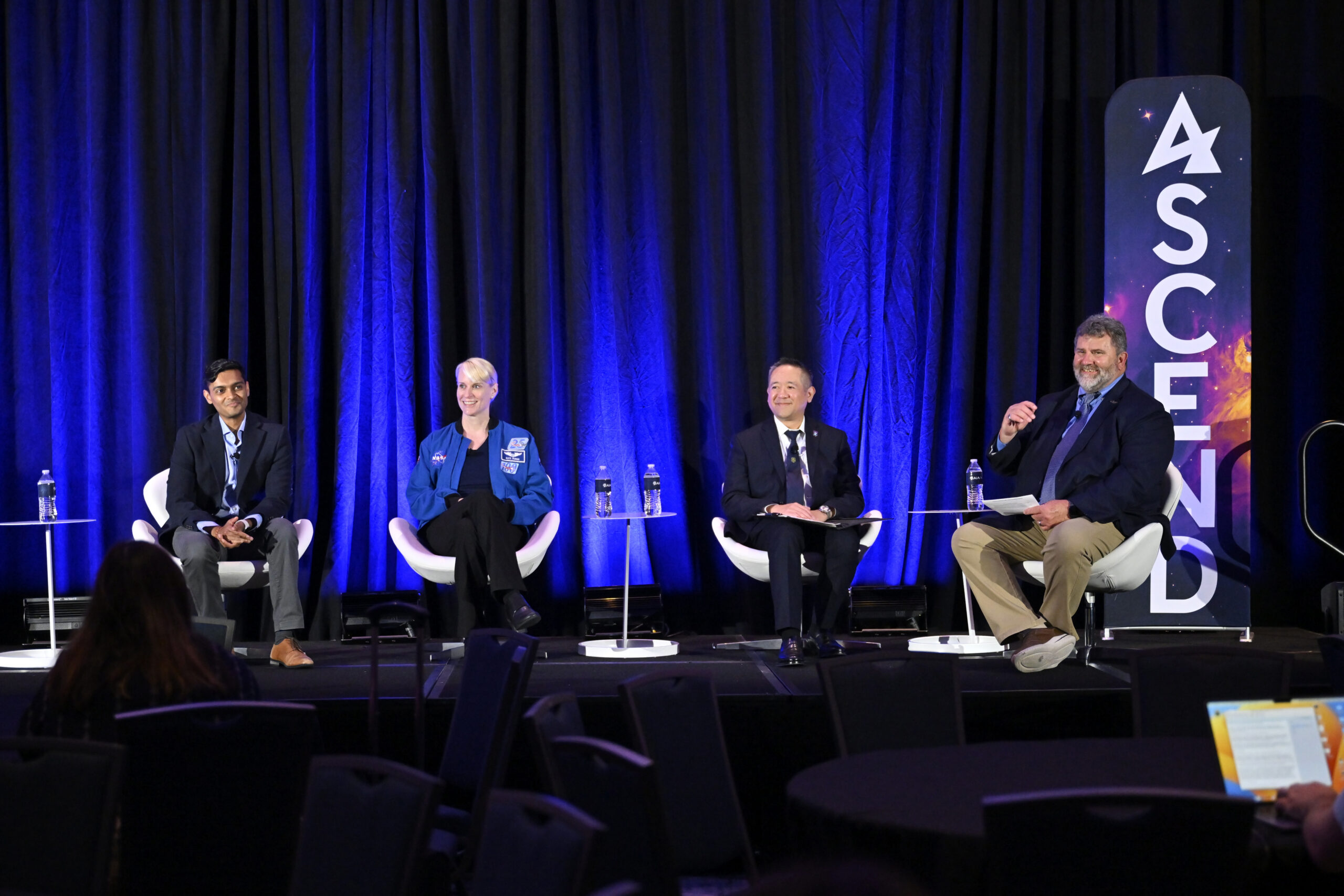
Cedars Sinai, Cleveland Clinic, and University of Pittsburgh discuss how ISS has helped drive disease research and treatments
WASHINGTON, D.C. – The biological research onboard the International Space Station (ISS) over the last 26 years hasn’t only benefited astronauts; it’s driven new understanding of human health on the ground.
“There are things we can learn by exposure of biology to the space environment that inform us about new cures, new therapies, and new ways to approach aging and disease here on Earth,” said Michael Roberts, chief scientist for the ISS National Lab, while moderating the “Space Research for a Healthy Future” session at ASCEND 2026 as part of the ISS National Lab track.
Roberts said the ISS has inspired medical researchers and biologists to use microgravity as a platform for cures on Earth. Three such programs took center stage on Tuesday.
At Cedars Sinai, stem cell biologist Arun Sharma founded the Center for Space Medicine Research a decade ago to push regenerative medicine into orbit. Sharma is best known for leading a first-of-its-kind space experiment – sending human stem cell-derived cardiomyocytes (heart muscle cells) to the ISS – that became “the first long duration cell culture experiment in space” and set the tone for a program now centered on stem cell biomanufacturing in space. His team studied how microgravity affects human heart function over time.
“We’ve been able to harness microgravity to make stem cell-derived products that may not be possible on the ground,” he said. His researchers have access to an on-campus biomanufacturing center that has sent multiple payloads to the ISS.
“We’re really excited about the prospect of automated biology that we do on the ground. We want automated, all-in-one systems that would be able to manufacture cell and gene therapies en mass or potentially use stem cell- and organoid-derived products for high-throughput screening to discover new compounds.”
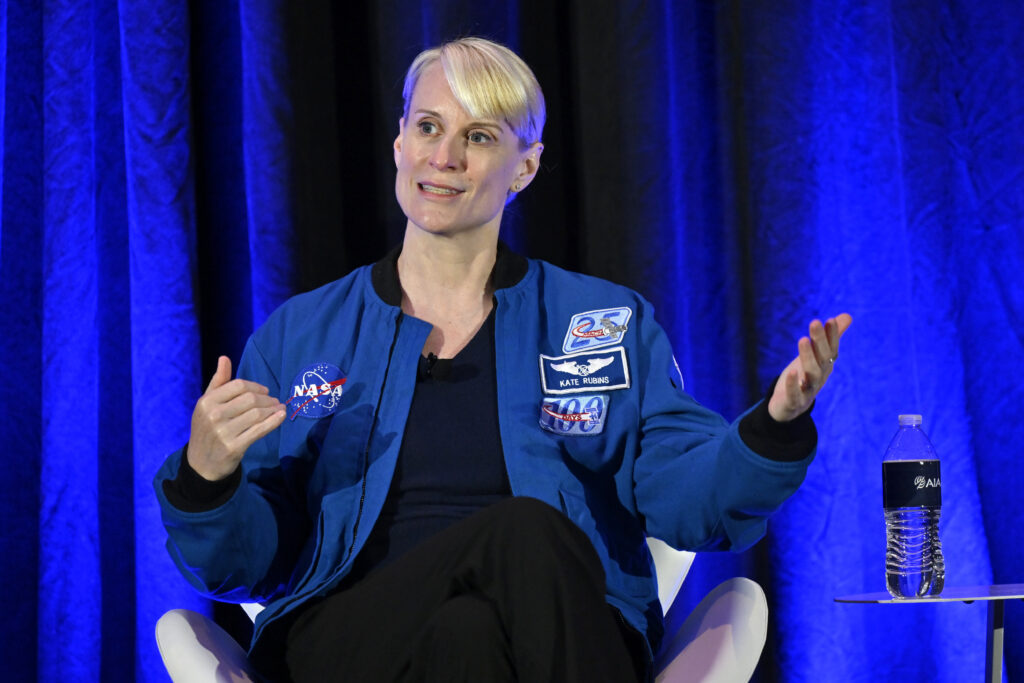
In January, former NASA astronaut Kate Rubins took the helm of the Trivedi Institute for Space and Global Biomedicine at the University of Pittsburgh. Rubins, who was the first person to sequence DNA in space, spent two long-duration missions serving both as an experimental subject and on-orbit lab tech. Leaving NASA, she wanted to bridge space discoveries and public health. Her institute fills a gap by translating “the amazing discoveries we’re making about astronaut health and physiology and to really think about how that would affect human populations on Earth.”
Besides researching basic tissue architectures and fundamental cellular and molecular mechanisms, the center also hopes “to learn about astronaut physiology that replicates chronic diseases on Earth.” Another key focus: taking space-based health-monitoring tools and applying them to remote health clinics, such as ones in the Democratic Republic of Congo.
“Clinics could use the technology that we sent to space because it’s already been designed for an incredibly remote, low-resource environment,” she said.
Dr. Kenneth Mayuga, a cardiac electrophysiologist, founded the Space Health Center at the Cleveland Clinic after responding to a NASA call for input on the Moon-to-Mars objectives. He realized that his team of physicians at the world’s #1 cardiovascular hospital could use their knowledge to help tackle cardiovascular and other health challenges related to space travel. The center, which launched in April, already includes more than 15 physician scientists and is framed by a physician’s “ethical mandate to help others and relieve suffering.”
He notes that patients on Earth have already benefited from space-based research. His team has taken exercise therapy developed for astronauts returning to Earth and used it to help patients with Postural Tachycardia Syndrome, or POTS, a form of dysautonomia where the autonomic nervous system doesn’t manage blood flow properly. (When a person stands up, they feel extremely dizzy and short of breath.)
Mayuga also pointed to another innovation, the Left Ventricular Assist Device, or LVAD, which was developed in collaboration with NASA. NASA’s knowledge of the fluid dynamics of rocket engine fuel was used to create a heart pump device that helps patients with heart failure.
According to Mayuga, one of the biggest challenges of leading a new center is finding where the greatest need lies. He regularly consults with NASA Glenn Research Center, located nearby in Cleveland, for guidance. He also applied for a STEM research grant at the ISS National Lab, which was awarded. He’s using the funds to develop a space medicine course at the Cleveland Clinic that will be offered next month. “Partnering with the ISS has been great. It’s opened so many doors,” he said.
He’s not alone in feeling partnerships are critical. Sharma said his center has access to sustained funding from the California Institute for Regenerative Medicine (CIRM), which has also helped him build out the educational workforce and ecosystem for stem cell biology.
“A lot of students who are working in my laboratory and have worked on some of these projects that we’re launching to the ISS are CIRM-funded graduate students,” he said.
Rubins views space biomedicine as an emerging field that now needs formal training pathways. Her center is participating in the Student Space Life Experiment Program, that lets undergraduate institutions form teams and come up with a payload they design and compete to fly on the ISS.
“Students can see the whole cycle of payload development and get a sense for what is it like to build hardware for space,” she said.
She’s seen a shift in how people view space biomedicine: “The world is waking up to the potential that we see in space,” said Rubins, crediting Sharma’s cardiomyocytes research for helping to raise the field’s profile.
To the panelists, the science case for microgravity is no longer the question. The next phase is about building the infrastructure, standards and governance to turn promising experiments into a durable, space-enabled health ecosystem. With the ISS funded through at least 2030, the immediate priority is to continue to leverage it as a test bed, emphasized Roberts. “We have opportunities to continue to de-risk these new technology platforms that will open new gateways to discovery.”