
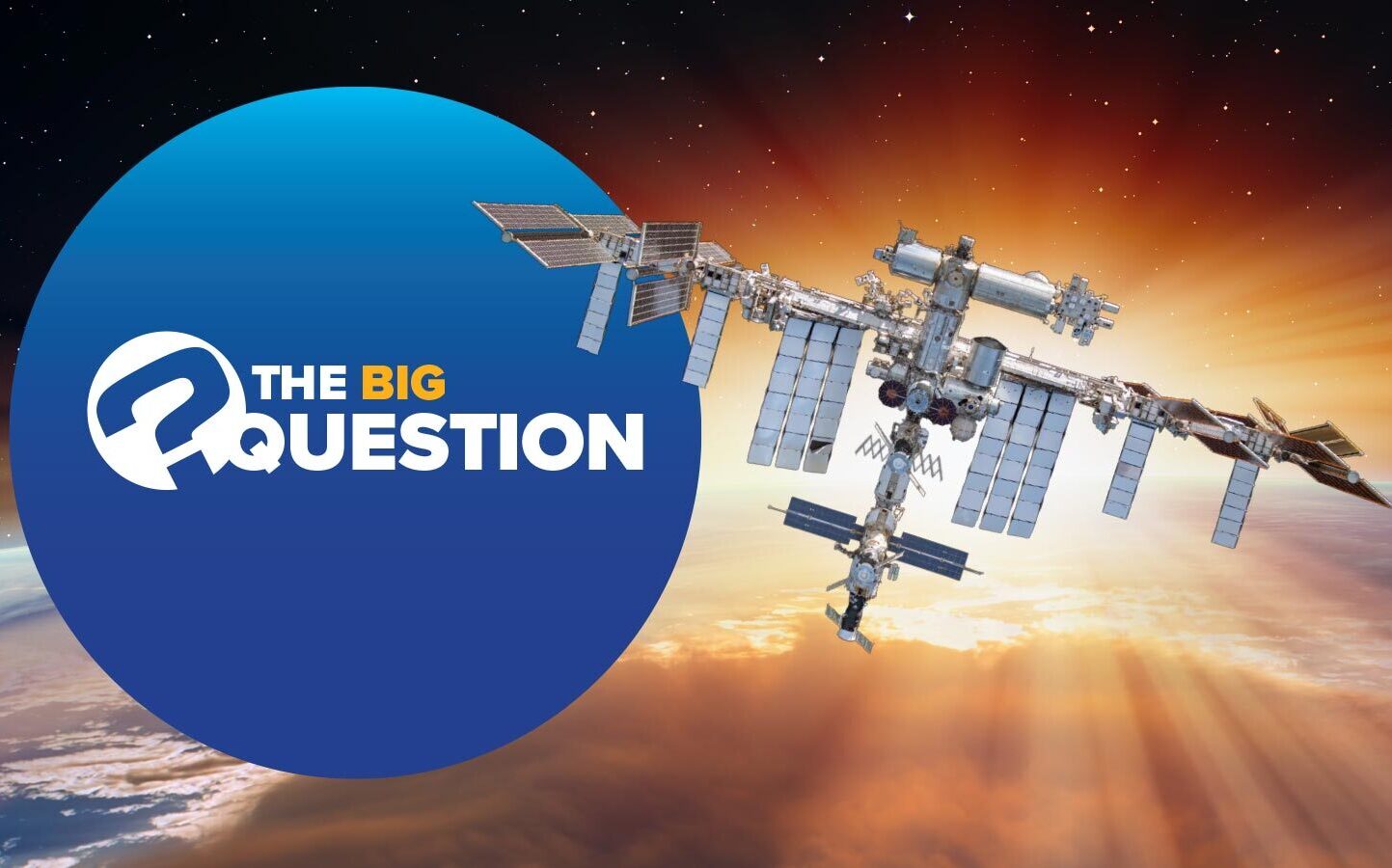
When assembly of the International Space Station began in 1998, NASA planned to operate the orbiting laboratory for 15 years. While the station has exceeded those targets — last year reaching 25 years of continuous human presence — its retirement is now looming. NASA has contracted SpaceX to build a deorbit vehicle to steer ISS into the atmosphere in early 2031, maneuvering so that any surviving parts fall into a remote part of the Pacific Ocean known as Point Nemo.
NASA’s rationale is the increased cost and risk associated with operating a nearly 30-year-old platform, but not everyone agrees a controlled deorbit is the best course. And although the handful of companies developing commercial successors have expressed confidence their stations will be operating by 2030, NASA and U.S. lawmakers are also concerned about the possibility of a gap in U.S. presence in low-Earth orbit.
The House Science Committee in February passed a NASA reauthorization bill that directs the agency to submit a report on “potential options and associated costs” for preventing such a gap, including “Supporting the operation of the ISS beyond 2030.” The Senate Commerce Committee’s version that passed in March contains a provision extending ISS to 2032. The two bills were in conference as of press time in mid-June.
I asked lawmakers, researchers and a former astronaut whether ISS operations should be extended. NASA declined to provide a response, citing the pending legislation.

Maybe. If extending the station becomes necessary to avoid a gap in low-Earth orbit, that’s something we should be prepared to evaluate while ensuring continuity of U.S. leadership and fostering a competitive commercial sector.
We need to be realistic about the timeline for commercial replacements. Although the NASA Reauthorization Act includes a provision to study this issue, as Administrator [Jared] Isaacman has emphasized, this transition has to be managed carefully.
In the near term, the ISS can operate with or without Russia, but those are very different scenarios. With Russia, operations remain stable given its role in propulsion; while going it alone would require additional capabilities and introduce more risk. The real question is whether extending the ISS is the right move as we transition to a strong, U.S.-led commercial presence in low-Earth orbit.
Commercial space stations are making progress, but the timeline remains uncertain. While the ISS is showing signs of aging, engineering studies conducted by NASA and its contractors indicate it could be safely extended if necessary.
[A 2024 report from NASA’s Office of Inspector General noted the agency is “is well-positioned to continue operations and maintenance of the ISS through 2030. However, as NASA pushes the retirement of the ISS farther into the future, a variety of long-standing challenges will continue to intensify. These challenges include maintaining and upgrading the Station; monitoring the structural integrity” and managing procurement contracts. — PB]
Any effort to extend the ISS must also take into consideration the private sector, which will invest in its replacement. We don’t want to send the wrong signal that there is no near-term demand, because there is.

Yes. I was so surprised that NASA would propose just letting the ISS deorbit into the ocean. I really don’t think that’s a good idea.
There’s a lot of reasons we’ve had a continuous human presence in space for 26 years now. If the replacements aren’t ready in time, you would lose that continuity and that access to space.
The fact that we are not going to build the lunar Gateway now might actually add to this argument that we still need the space station, whether we have people on it or not. It could be a supply place. It could be an emergency backup or stopover. I just think that, surely, there is something we can do with it, until we’re really certain that we are established on the moon. Maybe then we don’t need it anymore, but I think even then it could have value. We can’t study the same kind of microgravity on the moon because it has its own gravity, of course.
It’s going to be a long time until they’re set up to do research on the moon. It will be a major thing just to get a structure or habitat, some kind of radiation protection. A lot has to happen before any kind of research can occur on the moon.
But the issue is a lot bigger than that. The approaching decommission date has already affected some of the studies. They’ve already cut short a study I’m currently involved in, CIPHER, because they have to finish these things up. There’s this line in the sand now, and we have to start wrapping up research — prematurely in some cases.
[Short for Complimentary Integrated Program for Human Exploration Research, the CIPHER project since 2023 has tracked how the orbital environment affects astronauts’ bodies over time. — PB]
The experiments involve this chronic exposure to the space environment, this unique combination of stressors, including microgravity and low-dose space radiation, which we cannot satisfactorily simulate on Earth — the chronic exposure especially. ISS is really our only option, the only place we can do that type of study. We were planning to study about 30 astronauts in space, but we will have to wrap up the work with seven instead.
In terms of planning for research in orbit, it’s a very long, tedious process to get projects approved for ISS, especially with astronauts, and to go through all the process of getting them ready for flight. Then to actually do the experiment, get the data returned and do the post-flight evaluations — you can’t just restart something like that overnight.

Yes. Having slept aboard the space station in 2001 as we installed the Destiny science module, I am familiar enough with it to say I’m comfortable with extending the ISS past 2030 from an engineering standpoint. Most of the structures up there get inspected regularly. And of course, the engineers on the ground are analyzing stresses on the vehicle, and they’re looking for signs of degradation.
The only concern is in the Russian Zvezda module, where there are these cracks that have been causing a slow leak.
[The rate of the leak, first reported in 2019, increased in early June, and NASA directed five crewmembers to take shelter in the Dragon spacecraft docked to the station while cosmonauts attempted repairs. That work was paused shortly after, and NASA rescinded the safe haven order. — PB]
We can and do close the hatch between the U.S. and Russian segments to prevent catastrophic decompression should that occur. It’s just a precaution, and the Russians don’t think that’s necessary, but we’ve agreed to disagree so that’s a workaround.
If the Russians cannot support their segment of the station as it is today and they can’t keep the risks controlled, that’s when you say, “Let’s decommission.” Personally, I would like to see ISS preserved by moving it to a much higher orbit, where it could stay until we figure out how to recycle the aluminum alloys that make up most of the structure in space.
NASA needs to make a decision now on which partner to go with for a private station and stick with that, to ensure we get something up there before we have to decommission ISS — even if it’s just a small one-room laboratory with sleeping space for extended missions.
I understand the desire to end ISS and eliminate any risk associated with it, but ultimately the optics of dumping the ISS into the ocean with more than $80 billion of taxpayer money going into the South Pacific really strikes me as a bad choice.
[NASA spends roughly $4 billion annually on ISS operations. Constructing the station cost $75 billion, according to a 2013 Office of Inspector General report, which translates to over $100 billion in today’s dollars. — PB]
If they do crash it into the ocean, I want to be out on a cruise as close as possible to see it reentering the atmosphere, because I worked up there and it’s very significant to me.

Maybe. Whether our continuing presence in LEO is through an extension of ISS operations, a commercial space station, or another platform must be assessed.
U.S. presence in LEO needs to be maintained to continue our R&D activities in microgravity, as well as keep up other important functions, like human spaceflight capabilities. It’s very important we avoid a gap in our presence there, to maintain our leadership with our international partners and to stay ahead of China.
Our committee has actively examined the future of the station and options in low-Earth orbit for many years. One particular question is whether there might be a way to store the ISS in a safe orbit for use by future generations.
Our recent authorization bill would direct NASA to revisit the question and conduct an engineering analysis of the technical, operational, and logistical viability of storing the ISS safely for future generations.
It’s important that we have a robust U.S. strategy in place to guide our national vision for LEO and our next steps following the end of ISS operations. The ISS is one of the most complex engineering accomplishments the U.S. has undertaken and a shining example of U.S.-led international cooperation.
Our reauthorization bill directs such a strategy, and I look forward to working with the Senate to get this legislation enacted.

Yes. The question is, does anyone know how much it will cost to keep ISS up there, and how will that money be put on the table? At some point, we’d want to devote the ISS budget to developing a new alternative in low-Earth orbit, but if we want to have a continuous presence, there may be a period where we need to fund both ISS and a commercial replacement.
We need a schedule to identify when we think that transition is going to occur from a realistic standpoint, and that’s kind of what we don’t have right now. Certainly, if someone told me it’s absolutely not safe to have the ISS operate past a certain date, my answer to your initial question would change to a negative.
Any extension of ISS really needs to be tied to a definite schedule for a replacement, so our whole presence in space doesn’t drive off a cliff. It’s like an old house: At some point, it’s no longer worth spending money on. We have wanted for years to replace the ISS with a commercially owned and operated station, but we haven’t historically put sufficient money forward to make that happen.
And this isn’t necessarily completely separate from Artemis plans, because things like spacesuits for Artemis need to be tested adequately, which can happen on ISS.