
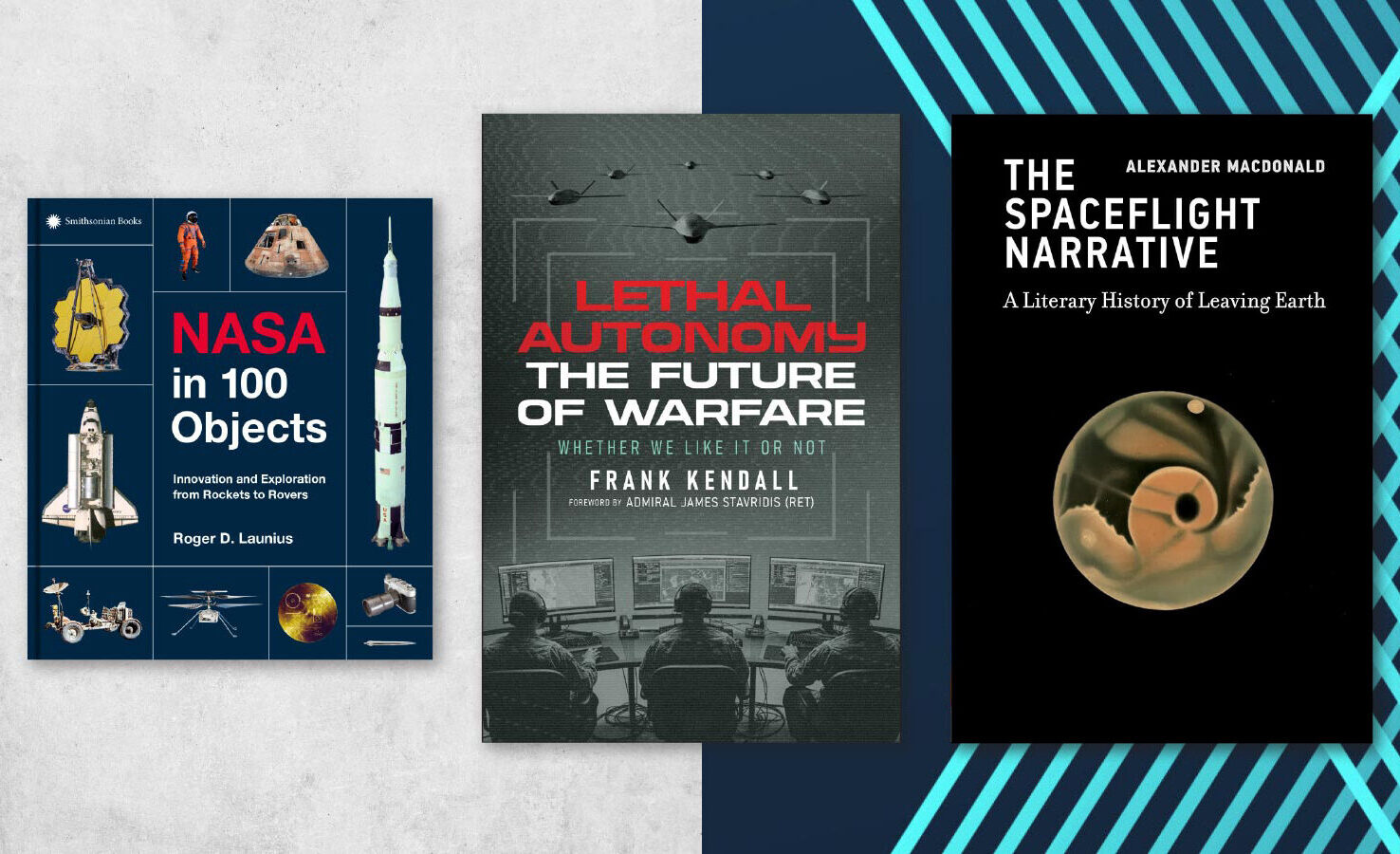
A selection of upcoming and recently published titles
Titles are meant to reflect a broad range of topics and are not reviewed or endorsed by Aerospace America or AIAA.

Lethal Autonomy: The Future of Warfare Whether We Like it or Not
Releasing July 7, 2026 (Knox Press)
Former U.S. Air Force Secretary Frank Kendall describes “how lethal autonomous platforms will transform warfare,” according to the publisher. [Read an excerpt.]
Kendall, also a previous Pentagon acquisition chief, offers “compelling descriptions of how artificial intelligence and autonomous weaponry are going to transform conventional warfare, rendering current militaries almost entirely obsolete,” it adds. The book weighs the future of warfare across all military domains — including space and cyberspace, the publisher notes.
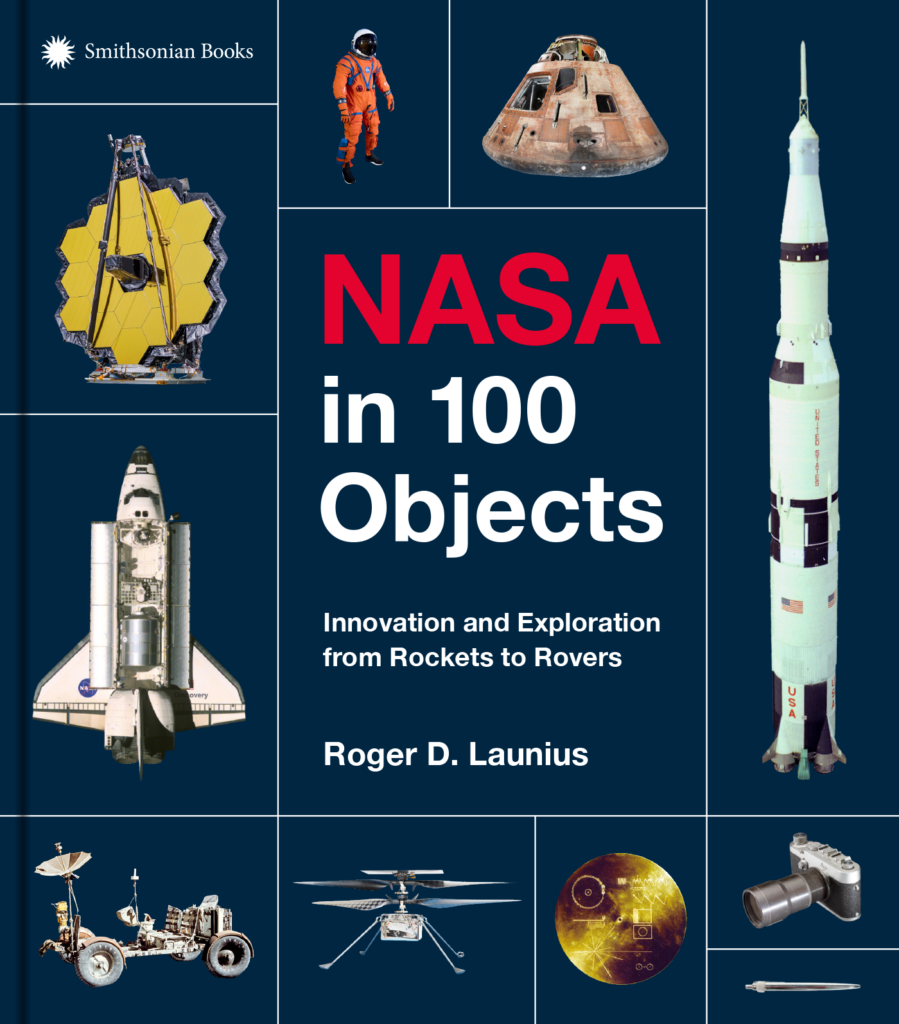
NASA in 100 Objects: Innovation and Exploration from Rockets to Rovers
Releasing Sept. 15, 2026 (Penguin Random House)
Former NASA Chief Historian Roger D. Launius has put together what the publisher calls a “space coffee table book,” featuring 100 influential objects.
“NASA in 100 Objects begins with the agency’s origin as the National Advisory Committee for Aeronautics and moves through the space race, Apollo era, rise of Earth orbital activities, International Space Station, and present-day commercial spaceflight,” the publisher writes, calling it “an accessible reference guide to the nation’s amazing history of space exploration.”
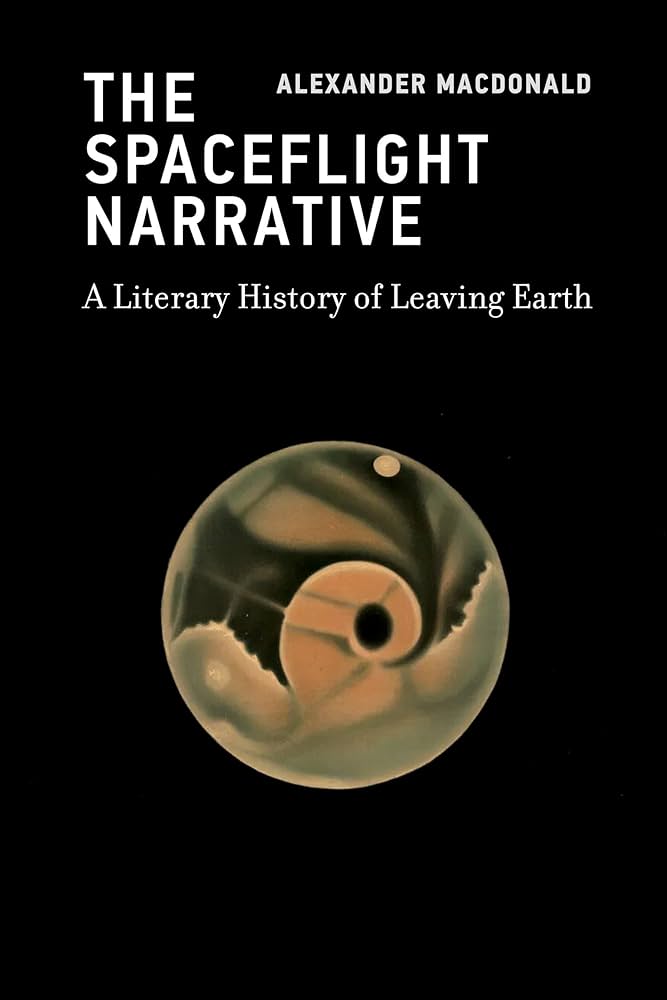
The Spaceflight Narrative: A Literary History of Leaving Earth
Releasing Oct. 13, 2026 (The MIT Press)
NASA’s first chief economist, Alexander MacDonald, “explores the earliest origins of spaceflight as it emerged through storytelling in works of literature and commentary dating back over three hundred years,” the publisher writes.
The book “covers the history of the conceptual development of spaceflight from the first story, written in the 1620s, of a person building a machine that goes to the Moon, all the way through to the 1890s when visions of spacefaring adventures across the solar system had become common,” it adds.