
A year of acceleration and the rise of quantum sensing
 By Cat Hofacker
 By Cat Hofacker
The United Nations in mid-2024 proclaimed that 2025 would be the International Year of Quantum Science and Technology. The year-long initiative included global activities aimed at raising public awareness of quantum science and its applications, particularly in positioning, navigation and timing (PNT).
In January, the U.K.’s Defence Science and Technology Laboratory announced a British-made quantum clock developed in partnership with Imperial College London, Inflexion, Aquark Technologies and HCD research — all U.K.-based quantum technology companies. The clock is to be used in the next five years by troops to tell time and position, enabling navigation in hostile environments without reliance on GPS technology.
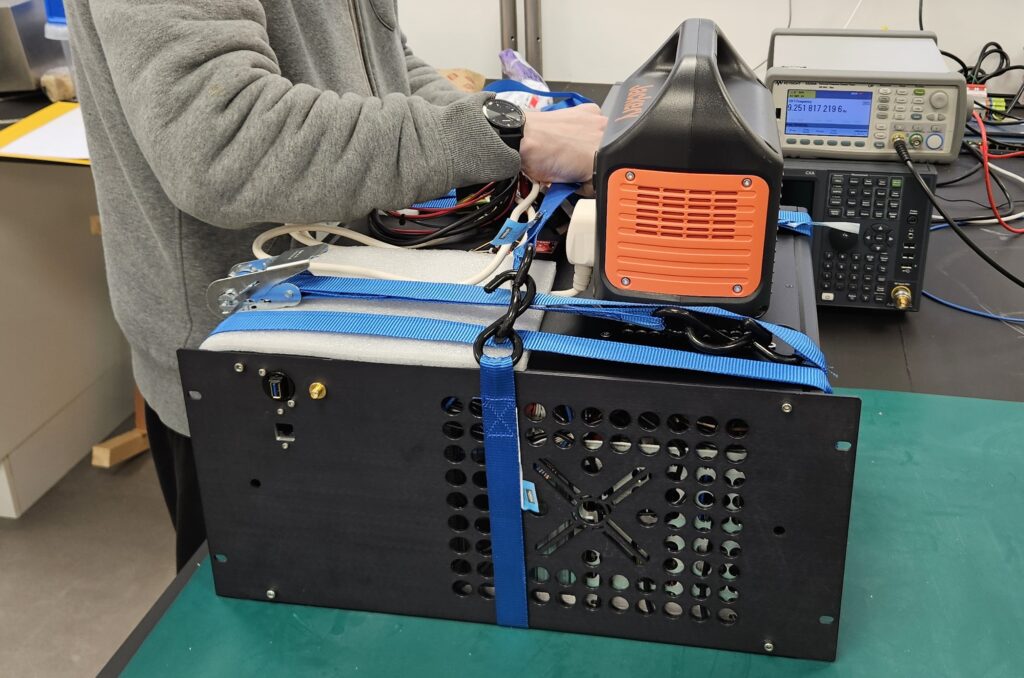
In June, Aquark Technologies announced its atomic clock AQlock was successfully trialed in February. The experimental program at HMS Pursuer in the Solent area included 25 sea trials over three days during rough sea conditions in harbor, coastal, and open water scenarios demonstrating continuous operation of the clock in real-world maritime operational scenarios.
In February, Australia-based Q-CTRL completed a week-long flight trial near Griffin, Australia, flying over 6,700 kilometers in a Cessna 208B Grand Caravan aircraft equipped with a quantum-assured navigation system. During the trials, the technology enabled successful GPS-free navigation, outperforming a high-end conventional GPS alternative by up to 50-times under GNSS-denied conditions.
In April, Q-CTRL launched Ironstone Opal, a quantum-assured navigation system. Ironstone Opal includes proprietary AI-powered quantum control software to harden quantum sensors against interferences encountered in the real world and allow the systems to be miniaturized by trading hardware for software to enable deployment on nearly any vehicle.
Q-CTRL continued evaluation of Ironstone Opal in July, conducting sea trials with the Australian Defence Force onboard the Royal Australian Navy’s Multirole Aviation Training Vessel, MV Sycamore. In these trials, a quantum dual gravimeter was deployed, further enhancing the resilience of positioning and navigation systems when GPS is unavailable or untrusted. Over 144 hours of continuous data were collected successfully with no human intervention. Conditions of ship motion and engine vibrations during the trials would be sufficient to cause total loss of signal using conventional operating techniques employed in past research experiments.
In August, Q-CTRL was selected for two awards under the Robust Quantum Sensors program run by DARPA. With this selection, Q-CTRL was awarded Australian $38 million (U.S. $24.4 million) worth of contracts to augment its field-validated quantum sensing technologies for real-world operational scenarios in high-performance military vehicles.
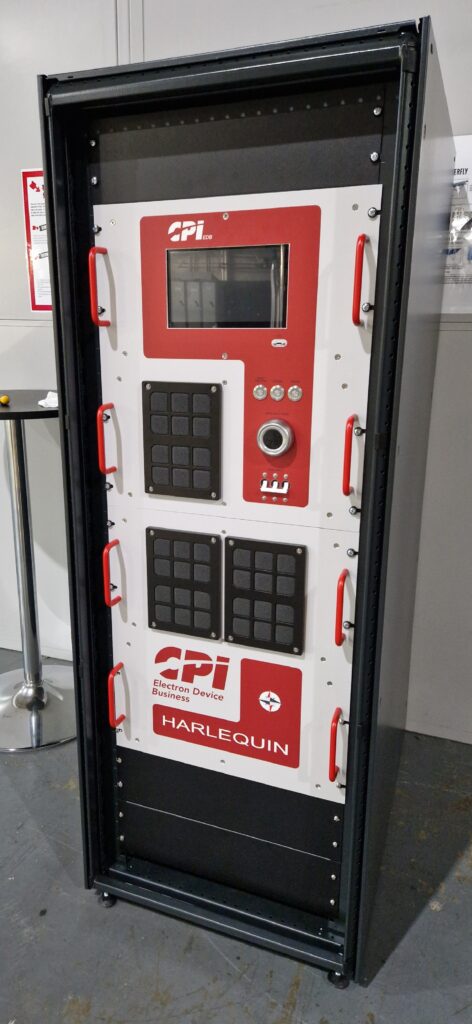
In March, London-based CPI TMD Technologies Ltd. completed development of the High Accuracy Robust deployabLE Quantum Inertial Navigation system (HARLEQUIN), supported by a £4.8 million (U.S. $6.4 million) grant aimed to develop a commercially viable system that can be manufactured at a scale and used by civilian and defense end users. The system integrates magneto-optical trap-based accelerometer with a classical ring laser gyroscope and an atomic clock to allow precise measurement of changes in position, and will be suitable for use on a maritime platform. In April, the company secured a further £0.5 million (U.S. $0.64 million) grant to conduct sea trials in collaboration with the University of Strathclyde and the U.K.’s General Lighthouse Authority, with the initial stage conducted in October.
In August, Boeing and Space Force launched the X-37B spaceplane aboard a SpaceX Falcon 9 rocket from NASA’s Kennedy Space Center in Florida. Among the technologies evaluated was the Space Force describes as “the highest performing quantum inertial sensor to fly in space.” This demonstration is a part of the Transition of Quantum Sensing program, which aims to accelerate the fielding of quantum sensors to address strategic Joint Force needs, including PNT and anomaly detection missions.
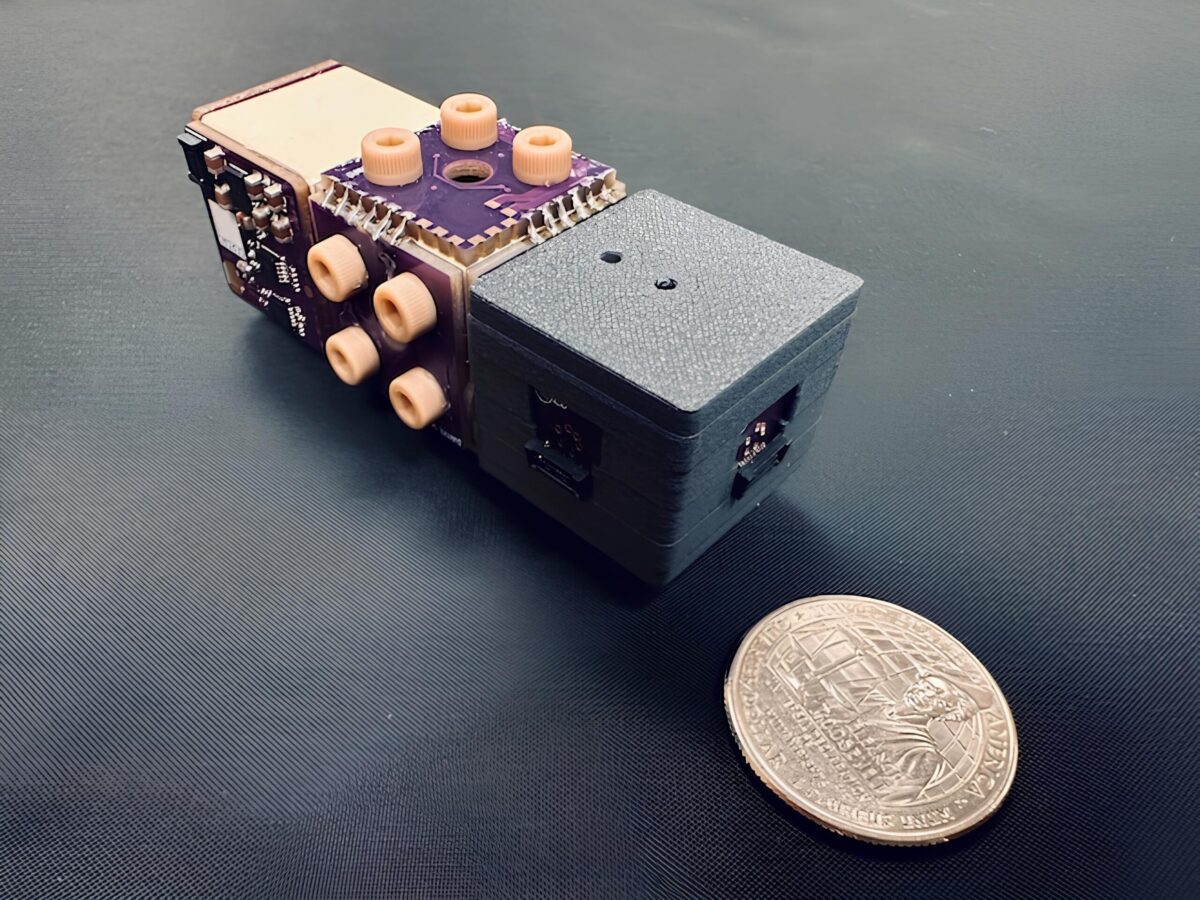
Opener image: The Q-CTRL quantum magnetometer, which completed flight trials near Griffin, Australia, in February 2025. Credit: Q-CTRL