U.S. Air Force’s first chief modernization officer talks CCAs, mass production


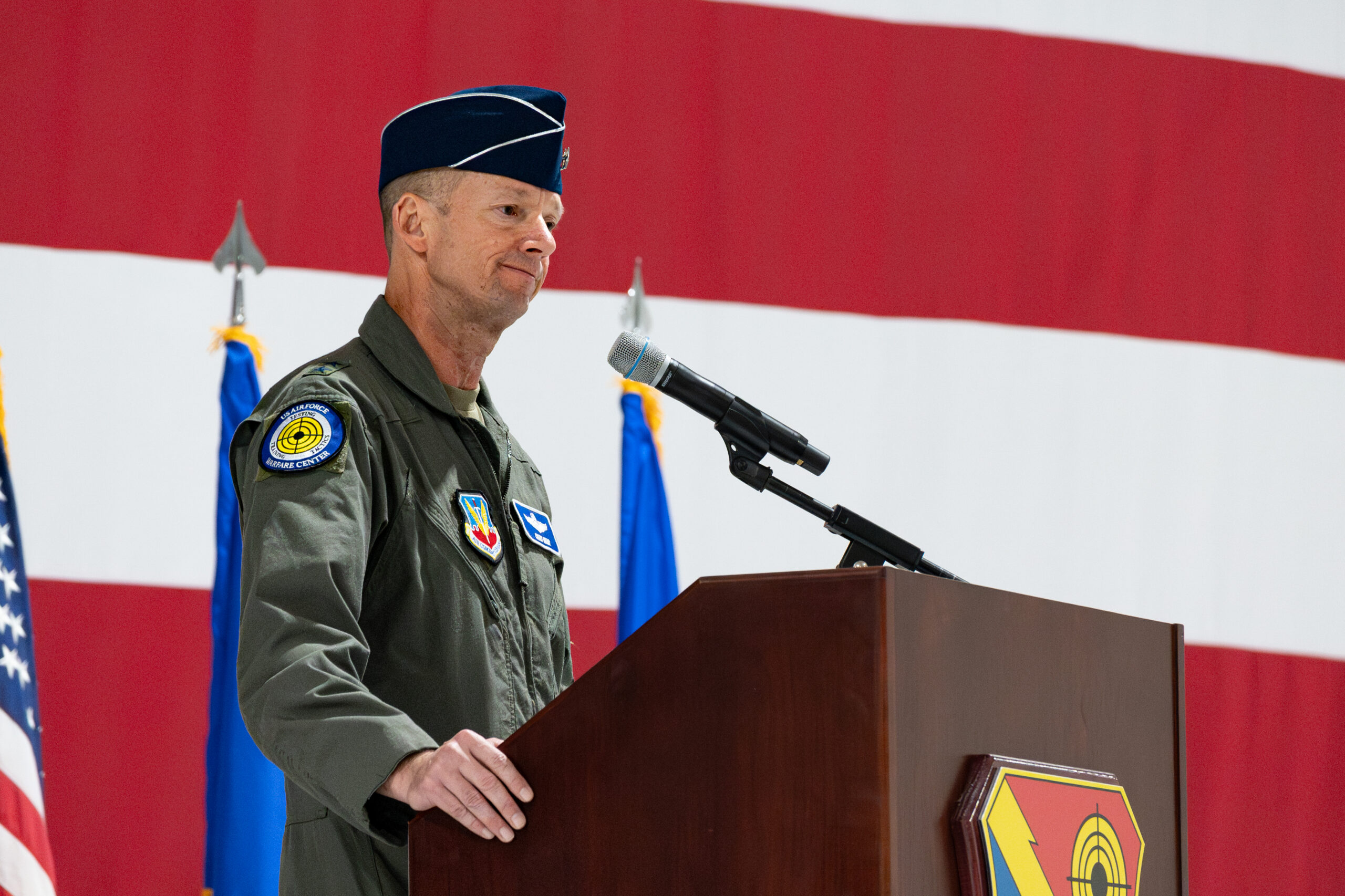
The U.S. Air Force’s first chief modernization officer told lawmakers yesterday he’s “bullish” about the service’s Collaborative Combat Aircraft program, particularly in its ability to apply artificial intelligence.
Lt. Gen. Christopher Niemi was nominated last month for promotion and to serve as both deputy chief of staff for the service’s Strategy, Design and Requirements directorate and as chief modernization officer, a new role, according to a service spokesperson. The Senate confirmed his promotion shortly after his Tuesday appearance at a Senate Armed Services Committee hearing.
Niemi told the committee the Air Force has “consolidated our efforts into a single office that coordinates and synchronizes modernization across the Air Force.”
“This effort is focused on one outcome: identifying tomorrow’s highest priority gaps and ensuring they are resourced,” he added.
Asked about the CCA program, which is developing semi-autonomous drones that would fly alongside human-piloted aircraft, Niemi said he’s “enthusiastic about the opportunities of the future for CCA-type aircraft. It’s one of the primary platforms that we will use to explore practical use for AI.”
“There’s no doubt in my mind that we’ll find some disappointments and nasty surprises, but we’re also going to discover some opportunities,” he continued.
“There will come a point where a robot fighter is better than a manned fighter,” Niemi told lawmakers. “The question is, when will that happen? And I think it would be a tragic shame if the United States didn’t have a better answer, if we were facing robot fighters that were better than our manned fighters. So for all these reasons, I’m very bullish on CCAs.”
He said another of his priorities will be addressing the challenges of quickly acquiring new capabilities.
“One of the things that the Air Force grapples with is: How do we balance the tension between freezing the requirements, which helps us to move more quickly and field capability, but at the same time being responsive as the threat environment changes?” he said. “That’ll be a big part of my responsibilities.”
Niemi also said the Air Force increasingly needs to be able to produce systems in large volumes.
He pointed to the low-cost cruise missile program called the Family of Affordable Mass Munitions. “These are munitions that are built from the ground up designed to be mass produced … so that allies and partners could help, or you could crowdsource how the weapons were built, and you could rapidly ramp up the production rates so that if we were to transition in a future scenario from peacetime to conflict, you could go from maybe buying 1,000 a year of these to 1,000 a week.”