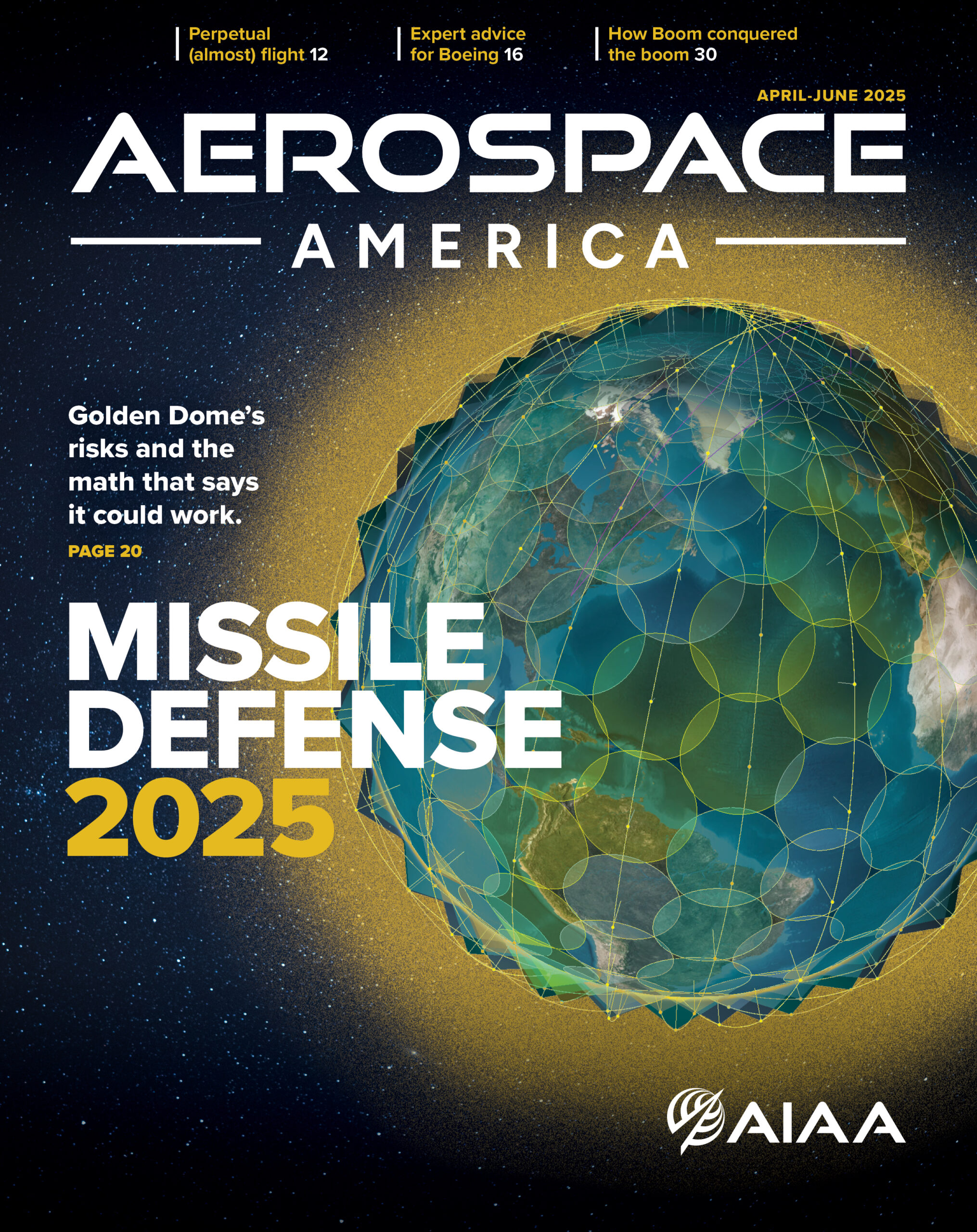
Lawmakers seek more details, cost information from Golden Dome program manager



House lawmakers on Wednesday pushed for more details and cost estimates on Golden Dome, the Trump administration’s planned missile defense shield.
The White House early this month proposed a cumulative $1.5 trillion in defense spending for fiscal year 2027, the largest figure in history. The budget seeks $17.5 billion for Golden Dome, $17.1 billion of which would come from a planned reconciliation package. In fiscal 2026, Golden Dome received $24.4 billion through the Trump administration’s sprawling tax and spending package.
Gen. Michael Guetlein, program manager for Golden Dome, said at a House Armed Services Strategic Forces Subcommittee hearing today the program is on budget and on schedule.
“The greatest challenge here is not technical; it is organizational,” he said.
But lawmakers have long been critical of the limited information about the program.
“Unfortunately, the administration has chosen to classify nearly everything when it comes to the architecture and cost system” of Golden Dome, said Rep. Seth Moulton (D-Mass.), the top Democrat on the subcommittee.
Rep. Salud Carbajal (D-Calif.) asked about the Congressional Budget Office’s cost estimate for Golden Dome’s space-based interceptor layer. The report, released in May 2025, estimated this portion alone could cost as much as $542 billion over 20 years. The White House has said Golden Dome is expected to cost $185 billion.
Guetlein said external groups are “not estimating what I’m building. They are estimating the modernization or/and then the continuation of the legacy system that we already have.”
“It sure would be good to get that estimation you have,” Carbajal replied, adding that “to my understanding, we have not seen that whatsoever.”
Rep. Eli Crane (R-Ariz.) also asked Guetlein about how Golden Dome will use boost-phase interceptors, a “particularly challenging aspect” of missile defense.
“Because we are so focused on affordability, if we cannot do it affordably, we will not go into production,” Guetlein said. “We are looking at the threats from a multi-domain perspective to make sure I have redundant capabilities, and I don’t have single point of failure. So if boost-phase intercept from space — if the amount of work is unsustainable, we will not produce it.”
“We are laser focused on affordability,” Guetlein added.