

Entrepreneurs share candid lessons on fundraising, hiring, and scaling in a hard but booming space market
WASHINGTON, D.C.— If you’re building a space startup, be ready for difficult fundraising cycles, lengthy government sales processes, and hiring decisions that can make or break your company – but also for a community of founders and mentors willing to offer support when things get hard.
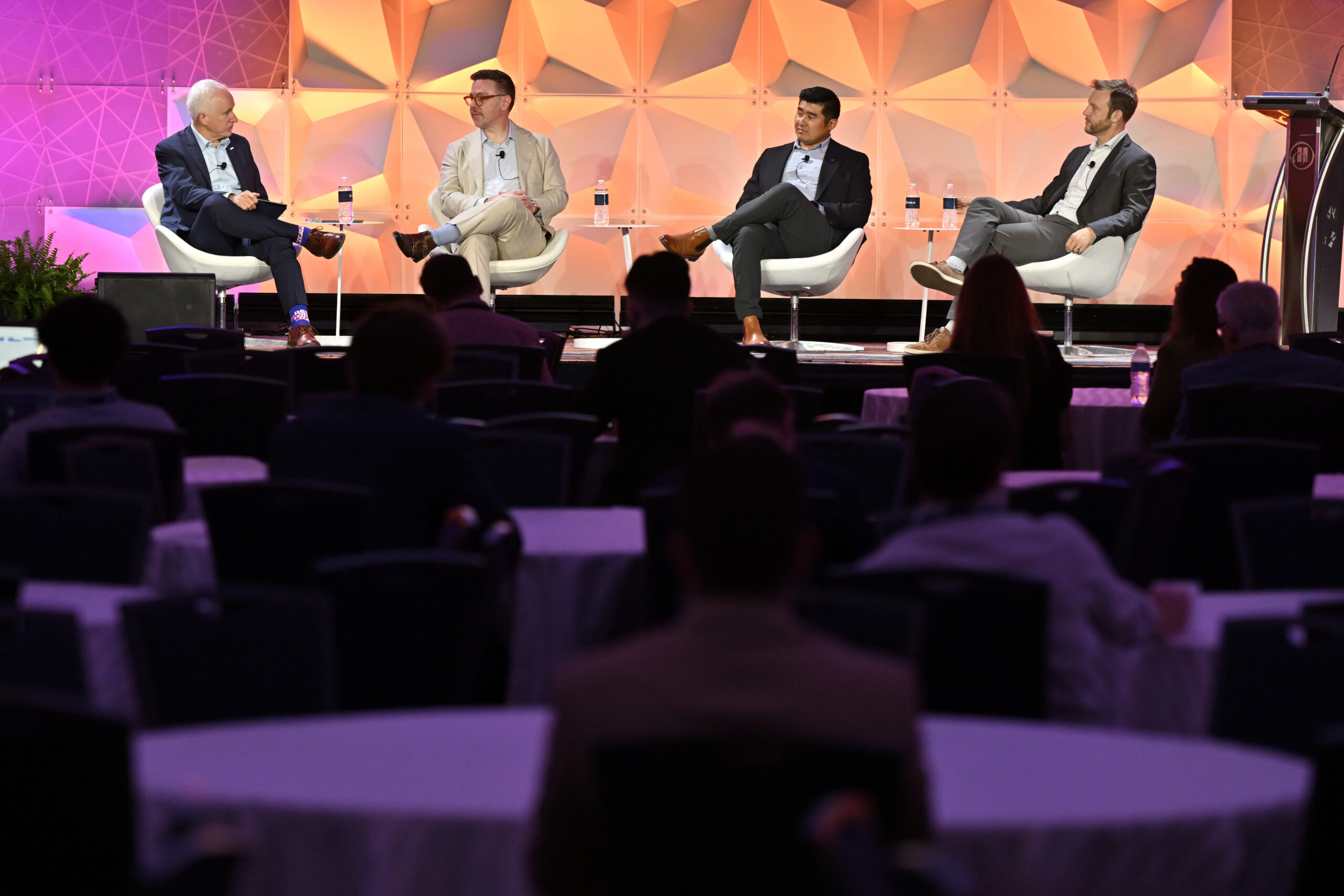
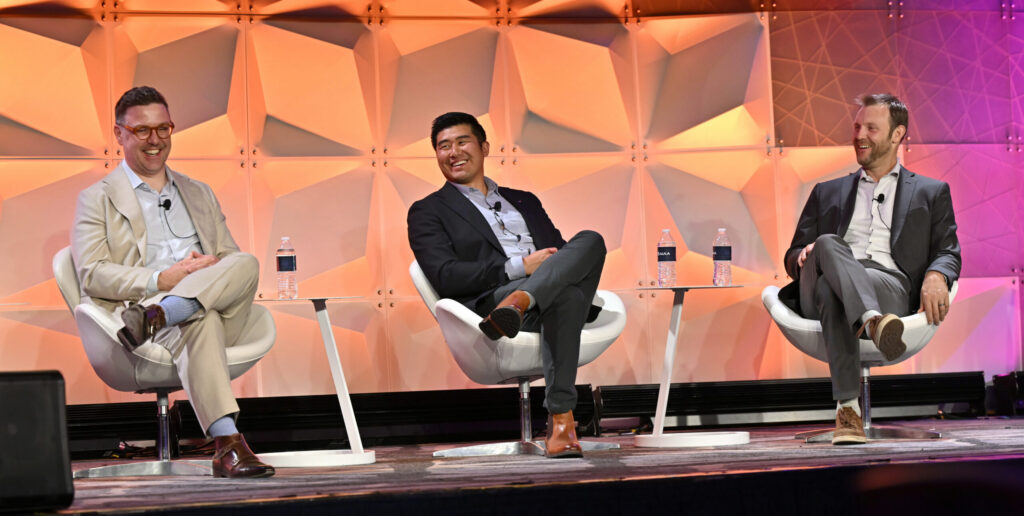
That was the central message from the Founders Panel at ASCEND 2026, an annual event created and moderated by Rob Meyerson, CEO of Interlune and event co-founder. Meyerson framed the session as a candid, practical conversation. Panelists were John Conafay, CEO and co-founder of Integrate; Matt Shieh, Chief Strategy Officer at Canopy Aero & Defense; and Jonny Dyer, CEO and founder of Muon Space.
Raising Capital
For Dyer, who previously helped build Skybox Imaging (later acquired by Google and now part of Planet), today’s space startup landscape is unrecognizable from 2009 – but he cautioned founders not to romanticize fundraising. “You’re going to go on a nose-to-tail of ‘no’s,’ and that’s just part of the process,” he said. His early seed round, anchored by investors already in his network, gave Muon Space the freedom to be “more risk-on and aggressive” about building the business.
Conafay’s path was harder. Integrate’s seed round required eight months and 177 rejections before receiving a yes. “It was probably the lowest point of the company,” he said. The experience reshaped his approach: for the Series A, thorough preparation allowed him to close in nine days. “Prior preparation prevents poor performance – I definitely learned my lesson.”
Meyerson added that the best founder introduction is from a founder who is already in that investor’s portfolio. He encouraged those raising capital to do their homework by networking with founders.
First Customers: Learn Fast, Then Scale
All three founders stressed that early customers don’t have to be perfect – they have to help you learn. Dyer pointed to Muon Space’s early work with Google on a wildfire constellation as a pivotal, if transitional, relationship. Though it was “a dead end with Google,” it opened doors and shaped what the company needed to build. A subsequent Air Force contract funded a developmental payload that became core intellectual property and opened doors across the national security market.
“Ideally, early customers are ones you can learn from or that provide some growth,” Dyer said. “That’s more important than whether they’re the biggest or longest-term customer.”
Conafay navigated a lengthy SBIR process to land a coveted Space Force contract vehicle – “the hardest thing to get in government business” – that grew into $5 million a year in Phase III work.
Shieh’s company leaned on R&D contracts in its early years, achieving near-perfect SBIR win rates that funded a runway and built credibility with both customers and investors. Both Dyer and Shieh emphasized building around enduring government needs rather than shifting political priorities. “If you’re focusing on those things, they’re not going to go away,” Dyer said.
Scaling and Hiring: “Be Relentless on Your Bar”
Once capital arrives and customers sign on, the hardest problems don’t disappear – they evolve. The panel’s most emphatic advice centered on hiring. “Be relentless on your hiring bar,” Conafay said. “Once people get into the organization, if they’re not 5x- or 10x-ers, they tend to be a drag.” Dyer echoed the warning: “It’s a very long-term problem when you hire the wrong person. It’s much harder to get rid of somebody than it is to hire them.” He also urged founders to consciously reinvent their organizations at each growth phase – adding middle managers, redefining roles – the organization will struggle to keep up.
Shieh, who has seen Canopy grow from 25 to roughly 350 employees through acquisition and merger, described culture integration as a never-ending challenge. Aligning people, mission, and vision across legacy organizations, he said, requires as much deliberate effort as operational integration.
Audience Q&A
Shifting to audience questions, the panelists were asked how to balance government opportunity with shifting Washington priorities. Conafay stressed keeping programs tightly scoped, noting, “The entire practice of selling to the government is ensuring that the stakeholder network doesn’t get out of control.”
Dyer and Shieh both urged diversification into dual-use markets. “There’s a very large long-term opportunity around commercial and existing markets today,” Dyer said.
For aspiring founders unsure of their idea, Conafay observed that “what you start with likely won’t be what you finish with. The exact perfect idea is less important than your execution of it.”
Dyer advised younger aspiring entrepreneurs: working at an established company first has real value. “You can learn on the job as a founder, but it’s a very expensive and painful process,” he said.
On investor relationships, all three panelists valued trust and restraint over involvement. Conafay described his best investor as someone who “picked up on the first ring,” for both wins and failures, but otherwise stayed hands-off. Dyer noted that as companies mature, investors shift naturally toward strategic and fundraising questions.
Community Matters
If one theme ran through every topic, it was: no one should try to do it alone. Conafay described regular weekend calls with fellow founders for mutual support.
Shieh meets quarterly with a local founder group in Denver, where participants follow “a kind of Fight Club rules,” he joked. They trade candid stories on fundraising, boards, and strategy.
Dyer actively seeks out mentors and finds that asking for help is almost always well received. “I’ve never gone to somebody and asked for their mentorship and had a negative response,” he said. “Almost universally, people are very generous with their time and advice.”