

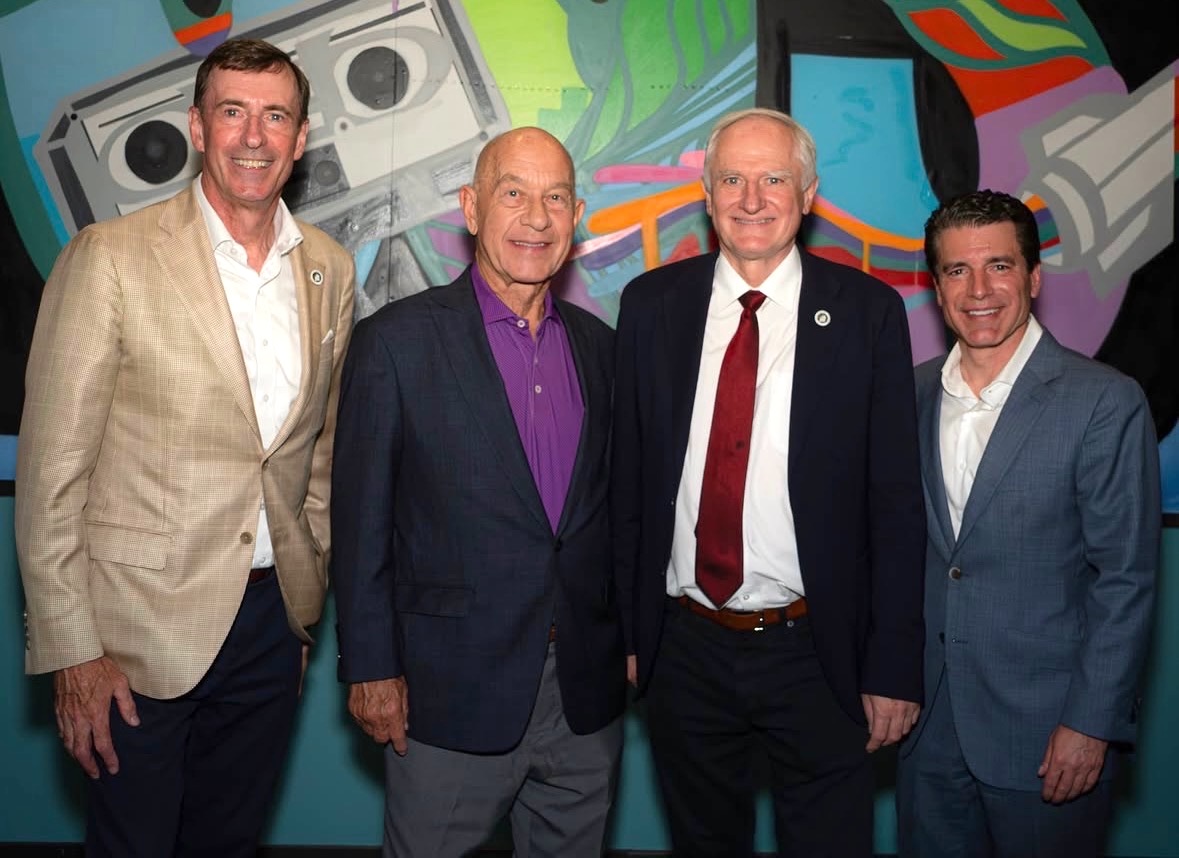
There are many reasons Houston is known around the world as Space City™. During the official site visit for AIAA’s bid to host the 80th International Astronautical Congress (IAC) in Houston in 2029, we had the opportunity to demonstrate exactly why.
The International Astronautical Congress is the world’s largest annual gathering of space professionals, bringing together space agencies, industry, academia, governments, astronauts, students, and emerging space nations from around the globe.
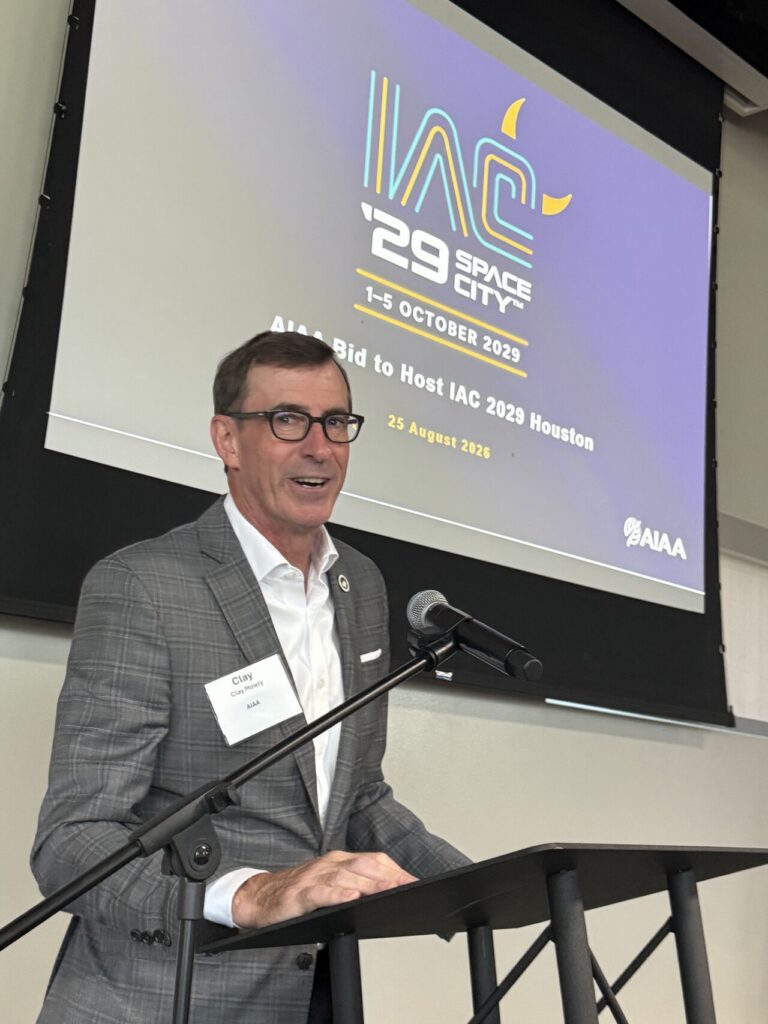
Each year, members of the International Astronautical Federation (IAF) compete for the privilege of hosting the Congress three years later. For 2029, AIAA and Houston are bidding against Geneva, Switzerland, and Barcelona, Spain.
As part of the process, IAF Executive Director Christian Feichtinger visits each candidate city before providing his assessment to the IAF Congress and Symposia Advisory Committee (CSAC). Ultimately, IAF members will decide the host city at the General Assembly during IAC 2026 in Antalya, Türkiye, on 9 October.
The AIAA task during the IAF’s Houston visit was simple: bring our bid to life.
Where Humanity’s Journey to the Moon Began
When humanity first landed on the Moon in 1969, the message from the lunar surface began with one word: “Houston.”
Almost six decades later, Houston remains at the center of human spaceflight.
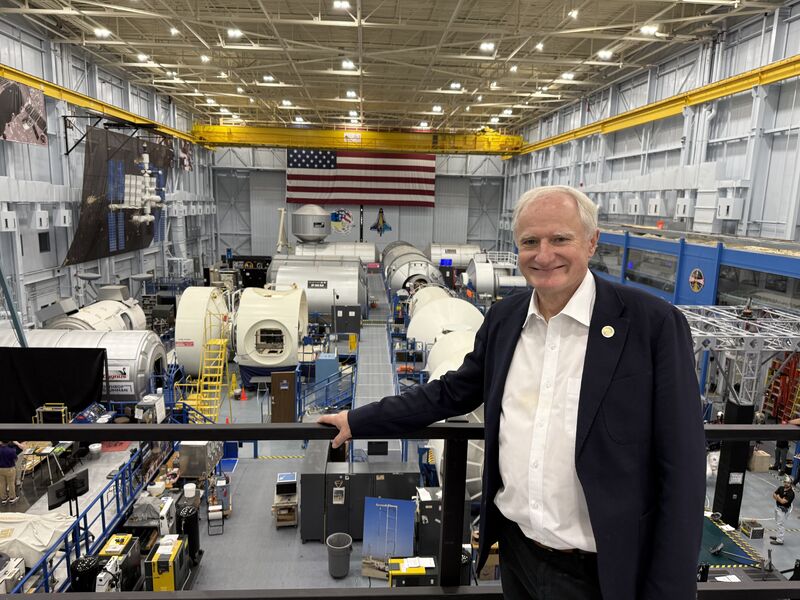
Our visit to NASA Johnson Space Center offered an extraordinary glimpse into that continuing story.
At the Neutral Buoyancy Laboratory, we watched astronaut candidate Adam Fuhrmann suit up for training in one of the world’s largest indoor pools, where full-scale mock-ups allow astronauts to rehearse complex tasks in conditions that simulate aspects of working in microgravity.
At Mission Control, we watched ISS astronaut Sophie Adenot undertaking a spacewalk – an experience normally witnessed from this vantage point by astronauts’ families and invited guests.
And then we had the opportunity to touch the moon itself. NASA brought out part of the moon rock collection, including a Lunar Sample Disk and samples from Apollo 11, Apollo 15, and Apollo 17.
Personally holding material brought back by the Apollo astronauts was a powerful reminder of Houston’s extraordinary place in the history of exploration – and of the new chapter now being written through Artemis.
From Apollo to Artemis
The connection between past and future sits at the heart of Houston’s bid. Our proposed theme, Humanity’s Next Giant Leap, is designed to connect Houston’s extraordinary legacy with the questions, technologies, and partnerships that will define what comes next.
But IAC 2029 will not simply look back on the 60th anniversary of Apollo 11. By 2029, humanity will be entering a new era of lunar exploration through Artemis. It will be a time of an increasingly international and commercial space involvement.
Our visit to Space Center Houston provided us with another perspective on that story, including the opportunity to go into the cockpit of NASA’s original Shuttle Carrier Aircraft, preserved down to its controls and original flight manuals.
For many international delegates – particularly students and young professionals – experiences like these would be unforgettable.
This is one of our ambitions for IAC 2029: to inspire the “Artemis Generation,” connecting young people directly with the astronauts, engineers, scientists, entrepreneurs, and technologies shaping humanity’s future in space.
A City – and Community – Built for Space
Houston’s space credentials are extraordinary, but an IAC requires much more than great technical visits. It requires a city capable of welcoming thousands of people from around the world. The site visit demonstrated that Houston has both the infrastructure and the community to do exactly that.
AIAA and Houston First hosted a reception at the George R. Brown Convention Center, where we were joined by Houston Mayor John Whitmire, representatives from across the region, and members of Houston’s international community.
We also hosted a lunch at Space Center Houston, joined by leaders from government, industry, and the Consular Corps – Houston is one of America’s most internationally connected cities, with 92 consular representations and communities from around the world.
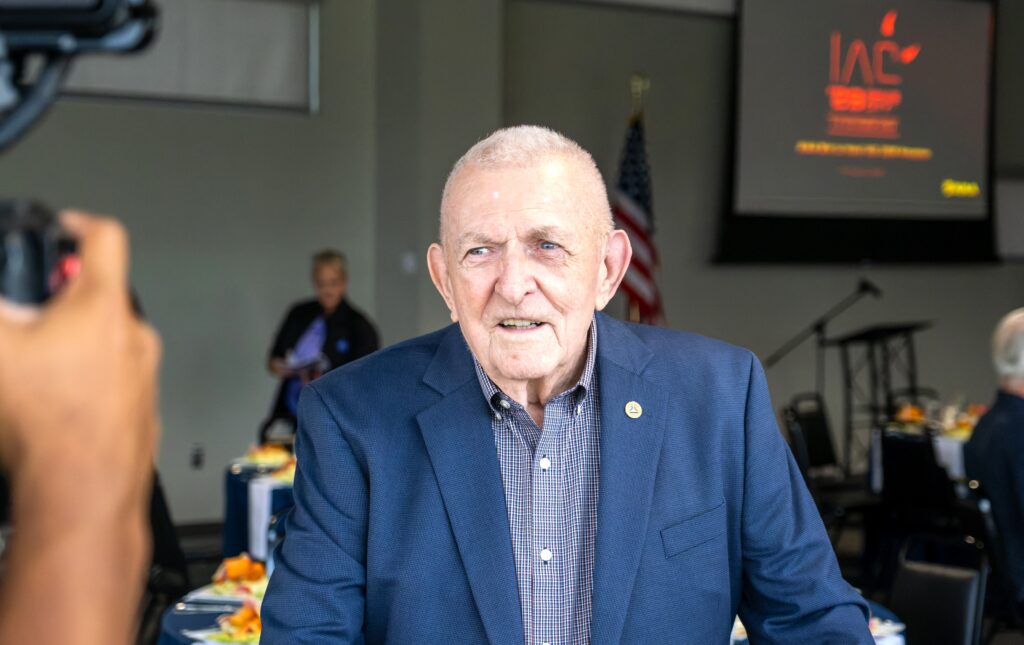
We also welcomed one particularly special guest: Gene Kranz, the legendary NASA Flight Director whose missions included the Apollo 11 lunar landing.
Presentations from the Texas Space Commission, Houston Spaceport, and members of Houston’s space industry demonstrated the breadth of support behind the bid.
This community is an important part of Houston’s proposition.
Ready to Welcome the World
At the center of the Congress would be the George R. Brown Convention Center.
During the visit, we toured the existing facilities and could see the busy construction site where the expansion is scheduled to open in 2028, giving us a glimpse of what delegates could experience in 2029.
Connected to the convention center by skybridges are the Hilton Americas-Houston and Marriott Marquis Houston, providing around 2,200 rooms between them. More than 9,000 hotel rooms are available within about a mile, providing accommodation across a broad range of budgets.
We also explored potential venues beyond the main Congress.
The historic First Court of Appeals offered an impressive possibility for the International Institute of Space Law’s Manfred Lachs Space Law Moot Court Competition (and previously was the setting for Olympic champion Simone Biles’ wedding!). We visited potential venues for the Space Generation Congress, as well as The Ion – at the heart of Houston’s growing innovation community – and the Texas Medical Center, the largest medical complex in the world.
And, of Course, This is Texas
No site visit to Houston would be complete without experiencing the city’s food.
From melt-in-your-mouth Texas brisket to Tex-Mex accompanied by hot sauces approached at your own risk, Houston made sure nobody went hungry.
A word of advice to future delegates: arrive hungry. Portions are generous.
From Houston to Starbase
To complete the visit, we travelled south to Brownsville and SpaceX’s Starbase. There, we experienced another side of Texas’ extraordinary space story. Touring the facilities where SpaceX is producing its mega rocket, Starship, demonstrated the sheer scale and pace of commercial space development in the state.
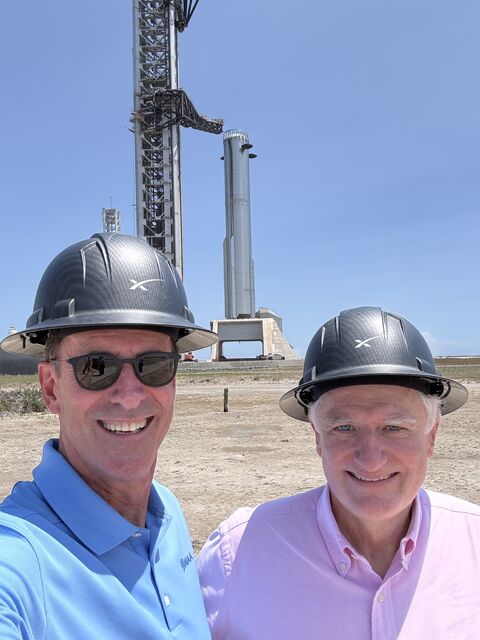
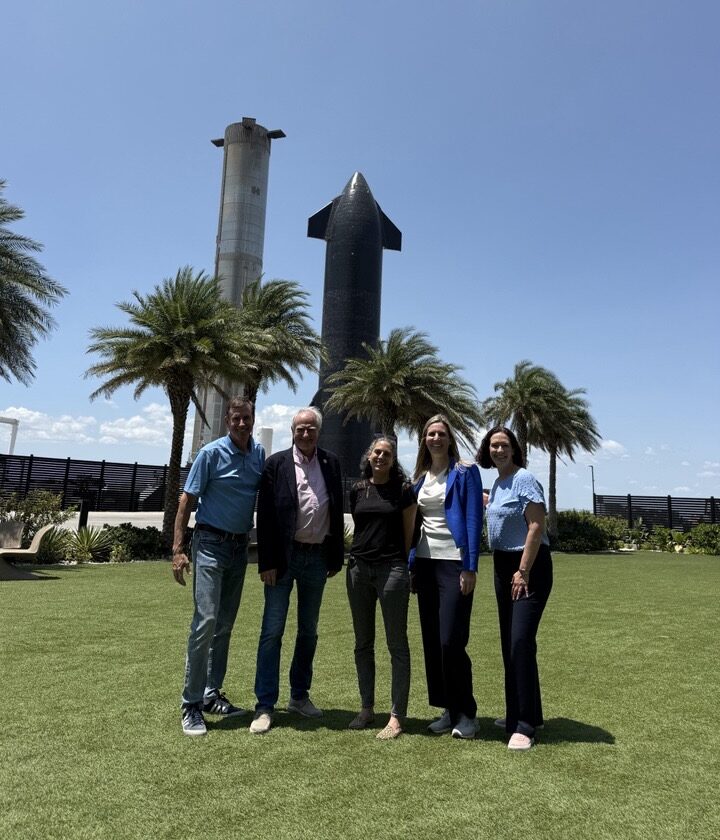
The visit reinforced that Houston’s bid is not simply about one city. It is supported by a state playing an increasingly important role across the full spectrum of the space economy – from human spaceflight and research to commercial launch, manufacturing, investment, and entrepreneurship.
Humanity’s Next Giant Leap
Our ambition is to welcome more than 13,000 delegates from 80+ countries, 5,000+ technical papers, and 20,000 public visitors to a Congress that celebrates our history while helping shape our future.
By 2029, a new generation will look again toward the moon and beyond.
Houston has an extraordinary opportunity to bring the global space community together to help determine what comes next.
We invite the global space community to support our bid for Houston for IAC 2029 – and help shape Humanity’s Next Giant Leap.