

“Advice that differs from the typical technical aerospace point of view [can be] pivotal in improving research at the intersection of aerospace, business outlook, and strategic decision-making.” – Jasmine Rimani, Researcher and Adjunct Professor at Politecnico di Torino, and presenter of “Regional Readiness in Space Exploration: Integrating Life-Cycle Assessment, Cost Modelling, and Technology Roadmapping in the Design of Sustainable Aerospace Systems.”
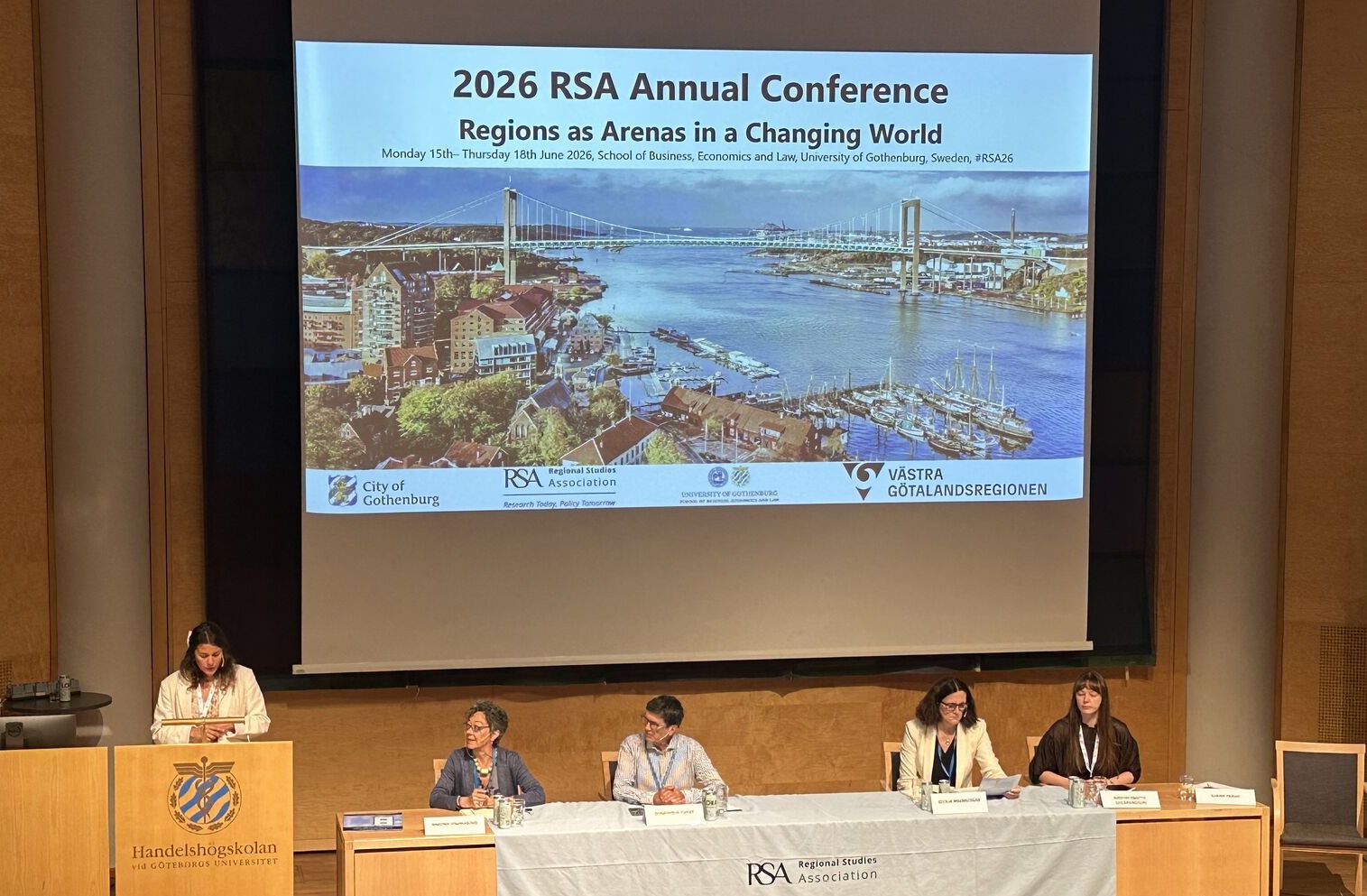
As AIAA programming is traditionally led by engineers with the inclusion of other members of the stakeholder ecosystem, my goal was to see whether it could be replicated in a new context. From 15–18 June, I participated in the 2026 Regional Studies Association’s Annual Conference at the University of Gothenburg’s Business School in my capacity as a practitioner-researcher with my AIAA role of Senior Manager of Aeronautics and Visiting Scholar at the George Washington University Space Policy Institute.
As organizer and moderator of the session, “Defining Regional Opportunities for Emerging Aerospace Technologies,” at the conference, which focused on the theme of “Regions as Arenas in a Changing World,” I developed a session in parallel with the current Aeronautics Domain approach of pairing technical research presentations with discussions of enablement and impact. AIAA AVIATION Forum 2026 marked a true Phase Two of the efforts of the Aeronautics Domain, which has worked on the expansion of programming, professional development, and advocacy resources on emerging aeronautical technologies since 2021. At the 2026 forum, we celebrated sessions and workshops hosted by recently established committees in Sustainability, chaired by Phil Ansell of the University of Illinois Urbana-Champaign; Multimodal Transportation, chaired by Husni Idris of NASA Ames Research Center; and High-Speed Flight, chaired by Todd Magee of The Boeing Company, as well as new Working Groups focused on Artificial Intelligence (Gregory Roth, Air Force Research Laboratory), Autonomy (Justin Bradley, North Carolina State University), and Seaplanes (Bruce Holmes, Holmes Consulting, LLC).
“My research shows that prosperous regions with strong industrial clusters, including aerospace hubs, tend to have higher solar panel adoption, supporting wider sustainability and renewable energy transitions.” – Sergey Sosnovskikh, Senior Lecturer in International Business at The Manchester Metropolitan University, and presenter of “Agglomeration Economies and Household Renewable Energy Adoption: Evidence from UK Regions.”
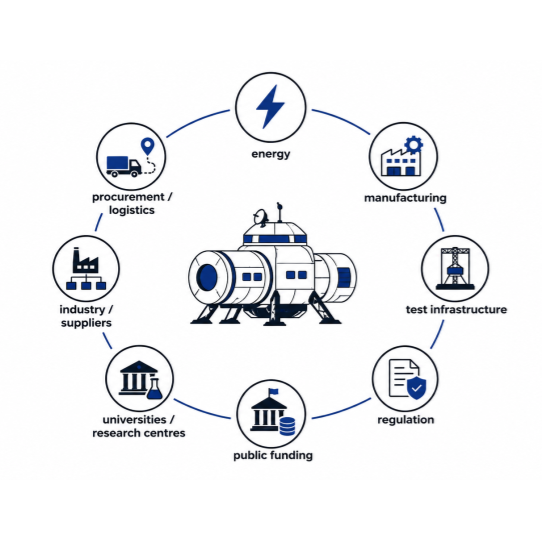
I was joined by Nazmiye Balta-Ozkan, Head of the Centre for Energy Systems and Strategy at Cranfield University; Weizhao Huang, Research Fellow at Cranfield University; Jasmine Rimani, Researcher and Adjunct Professor at Politecnico di Torino; and Sergey Sosnovskikh, Senior Lecturer in International Business at Manchester Metropolitan University. While a few sessions at the conference focused on innovation in infrastructure and ground transportation, ours was unique in topic and format. Each presenter defined contexts for regional readiness around topics such as enabling energy transition at airports and personal residences and how regional variation in space industry maturity might impact the success of developing analogue space exploration experiences. After the presentations, we had open discussions, providing systematic feedback on methodology, data, scope, and argument. As a result, the session served as a Research in Progress Workshop on aerospace industry and energy systems, with the kind of detailed feedback usually reserved for a departmental presentation or summer research retreat.
“I particularly appreciated the discussion on how aviation decarbonisation can be better understood not only as a technological challenge, but also as a regional and infrastructure transition.” – Weizhao Huang, Research Fellow at Cranfield University, and presenter of “Regional Economic Structures and Airport Decarbonisation Pathways: UK Perspective.”
We have begun to explore additional partner programming with the Regional Studies Association, and welcome expressions of interest from AIAA members who would enjoy presenting their research in an interdisciplinary setting. Learn more about the Regional Studies Association.