

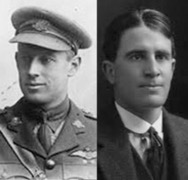
On 16 July 1910, at Spring Plains Station near Mia Mia in central Victoria, Australia, brothers John Robertson and Reginald Charles Duigan flew the first Australian-designed and built airplane. It was an act of engineering ingenuity, carried out in isolation, with no proprietary plans, no trained aeronautical support, and no industry infrastructure of any kind. It is, by any measure, the birth of Australian aerospace engineering.
John Duigan trained as an electrical and mechanical engineer at Finsbury Technical School in London before returning to Australia in early 1908. He settled at Spring Plains, his family’s property near Mia Mia in central Victoria, at a time when the science of flight was still in its infancy and essentially unknown in Australia.
Inspired by a photograph and letter from a former colleague in England showing the Wright Brothers’ machine, John and Reg Duigan resolved to build and fly their own machine. With no access to aircraft designs, aeronautical training, or an established industry to draw upon, the brothers designed and constructed a biplane from first principles, fashioning its components from available materials on the property.
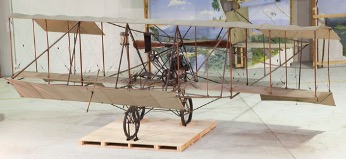
After months of construction and testing, John Duigan achieved the first flight of their airplane at Spring Plains, Mia Mia, on 16 July 1910 – the aircraft flew 23 feet (7 meters) under its own power. On 7 October 1910, a fully controlled flight of 588 feet (179 meters) was recorded at 25 mph and a height of 12 feet (3.5 meters). On 11 May 1911, the aircraft flew publicly before approximately 600 spectators at Bendigo Racecourse.
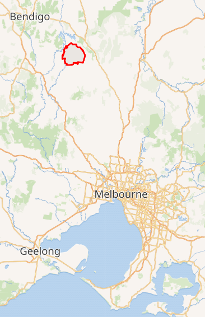
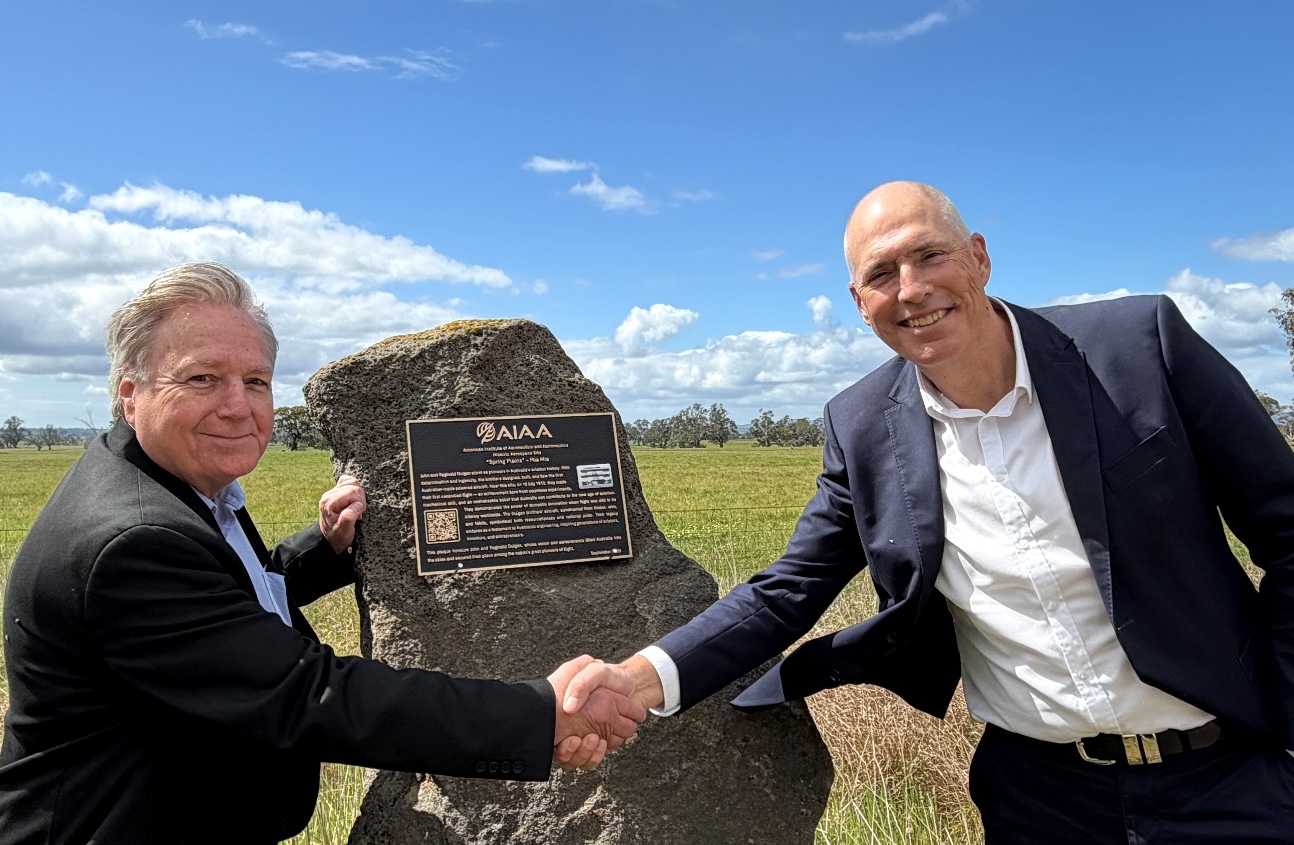
More than a century later, AIAA, joined by local members of the AIAA Australian sections, local government representatives, Duigan family friends, and the Honorable Nicolas (Nick) Duigan, Minister in the Government of Tasmania and grandson of Reginald Duigan, recognized the Duigan brothers’ pioneering achievement by erecting a plaque designating the site as an AIAA Historical Aerospace Site. The 21 September event included a dedication ceremony at Spring Plains and an evening dinner in Melbourne, bringing together the AIAA delegation, aerospace industry representatives, and invited guests.
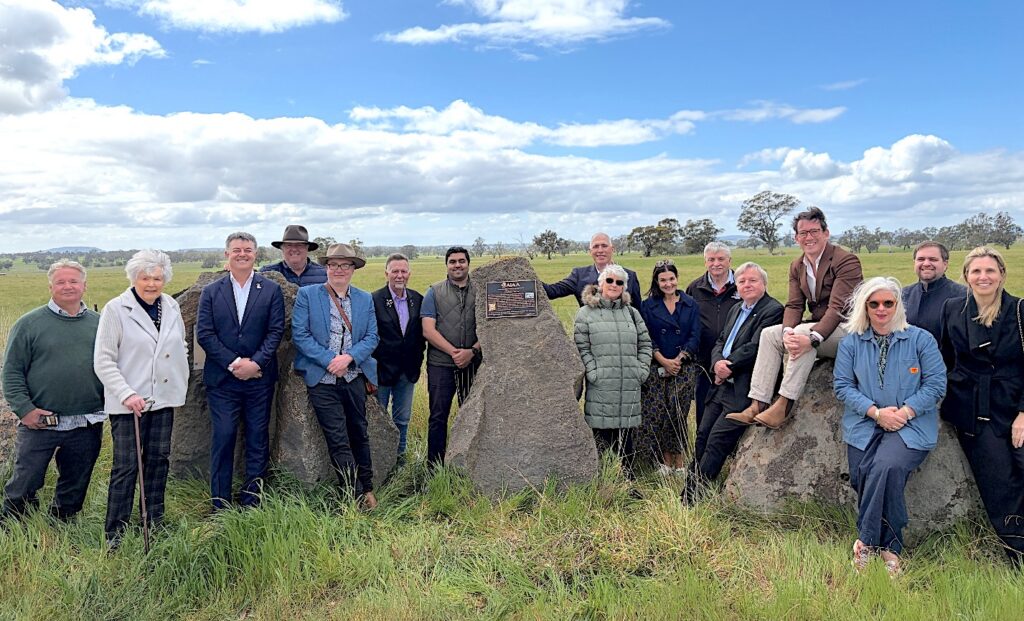
Those that provided remarks at the dedication included: Professor Cees Bil, Immediate Past Region VII Director, who led the effort to get the site listed; Mayor Cr Thomas Prince, Mayor of Bendigo; Cr Nathan Clark, Councilor for Mitchell Shire Council; the Hon. Nick Duigan, Member of the Legislative Council of Tasmania; Paul Fox, Executive Director, NTRO Centre for Transport Safety Asia Pacific; Luke Webb, President Elect, Royal Aeronautical Society Australia Division; and Jim Sherman, Senior Director for Aeronautics, AIAA. The Hon. Nick Duigan reflected afterward, “I know that having Mia Mia included in a list of significant aviation sites that includes Kitty Hawk and Tranquility Base is an honour that my family will treasure.”
The recognition of Mia Mia as an AIAA Historic Aerospace Site reflects the Institute’s ongoing commitment to preserving aviation history. The Duigan brothers’ legacy in Australia represents the remarkable determination and ingenuity that helped advance the aerospace industry in Australia – qualities rooted in the kind of breakthrough thinking that continues to define AIAA’s mission today.
The dedication plaque will remain at the Spring Plains site in Mia Mia, alongside other dedication recognitions. The Institute owes a debt of gratitude to Prof. Cees Bil for his outstanding work getting this site recognized and organizing the dedication ceremony.